What if the construction-zone sign doesn’t tell the whole story about who caused your crash? Liability for accidents in a construction zone depends on more than where the collision happened. A driver, contractor, subcontractor, or government entity may be responsible, and sometimes several parties share responsibility.
It’s understandable to feel unsure, especially when signs, barriers, and lane layouts can change soon after a crash. An insurer may focus on your actions without closely examining whether the work zone was properly set up or maintained. Responsibility often turns on who controlled the area, what each party did or failed to do, and what the available evidence shows.
This article explains who may be held accountable and what evidence can help clarify what happened, including photos, witness information, and work-zone records. You’ll also find practical steps for preserving evidence and protecting your options after a crash. If responsibility is disputed, legal guidance may help you understand possible next steps and claim options.
Key Takeaways
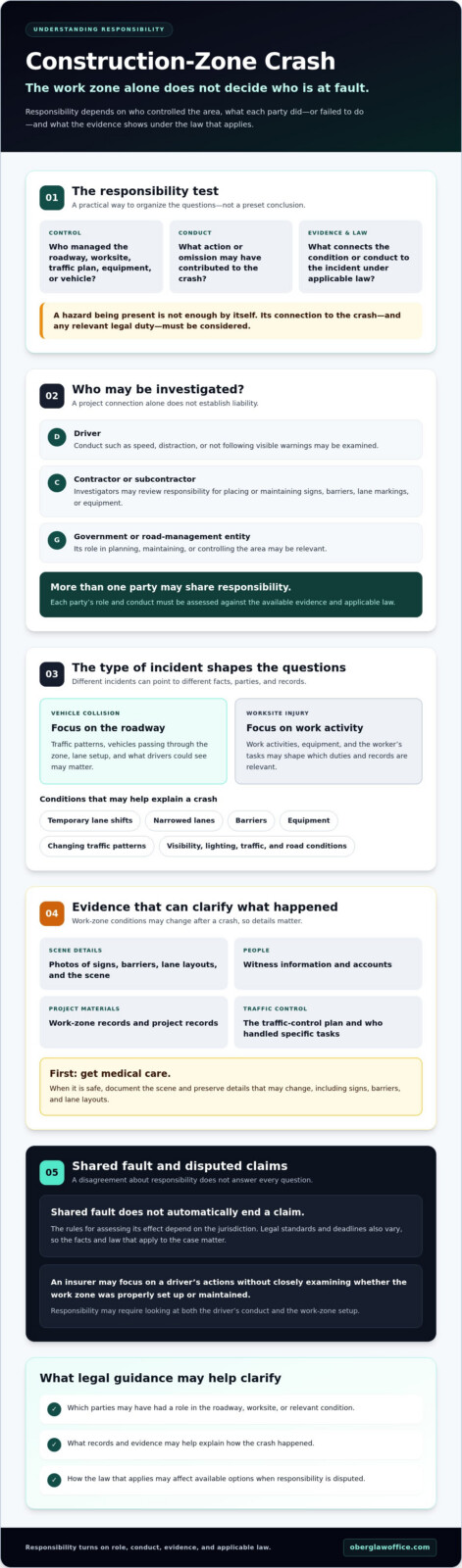
- Liability for accidents in a construction zone depends on who controlled the roadway, what actions or omissions contributed to the crash, and the evidence available.
- A driver, construction company, subcontractor, or government entity may be investigated, and more than one party could share responsibility.
- Shared fault doesn’t automatically end a claim. The rules for assessing its effect depend on the jurisdiction.
- Get medical care first. When it’s safe, document the scene and preserve details that may change, such as signs, barriers, and lane layouts.
- Legal guidance may help identify potentially responsible parties, gather records, and understand options under the law that applies to your case.
Liability for Accidents in a Construction Zone: Why the Work Zone Alone Does Not Decide Fault
A crash in a changing work zone can leave you with more questions than answers. Lane markings may shift, barriers may be moved, and it may not be clear who controlled the roadway when the collision happened. Liability for accidents in a construction zone means legal responsibility for harm. It depends on the facts, applicable law, and evidence, not simply on the presence of construction.
A construction zone doesn’t automatically make a driver, contractor, or government agency at fault. A driver’s conduct may have contributed, while a contractor or road-management entity may have played a role in planning, maintaining, or controlling the area. Investigators may consider several parties, but they must assess whether each party’s actions or omissions contributed to the crash.
The type of incident also matters. A roadway user injured in a collision raises different factual questions from a construction worker hurt at the worksite. A vehicle crash may involve traffic patterns and vehicles passing through the zone. An injury at the worksite may involve work activities, equipment, and the worker’s tasks. The distinction can affect which parties, records, and legal duties are relevant.
What makes a construction zone different from an ordinary roadway?
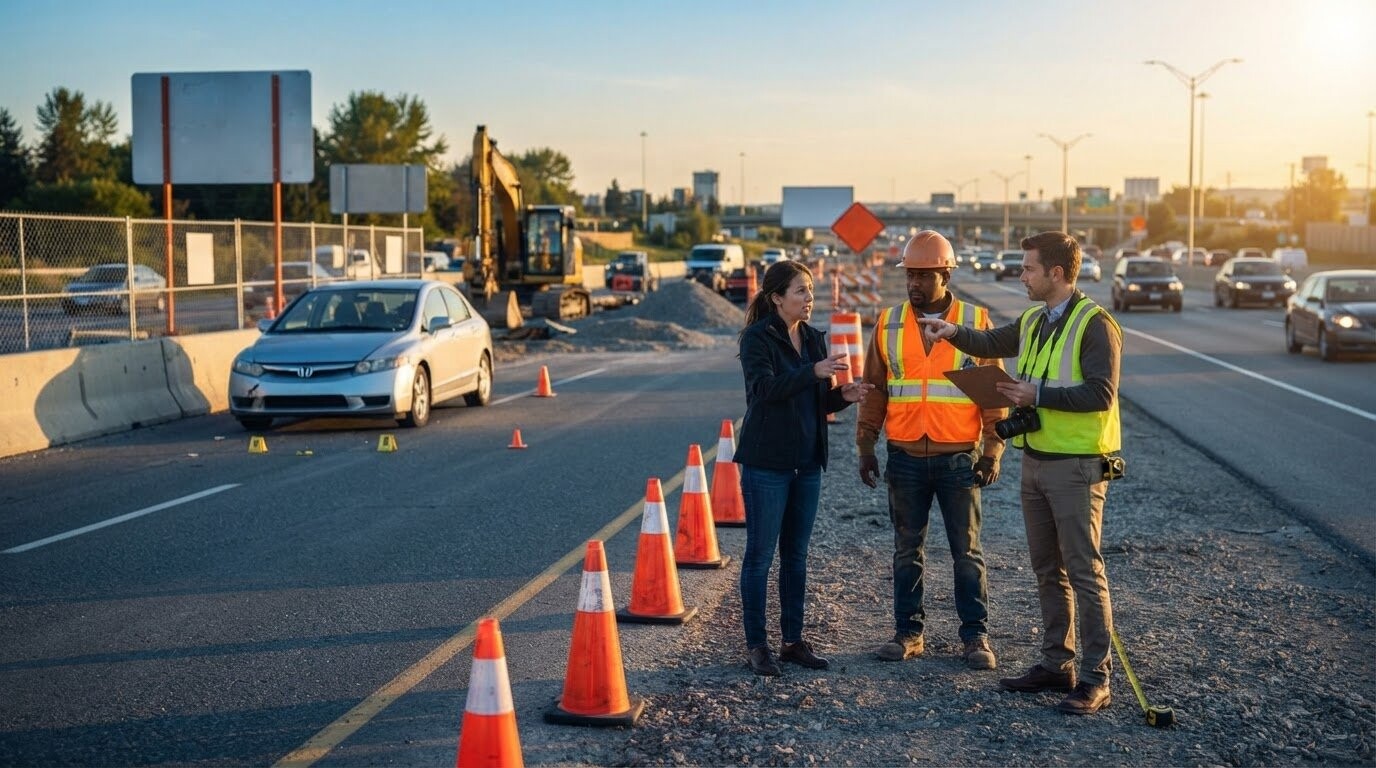
Temporary lane shifts, narrowed lanes, barriers, equipment, and changing traffic patterns can make a familiar route less predictable. Visibility, lighting, traffic volume, and road conditions may also help explain how a particular crash happened. A broad discussion of these hazards appears in Construction site safety standards, including risks involving passing vehicles and construction equipment.
Identifying a hazard isn’t enough by itself. Investigators need to consider whether it was connected to the incident and whether a party had a relevant legal duty in the circumstances. For example, a blocked sightline may matter if it affected what a driver could see before impact. Its significance depends on the evidence and the law that governs the claim.
Which legal questions help clarify responsibility?
Start with control: who managed the roadway, worksite, traffic plan, equipment, or vehicle involved? Investigators may also examine what each party knew, or reasonably should have known, about a hazard and what steps were taken in response. These questions can help distinguish a condition that contributed to the crash from one that was present but unrelated.
Responsibility depends on each party’s role and conduct, measured against the evidence and the law that applies. Legal standards and deadlines vary by jurisdiction, so no single conclusion fits every work-zone crash. The specific facts matter.
Who May Be Liable for a Construction-Zone Accident?
Several people or organizations may need to be considered after a work-zone crash, but being connected to a project doesn’t automatically make someone liable. An investigation focuses on who created, controlled, or failed to address a hazard, and whether that conduct contributed to the injuries under the applicable law. A driver’s actions and the work-zone setup may both deserve scrutiny without assuming either caused the crash.
For context, the Federal Highway Administration statistics page compiles information about work-zone crashes and contributing factors. Broader figures can describe risks, but they can’t establish what happened in a specific collision. That requires evidence connected to the scene and the parties involved.
When may a driver, contractor, or subcontractor be involved?
A motorist may be investigated for conduct such as excessive speed, distraction, or failing to follow visible warnings. A contractor or subcontractor may also warrant review if the placement or maintenance of signs, barriers, lane markings, or equipment is disputed. The key question isn’t just whether a safety measure was imperfect. Investigators must consider whether the party had a relevant duty and whether a failure contributed to the crash.
Project records, the traffic-control plan, photographs, and witness accounts may help clarify who handled particular tasks. Contractors can have different roles, so it matters who was responsible for the specific work or condition. One incident may involve several contributing actions, but the evidence and applicable law determine whether any party is legally responsible.
Could a road owner, public entity, or product maker share responsibility?
A public entity or road owner may be relevant if roadway control, maintenance, or a decision about the work zone is at issue. Claims involving government entities can have special procedures and shorter notice requirements. Rules differ by jurisdiction, so promptly check what applies where the crash occurred rather than relying on a general deadline.
A vehicle part or traffic-control product may also merit investigation if there’s evidence it malfunctioned or failed. That possibility alone doesn’t establish a defect or identify a responsible maker. Records, inspection, and other case-specific evidence are needed to assess whether a product played a role.
Control, safety duties, and evidence are useful starting points for investigating who may be responsible. If insurers disagree about which parties contributed, an initial strategy session may help you understand possible next steps. Learn more about Oberg Law Office’s accident representation. Any claim depends on the facts and the law that applies.
How Shared Fault and Insurance Disputes Affect Construction-Zone Claims
Being partly blamed for a construction-zone crash doesn’t automatically mean you can’t bring an injury claim. The outcome depends on the law governing the claim and the facts established through the investigation. Jurisdictions use different rules to assess shared fault and its effect on recovery, so local law must be checked before drawing conclusions.
If an insurer says you contributed to the crash, ask what evidence supports that assessment. A decision made during an insurance investigation isn’t the same as a legal finding. Liability for accidents in a construction zone may involve competing accounts of driver behavior, work-zone conditions, and roadway factors.
Does partial fault prevent an injury claim?
Not necessarily. How a person’s share of fault affects a claim depends on the jurisdiction’s rules and the evidence. A statement that you changed lanes, for example, may be only one part of the picture. Visibility, warnings, and the actions of other parties may also matter. Before accepting a blame assessment, understand its basis and how the applicable rules treat shared fault.
Why might insurers disagree about who caused the crash?
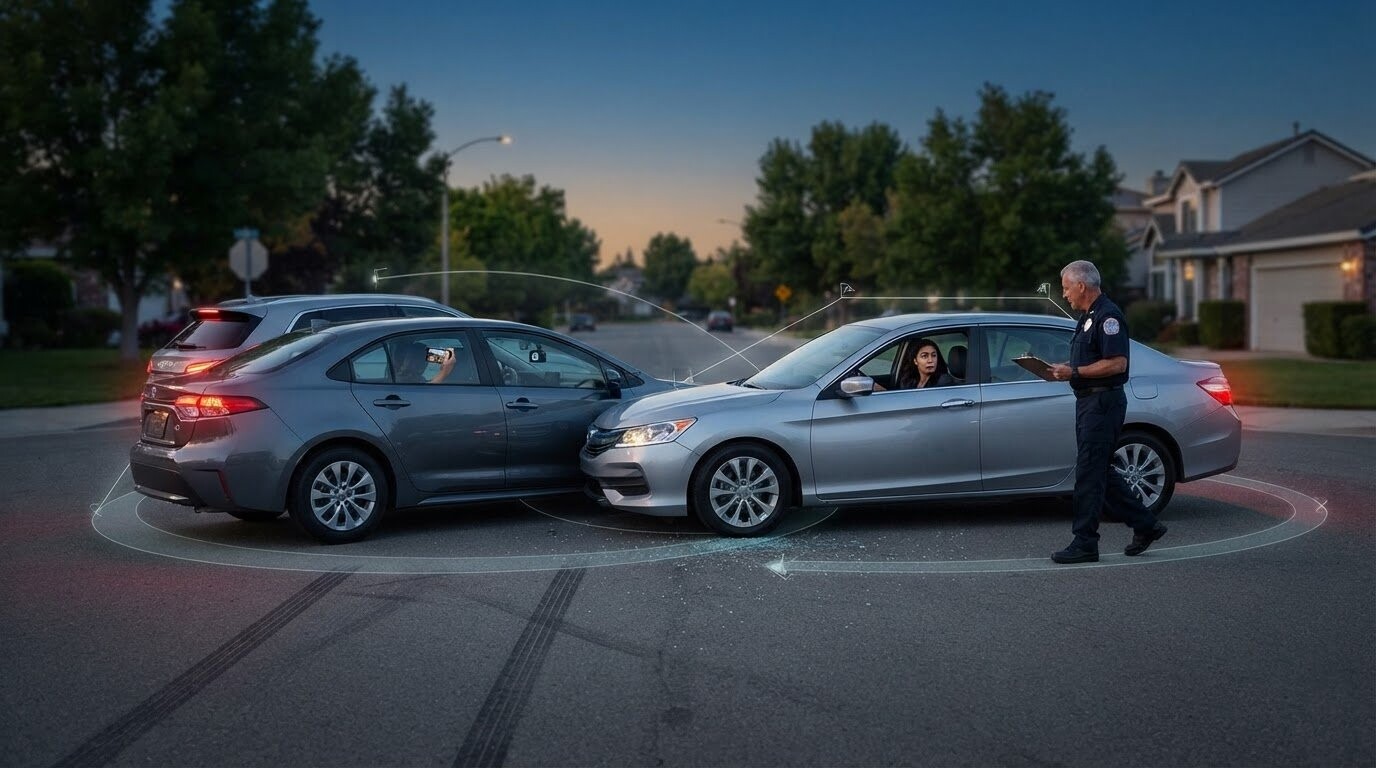
Drivers, contractors, road managers, and insurers may describe the same event differently. One account may emphasize speed or a lane change; another may question whether warnings were visible or whether lighting and sightlines allowed enough time to react. Work-zone evidence can also be harder to assess if signs, barriers, or traffic patterns have changed since the collision.
These questions can help organize what investigators may need to examine:
| Factor | Evidence questions |
|---|---|
| Driver conduct | What do witness accounts, available video, or vehicle records show about speed, attention, warnings, and lane changes? |
| Work-zone setup | What do scene photos, project records, or traffic plans show about signs, barriers, lane markings, and visibility at the time? |
| Roadway conditions | Were lighting, surface conditions, sightlines, or traffic flow relevant to how the crash occurred? |
Insurers may request recorded statements or propose a settlement based on their view of the evidence. What you say and whether you accept an offer can affect the claim, so consider the request carefully and seek guidance if you’re unsure. Keep communications accurate, and don’t treat an insurer’s position as the final word on responsibility.
What Evidence and Steps Can Help After a Construction-Zone Crash?
Your health comes first. Call emergency services for urgent help and get medical care promptly. Don’t delay treatment to take pictures or collect information. If you’re able to document what happened, do so only when it’s safe. Construction layouts can change quickly, so timely records may help clarify conditions at the time of the crash and liability for accidents in a construction zone.
Which evidence may help explain what happened?
When your condition and the scene allow, use this checklist. Don’t enter an active roadway or work area, and don’t confront drivers, workers, or other people to obtain evidence.
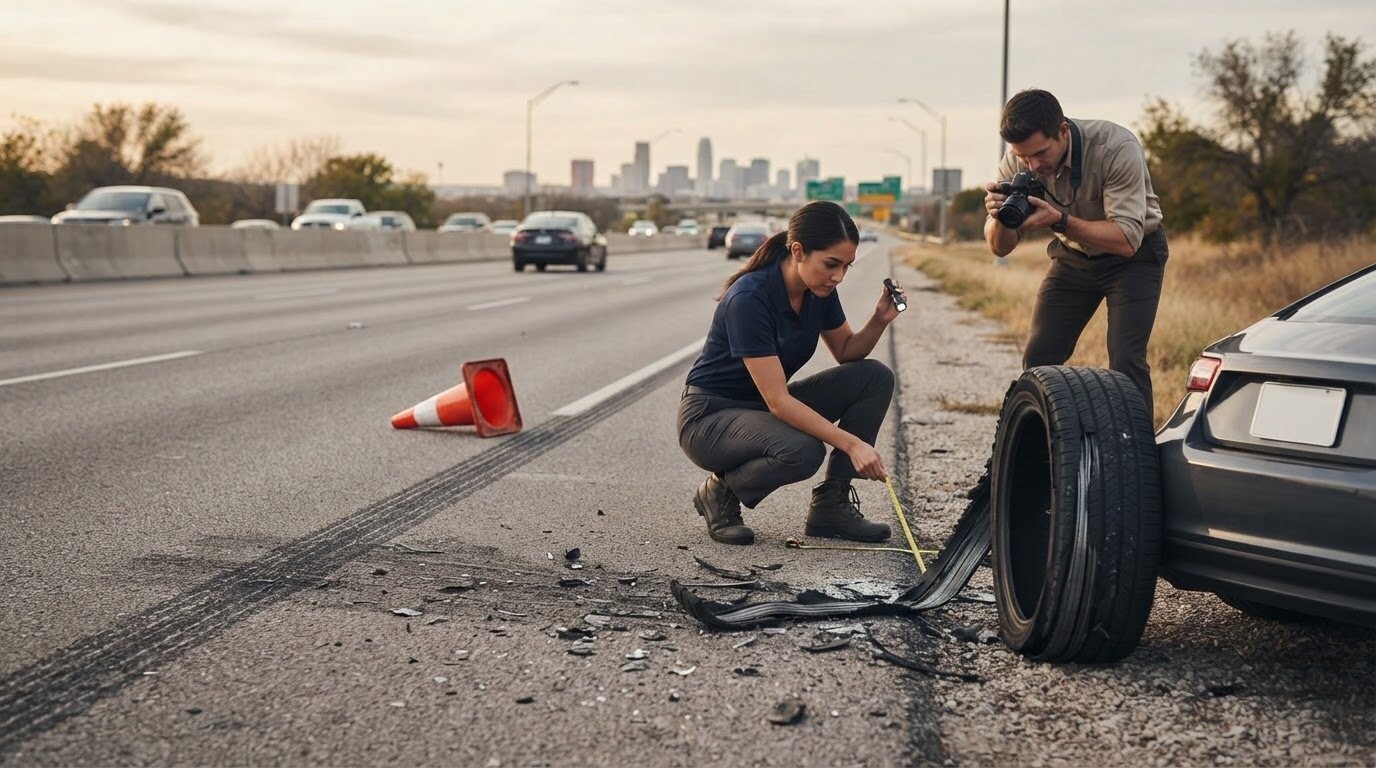
- 1. Photograph or record the scene from a safe place. Capture signs, barriers, lane markings, lighting, vehicle positions, and visible injuries, if possible.
- 2. Write down key details. Note the time, precise location, weather, direction of travel, and what you remember about the events. Record witness names and contact information if they’re willing to share it.
- 3. Preserve available records. Keep the crash report, medical records, relevant vehicle information, and any dashcam footage. Worksite records may also be relevant, though you may need help identifying or requesting them.
- 4. Save communications and claim details. Keep insurer letters, emails, messages, and claim numbers together in a secure place.
Photographs taken soon after the crash may show temporary signs, barriers, or lane arrangements before they’re moved. If you couldn’t document the scene yourself, don’t take risks trying to recreate it. A witness or another available record may help establish what the area looked like.
What should you do before speaking with insurers?
Be accurate about what you remember, and don’t guess when you’re unsure. If an insurer asks questions or requests a recorded statement, make sure you understand what’s being requested. Consider getting advice before responding if you have concerns. A statement or settlement decision may affect your claim, and the right approach depends on your circumstances.
Keep copies of records and communications, and note when and how you receive them. If fault is disputed or your injuries are serious, a qualified lawyer can help you understand what evidence may matter and what rules apply. Procedures and deadlines vary by jurisdiction.
If you’re unsure how to protect your options after a work-zone crash, contact Oberg Law Office to discuss your situation. A conversation can help you consider possible next steps, without guaranteeing any particular outcome.
How a Construction-Zone Accident Lawyer Can Help Clarify Your Options
If you’re injured and responsibility is disputed, it can be hard to know which records to seek or what to do next. A lawyer may help identify potentially relevant parties, gather available evidence, and assess how the facts relate to liability for accidents in a construction zone. That may include reviewing crash reports, project documents, witness accounts, and insurer communications.
The investigation and any potential legal remedies depend on the case facts and the law in the jurisdiction where the crash occurred. A lawyer can help explain which deadlines or special procedures may apply, including those that can affect claims involving public entities. Guidance can clarify options, but it can’t guarantee a particular result.
What to ask during an initial strategy session
Use the conversation to understand the next steps and how the case may be evaluated. You might ask:
- Which people or organizations may need to be investigated, and what records could help clarify their roles?
- What evidence should I preserve, and are there records that may be time-sensitive?
- Which deadlines or procedural requirements might apply, and how can they be verified for this jurisdiction?
- Who would handle communications about the case, and how are legal fees and case expenses explained?
Clear answers can help you make an informed decision without pressure. Ask for an explanation of anything you don’t understand, especially the scope of representation and the terms of any fee agreement.
When should you consider getting legal guidance?
Consider seeking advice if your injuries are serious, an insurer disputes responsibility, or several parties may have contributed. This may be especially relevant after a crash involving a commercial truck or a catastrophic injury. Oberg Law Office represents people injured in truck accidents and catastrophic-injury accidents. Attorney Gregg Oberg has practiced law for over 25 years, and the firm offers free initial strategy sessions for injured clients.
The firm handles personal injury cases on a contingency basis without upfront legal fees. Confirm current consultation and fee terms, including how case expenses are handled and whether the arrangement applies to your circumstances. Representation availability should also be confirmed for your jurisdiction.
If you’d like help understanding possible next steps, consider discussing the circumstances of your crash with a lawyer. An initial conversation can help clarify questions and options, without promising a specific outcome.
Take the Next Step Toward Clarity
Liability for accidents in a construction zone depends on more than where the crash happened. Responsibility may turn on who controlled or contributed to a hazard, what the evidence shows, and the law that applies. If an insurer assigns blame, remember that its assessment isn’t the same as a final legal finding. Preserving available records and getting advice when fault is disputed can help you understand your options.
Oberg Law Office represents people injured in vehicle accidents and offers free initial strategy sessions for injured clients. Attorney Gregg Oberg has practiced law for over 25 years. The firm handles injury cases on a contingency basis without upfront legal fees. Confirm current consultation and fee terms, including whether they apply to your circumstances.
If you’re unsure who may be responsible or what steps to take, schedule a free initial strategy session with Oberg Law Office to discuss your situation. You don’t have to sort through every question alone. A conversation may help you move forward with greater clarity.
Frequently Asked Questions
Who is responsible for an accident in a construction zone?
Responsibility depends on the facts, the evidence, and the law that applies. A driver, contractor, subcontractor, road owner, or public entity may be investigated if their conduct or control contributed to a hazard. For example, investigators may examine driver behavior alongside the placement of signs or barriers. More than one party may have played a role, but involvement in the project alone doesn’t establish legal responsibility.
Can a construction company be liable for a car accident in a work zone?
Yes, a construction company may be liable if evidence shows its conduct breached an applicable duty and contributed to the crash. Investigators might review disputed signs, barriers, lane markings, or work-zone maintenance, along with project records and witness accounts. A contractor isn’t automatically responsible because a collision occurred near its work. The company’s role, the conditions at the time, and the law governing the claim all matter.
Can I recover compensation if I was partly at fault in a construction-zone crash?
Possibly. Being partly at fault doesn’t automatically end an injury claim, but the effect depends on the law in the jurisdiction and the facts established. Different places apply different rules to shared responsibility, so there’s no universal answer or fault percentage. Before accepting an insurer’s assessment, ask what evidence supports it and consider getting local legal guidance about how the applicable rules may affect your options.
What evidence should I collect after a construction-zone accident?
Get medical care and emergency help first. Don’t delay treatment to gather evidence. If you’re safe and able, photograph signs, barriers, lane markings, lighting, vehicle positions, and visible injuries without entering an active roadway or worksite. Record the time, location, weather, and witness contact details. Preserve dashcam footage, crash reports, medical records, and relevant communications. Work-zone conditions may change, so timely documentation can help show what was present.
What happens if a government entity is responsible for a work-zone accident?
A claim involving a government entity may follow special procedures, including notice requirements or deadlines that differ from claims against private parties. The specific rules depend on the jurisdiction and the entity involved. Don’t assume the usual injury-claim deadline applies or that filing a standard insurance claim satisfies any required notice. Identify the potentially responsible public entity and promptly verify local requirements with a qualified lawyer.
How long do I have to file a construction-zone accident claim?
There isn’t one deadline that applies to every construction-zone accident claim. Time limits depend on the jurisdiction, the type of claim, and potentially whether a government entity is involved. Special notice deadlines may be shorter than ordinary filing periods. Because missing a deadline can affect your options, identify where the crash happened and seek current local guidance promptly. Don’t rely on a general online estimate for your specific case.
Should I talk to the insurance company after a construction-zone crash?
You may need to communicate with insurers, but be accurate and avoid guessing about details you don’t remember. Keep copies of letters, messages, and claim information. Before giving a recorded statement or deciding whether to accept a settlement, make sure you understand what’s being requested and how the decision may affect your claim. If injuries are serious or fault is disputed, consider getting legal guidance about your circumstances and local rules.