
FAQ's
When the unthinkable happens, We're here to Help
Frequently Asked Questions
What should I do in the first 24 hours after a wreck?
The first 24 hours after a car wreck can be important — not only for your health, but for preserving information you may need if you later make an injury claim.
- Get medical attention if you are hurt. Don’t ignore new or worsening symptoms.
- Call the police and report the crash. Make sure the accident is properly documented.
- Take photos and video. The vehicles, the damage, the roadway, the scene, and any visible injuries.
- Get witness information. Names and contact details for anyone who saw what happened.
- Exchange insurance information. Name, driver’s license, insurance, and license plate number.
- Save the evidence. Photos, dashcam footage, medical paperwork, towing documents, receipts.
- Notify your own insurance company. There may be coverage under your policy that applies.
- Be careful talking to the other driver’s insurance company. You do not have to rush into a recorded statement.
- Don’t rush to settle. You may not yet know the full extent of your injuries.
- Talk to a personal injury lawyer if you have questions. Particularly when injuries are significant, fault is disputed, or there may not be enough insurance coverage.
Your first priority is medical care. If you are seriously injured, call 911 or go to the emergency room. Even if you do not think you need emergency care, pay attention to how you feel over the next several hours — pain and other symptoms sometimes become more noticeable after the initial shock and adrenaline of the collision wear off. If you develop symptoms, get evaluated and accurately explain how the crash occurred.
A police investigation can document the drivers and vehicles involved, insurance information, witness information, statements made at the scene, and other facts about the collision. If the other driver leaves the scene, or you suspect the driver is intoxicated or uninsured, tell the investigating officer.
If you are physically able, photograph the vehicles from several angles, the damage to each vehicle, the roadway, traffic signals or signs, skid marks or debris, and the general accident scene. If you have visible injuries, photograph those as well. Do not assume that someone else will preserve this evidence for you.
Independent witnesses can become particularly important when the drivers disagree about how the crash occurred. If nearby businesses or homes have surveillance or doorbell cameras, make a note of them. Video can be erased or recorded over quickly, so identifying potential sources early matters.
Exchange driver’s license and insurance information with the other driver, but avoid arguing about fault at the scene. Give the police an accurate account of what happened, but do not guess about speeds, distances, or facts you do not actually know.
Notify your own automobile insurance company about the collision. Your policy may provide benefits even when the other driver caused the crash, including Personal Injury Protection (PIP), Medical Payments coverage, collision coverage, or uninsured/underinsured motorist coverage.
Preserve anything related to the accident: photographs, videos, dashcam footage, text messages, insurance information, towing and rental-car documents, medical paperwork, and receipts for accident-related expenses. If your vehicle has been badly damaged, do not assume that potentially important evidence will remain available indefinitely after it is taken to a tow yard or salvage facility.
Finally, do not feel pressured to settle an injury claim immediately. In the first 24 hours, you may have no idea how significant your injuries will turn out to be. Once a bodily injury claim is settled and a release is signed, you generally cannot come back later for additional compensation.
Should I talk to the other driver’s insurance adjuster?
You should be careful about speaking with the other driver’s insurance adjuster, particularly before you understand the extent of your injuries and how the accident may affect you.
After a crash, the other driver’s insurance company will usually investigate what happened. The adjuster may ask you to describe the collision, discuss your injuries, provide medical information, or give a recorded statement. Keep in mind that the adjuster works for the insurance company — not for you. Part of the adjuster’s job is to evaluate the claim and determine how much, if anything, the insurance company should pay.
What you say can become important later. A simple statement such as “I’m doing okay” may be made before you know the full extent of your injuries. Likewise, an innocent comment about how the crash happened may later be used in an attempt to place some of the responsibility for the collision on you.
Texas follows a proportionate responsibility system. If you are found partly responsible for the crash, your recovery can be reduced by your percentage of responsibility, and if you are found more than 50% responsible you generally cannot recover damages at all. For that reason, statements about how the collision occurred can have consequences beyond simply helping the insurance company “process the claim.”
You should also be cautious about signing medical authorizations. A broad authorization may allow the insurance company to obtain medical records that extend well beyond the treatment you received for the accident. Prior medical history can sometimes be relevant, but that does not necessarily mean the insurance company needs unrestricted access to all of your medical records.
If you are represented by an attorney, the other driver’s insurance company generally should communicate with your attorney about the claim rather than contacting you directly. Your lawyer can provide the information reasonably necessary to investigate the claim while helping protect you from requests that are unnecessary or overly broad.
Talking to an insurance adjuster does not automatically damage your case, and there is no reason to panic if you have already spoken with one. But before giving a recorded statement, signing an authorization, or accepting a settlement, it is a good idea to understand your rights and what effect those decisions could have on your claim.
Do I have to give a recorded statement?
You are generally not required to give a recorded statement to the other driver’s insurance company. Your own insurance policy may impose different obligations, so the answer is not always the same for your insurer as it is for theirs.
Before agreeing to a recorded statement, it is worth understanding how one can be used later. See “Should I talk to the other driver’s insurance adjuster?” above, which covers recorded statements, medical authorizations, and why the timing matters.
What if I was partly at fault for the crash?
Being partly at fault for a car crash does not necessarily prevent you from recovering damages. Texas follows a system known as “proportionate responsibility,” sometimes also called comparative responsibility.
Under Texas law, the responsibility for a crash can be divided among the people or companies whose conduct contributed to causing it. For example, a jury might find that the other driver was 80% responsible for the collision and that you were 20% responsible.
If you are 50% or less responsible, you can still recover damages, but your recovery is reduced by your percentage of responsibility. So if your damages were $100,000 and you were found 20% responsible, your recovery would generally be reduced to $80,000.
There is an important cutoff, however. If you are found to be more than 50% responsible for the crash, Texas law prevents you from recovering damages. In other words, a finding of 50% responsibility still allows a recovery, while a finding of 51% does not.
Fault is not always as clear as it may seem immediately after a collision. Drivers, witnesses, police officers, insurance companies, and accident investigators may have different opinions about what happened. Evidence such as photographs, video, vehicle damage, electronic data, witness statements, and the physical layout of the roadway can become important when determining each driver’s percentage of responsibility.
An insurance company’s decision to blame you for part of a crash is not necessarily the final word. When fault is disputed, the evidence should be carefully evaluated before accepting an insurer’s assessment of responsibility.
The police report says the crash was my fault. Is my case over?
No. A police report that says you caused the crash does not necessarily mean that you do not have a case.
Police officers frequently investigate crashes after they happen. They may interview the drivers and witnesses, examine the vehicles, look at the roadway, and issue traffic citations. Based on that investigation, the officer may express an opinion about who caused the collision. That opinion can certainly be important, but it does not automatically determine who is legally responsible in a Texas personal injury case.
The officer usually did not actually witness the crash. In some cases, additional evidence may tell a different story. Dashcam or surveillance video, photographs, eyewitness testimony, vehicle damage, electronic vehicle data, cell phone records, and other evidence may provide information that was not available to the officer when the report was prepared.
There is also a difference between receiving a traffic citation and being legally responsible for someone’s injuries. Ultimately, fault in a civil case is determined under Texas law based on the evidence — not simply by checking a box on a police report.
Even if you were partly responsible for the collision, you may still have a claim. Under Texas’s proportionate responsibility system, if you are found 50% or less responsible you may still recover damages, reduced by your percentage of responsibility.
For these reasons, we do not automatically reject a potential case simply because a police report places fault on the injured person. When the facts justify it, the circumstances of the crash and the available evidence should be independently evaluated before deciding who was actually responsible.
The other driver didn’t have enough insurance. What happens now?
If the driver who caused your crash does not have enough insurance to cover your injuries and damages, you may still have other sources of recovery.
Texas requires drivers to carry minimum liability insurance, but those minimum limits can be quickly exhausted in a serious accident. A person may have substantial medical expenses, lost income, and other damages that greatly exceed the amount of liability insurance available from the at-fault driver.
One of the first things we look for is underinsured motorist, or “UIM,” coverage. UIM coverage is insurance you purchase as part of your own automobile policy to protect you when the person who causes the crash does not have enough liability insurance to compensate you for your damages. In Texas, insurers are generally required to offer uninsured/underinsured motorist coverage, although a policyholder can reject that coverage in writing.
There may also be more than one insurance policy or responsible party involved. If the at-fault driver was working at the time of the crash, an employer may potentially be responsible. A vehicle may be covered by a separate commercial or personal policy, and in some cases another person or company may share responsibility for causing the collision.
If UIM coverage is available, the amount that can be recovered is not automatically the amount of the UIM policy limits. The injured person must still establish the other driver’s responsibility for the crash and the amount of damages caused by it. The amount already recovered from the responsible driver is also considered in determining what may be owed under the UIM coverage.
For that reason, we generally do not assume that a case is limited to the amount shown on the other driver’s insurance policy. When injuries are significant and the available liability coverage appears inadequate, it is important to identify all potentially responsible parties and all available insurance coverage before resolving the claim.
The driver fled the scene, or had no insurance at all. What now?
You may still have a claim even if the driver who caused the crash fled the scene or had no automobile insurance. In Texas, one of the first things we look for in this situation is uninsured motorist coverage, commonly called “UM” coverage.
Uninsured motorist coverage is designed to protect you when the person who caused the crash has no liability insurance. It may also provide coverage in certain hit-and-run accidents when the responsible driver cannot be identified. Texas automobile insurers are generally required to offer uninsured/underinsured motorist coverage unless the policyholder rejects it in writing.
If the other driver fled the scene, identifying that driver is still important. Police reports, witness information, surveillance or doorbell video, photographs, license plate information, and other evidence may help locate the vehicle and driver. Because video is often erased or recorded over, investigating a hit-and-run promptly can make a significant difference.
If the driver cannot be identified, a claim may still be possible under your own UM coverage. However, hit-and-run claims can involve specific coverage requirements and proof issues. The insurance company may investigate whether another vehicle was actually involved, how the collision occurred, and whether the unidentified driver was legally responsible.
If the driver is identified but has no insurance, UM coverage may also apply. Depending on the circumstances, we may also investigate whether someone other than the driver bears responsibility or whether another insurance policy provides coverage. Additional issues can arise when the driver was working, driving someone else’s vehicle, or operating a commercial vehicle.
Making a claim under your own uninsured motorist policy does not mean that your insurance company simply pays your policy limits. You still must establish the uninsured driver’s responsibility for the crash and prove the damages caused by it.
Personal Injury Protection (PIP) or Medical Payments coverage may also be available under your own policy to help with medical expenses, regardless of whether the other driver is ever found.
A hit-and-run or uninsured-driver accident can therefore be more complicated than an ordinary insurance claim, but the absence of insurance — or even the inability to identify the driver — does not necessarily mean there is no way to recover. The important first steps are to preserve the available evidence and carefully review all potentially applicable insurance coverage.
The insurance company already offered me money. Should I take it?
Maybe — but accepting an insurance company’s settlement offer is an important decision, because once the claim is settled you generally cannot come back later and ask for more money.
Insurance companies sometimes make offers soon after a crash, particularly when the other driver’s responsibility appears clear. An early offer may sound reasonable at first. The problem is that it can be difficult to know what a personal injury claim is worth before you know the full extent of your injuries.
You may still be receiving medical treatment. Your doctor may recommend additional therapy, injections, diagnostic testing, or even surgery. You may also continue to miss work or discover that your injuries affect your ability to perform your job or normal daily activities. An offer made shortly after the accident may not take those future consequences into account.
Under Texas law, damages in a personal injury case can include more than the medical bills you have already received. Depending on the facts, you may be entitled to recover damages for past and future medical expenses, lost wages or loss of earning capacity, physical pain, mental anguish, physical impairment, and other losses caused by the collision.
It is also important to know how much insurance coverage is available. Before accepting the at-fault driver’s policy limits — or any settlement in a serious injury case — it may be appropriate to investigate whether there are additional insurance policies, other responsible parties, or uninsured/underinsured motorist coverage that could apply.
You should also consider liens and reimbursement claims. Medicare, Medicaid, health insurance companies, hospitals, and others may have a right to be reimbursed from a personal injury settlement, and those claims can affect how much of the settlement you actually receive.
Most importantly, a bodily injury settlement normally requires you to sign a release. Once the release is signed and the claim is settled, the case is generally over. If your condition later gets worse or you discover that you need additional medical treatment, you usually cannot reopen the claim.
That does not mean you should automatically reject an insurance company’s offer. Sometimes an early offer is fair and accepting it makes sense. The important thing is to make an informed decision — understanding the nature and extent of your injuries, the damages you may be entitled to recover, the available insurance coverage, any liens or reimbursement claims, and exactly what rights you are giving up.
Who pays my medical bills while my case is pending?
One of the frustrating things about a personal injury claim is that the medical bills usually do not wait for the case to be resolved.
In most Texas car accident cases, the other driver’s liability insurance company does not pay your medical bills as you receive treatment. Instead, the insurance company typically evaluates those expenses as part of your overall injury claim and, if the claim is resolved, pays an agreed settlement at the end of the case. That can leave an injured person wondering how medical care will be paid for in the meantime.
If you have health insurance, it can often be used to pay accident-related medical expenses just as it would for other medical care. Depending on the health plan, the insurer may later have a right to seek reimbursement from a settlement. Medicare and Medicaid may also have reimbursement rights when they pay medical expenses related to an accident.
Your automobile insurance policy may provide another source of payment. Personal Injury Protection, commonly called “PIP,” can pay certain medical expenses and lost income regardless of who caused the crash. Texas automobile insurers are generally required to offer PIP coverage unless it has been rejected in writing. Some policies may also include Medical Payments, or “MedPay,” coverage.
In some cases, a medical provider may agree to provide treatment while the personal injury case is pending and wait to be paid from the eventual settlement. These arrangements should be considered carefully, because the amount ultimately charged or owed can significantly affect how much money the injured person receives when the case is resolved.
It is also important to remember that receiving medical treatment and proving medical expenses in a Texas personal injury case are related but separate issues. The fact that a medical provider charged a particular amount does not necessarily mean that the entire amount will ultimately be recoverable as damages. Texas law places limits on the medical expenses that may be recovered, and issues involving health insurance payments, adjustments, liens, and reimbursement claims can affect the final calculation.
For these reasons, figuring out how medical bills will be handled should begin early in a personal injury case. We typically look at all available sources of payment — including health insurance, PIP or MedPay coverage, and other options — while also considering how those choices may affect the client’s ultimate recovery.
I don’t have health insurance. Can I still get treatment?
Yes. Not having health insurance does not necessarily mean that you cannot receive medical treatment after a car accident.
If you need emergency care, you should seek it regardless of whether you have health insurance. For follow-up treatment, however, finding doctors willing to treat an uninsured patient can sometimes be more complicated — particularly when the patient cannot afford to pay the medical bills as treatment is provided.
One possible source of payment is your own automobile insurance. If your policy includes Personal Injury Protection, commonly called “PIP,” it can pay certain accident-related medical expenses regardless of who caused the crash. Texas automobile insurers are generally required to offer PIP coverage unless it has been rejected in writing. Some policies may also provide Medical Payments, or “MedPay,” coverage.
Another possibility is treatment under a letter of protection or similar arrangement. In that situation, a medical provider agrees to provide treatment without requiring full payment at the time of service and instead waits to be paid from the proceeds of the personal injury claim. These arrangements can provide access to needed medical care when someone does not have health insurance or the ability to pay out of pocket.
Treatment under a letter of protection should be approached carefully, however. The medical bills do not simply disappear if the personal injury case is unsuccessful or settles for less than expected. Depending on the agreement, the patient may remain responsible for those charges. Medical expenses incurred under these arrangements can also be substantial and can significantly affect how much money the client ultimately receives from a settlement.
There may be other options as well. Depending on the circumstances, a patient may qualify for financial assistance, reduced self-pay rates, payment plans, or treatment through community or public healthcare programs.
The most important consideration is getting appropriate medical care for your injuries — not simply generating medical bills for a personal injury claim. Treatment should be based on what your healthcare providers believe is medically necessary. When a client does not have health insurance, we can help identify available payment options and consider how those choices may affect both the personal injury claim and the client’s ultimate recovery.
What is my case worth?
It depends. There is no formula that can accurately determine the value of a Texas personal injury case, and two people involved in similar accidents can have very different claims.
The starting point is usually the nature and extent of the injuries. A temporary injury that resolves after a few weeks is generally valued differently from an injury requiring surgery or one that causes permanent limitations. The length of medical treatment, the type of treatment received, whether future medical care will be necessary, and whether the injury affects your ability to work or participate in normal activities can all be important.
Texas law allows an injured person to seek compensation for the damages actually caused by another person’s negligence. Depending on the case, those damages may include past and future medical expenses, lost wages or loss of earning capacity, physical pain, mental anguish, physical impairment, disfigurement, and property damage.
Liability also matters. A serious injury does not necessarily result in a valuable case if there is a substantial dispute about who caused the accident. Because Texas uses a proportionate responsibility system, your recovery can be reduced if you share responsibility for what happened, and eliminated if you are found more than 50% responsible.
The available insurance coverage and the defendant’s ability to pay can also affect the practical value of a claim. A person may suffer damages far greater than the at-fault driver’s insurance limits. In those situations, we look for other possible sources of recovery, including additional insurance policies, other responsible parties, and uninsured or underinsured motorist coverage.
The quality of the evidence matters too. Medical records, photographs, video, witness testimony, vehicle damage, employment records, expert testimony, and other evidence can affect our ability to prove both how an accident happened and how it affected the injured person’s life.
There is also no Texas rule that says a personal injury case is worth “three times the medical bills” or some other multiple. Medical expenses are certainly important, but they are only one part of the claim. A case should be evaluated based on the individual person, the injuries, the evidence, the applicable law, and the damages that can actually be proven.
For that reason, we are cautious about placing a value on a case too early. As the medical condition becomes clearer and the evidence is developed, we can usually make a much better assessment of a claim’s reasonable settlement value — and, when necessary, what we believe a jury may reasonably award at trial.
How long do I have to file a claim in Texas?
In most Texas personal injury cases, you have two years from the date of the injury to file a lawsuit. This deadline is called the “statute of limitations.”
For example, if you were injured in a car crash on June 1, 2026, the general rule is that a lawsuit must be filed no later than June 1, 2028. Waiting until the insurance company finishes investigating or negotiating the claim generally does not extend that deadline.
It is important to understand the difference between making an insurance claim and filing a lawsuit. Reporting the accident to an insurance company, submitting medical bills, or negotiating with an adjuster does not ordinarily satisfy the statute of limitations. If the case has not been resolved, a lawsuit generally must actually be filed before the applicable deadline expires.
There are exceptions that can shorten or extend the time available. Claims involving a city, county, school district, or other governmental entity can be especially time-sensitive. The Texas Tort Claims Act contains notice requirements, and a city charter or other applicable law may require notice within a much shorter period than two years. Depending on the governmental entity involved, that deadline can sometimes be measured in months rather than years.
Different rules may also apply in cases involving minors and in certain other circumstances where Texas law “tolls,” or pauses, the limitations period. Determining whether an exception applies can be complicated, so it is generally not a good idea to assume that you have additional time.
Even when the two-year deadline applies, waiting until it approaches can make a case more difficult to investigate. Video may be erased, vehicles may be repaired or destroyed, physical conditions can change, and witnesses may become difficult to locate or remember fewer details about what happened.
For that reason, the safest approach is to investigate a potential personal injury claim well before the statute of limitations expires. If there is any question about the deadline, it should be determined as early as possible rather than assuming that every Texas personal injury claim has a full two years.
How long will my case take?
There is no set amount of time for a Texas personal injury case. Some claims can be resolved in a matter of months, while complicated cases — particularly those that require a lawsuit and trial — can take considerably longer.
One of the biggest factors is your medical treatment. In many cases, it does not make sense to settle until we have a reasonable understanding of your injuries and prognosis. If you are still improving, need additional testing, or may require surgery or other future treatment, settling too early can make it difficult to fairly evaluate your damages.
Once your medical condition is sufficiently understood, we can gather the medical records, bills, lost-income information, and other evidence needed to evaluate and present the claim. The insurance company will then have an opportunity to investigate and respond. If liability is reasonably clear and the parties can agree on the value of the claim, the case may be resolved without filing a lawsuit.
Other cases take longer because responsibility for the accident is disputed, the injuries are significant, there are multiple defendants or insurance companies, or the parties simply disagree about what constitutes fair compensation. In those situations, filing a lawsuit may be necessary.
A lawsuit adds additional steps. The parties exchange written discovery, obtain documents and other evidence, take depositions, and may retain expert witnesses. The case may also go through mediation before trial. Court schedules can affect the timeline as well, and the pace can differ from county to county. Even after a lawsuit is filed, many cases settle before ever reaching a jury.
We also have to resolve matters such as medical liens, Medicare or health insurance reimbursement claims, and other outstanding obligations before settlement funds can be fully distributed. Those issues can sometimes add time at the end of the case.
Our goal is not simply to make a case last longer — or to settle it as quickly as possible. The goal is to move the case forward efficiently while making sure we have the information and evidence necessary to properly evaluate it. A quick settlement is not necessarily a good settlement, particularly when the long-term effects of an injury are not yet known.
Every case is different, so we generally cannot give a reliable completion date at the beginning. As the medical treatment progresses, the evidence develops, and we learn the insurance company’s position, we can usually provide a much better estimate.
Will I have to go to court?
Maybe, but not necessarily. Many Texas personal injury claims are resolved without the injured person ever having to appear in court.
Some cases can be settled directly with the insurance company without filing a lawsuit at all. If responsibility for the accident is reasonably clear, the injuries and damages are well documented, and the insurance company makes a fair settlement offer, there may be no reason to file suit.
Other cases require a lawsuit. That may happen because the insurance company disputes who caused the accident, questions whether the accident caused the injuries, disagrees about the amount of damages, or simply refuses to make a reasonable settlement offer. Filing a lawsuit does not necessarily mean the case will go to trial — many lawsuits are resolved through negotiation or mediation before a jury is ever selected.
If a lawsuit is filed, however, you should expect to participate in the process. You may have to answer written questions, help gather documents, attend a deposition, undergo a medical examination in some cases, and participate in mediation. Most of these things take place outside the courtroom.
If the case cannot be fairly resolved, then a trial may become necessary. At trial, you will generally need to appear in court and testify about the accident, your injuries, your medical treatment, and how the injuries have affected your life. Other witnesses, doctors, experts, and the parties involved may also testify, and a judge or jury will ultimately decide the disputed issues.
Whether to settle or proceed to trial is an important decision. Your lawyer can advise you about the risks and benefits of each option and make a recommendation, but the decision whether to accept or reject a settlement offer belongs to you.
Our goal is not to take every case to trial, nor is it to avoid the courtroom at all costs. The goal is to obtain a fair result for the client. Sometimes that can be accomplished through settlement. When it cannot, we believe a personal injury lawyer should be prepared to take the case to court.
What do you charge, and what does “nothing unless we win” actually mean?
We handle personal injury cases on a contingency fee basis. That means you do not pay an attorney’s fee upfront, and we do not bill you by the hour while we work on your case. Our attorney’s fee is a percentage of the money we recover for you.
If we do not obtain a recovery for you, you do not owe us an attorney’s fee. That is what we mean by “nothing unless we win.”
The percentage we charge is explained in the written contingency fee agreement before you hire us. In many cases, the percentage may increase if a lawsuit has to be filed, because litigation requires substantially more time and work. You will know how the fee is calculated before you decide to hire us.
Attorney’s fees are different from case expenses. Depending on the case, expenses may include court filing fees, medical records, deposition costs, expert witness fees, accident reconstruction, photographs, exhibits, and other costs necessary to investigate and prove the claim. We generally advance those expenses so that our clients do not have to fund the litigation themselves.
When the case is resolved, we prepare a settlement statement showing exactly where the money goes. It identifies the total recovery, our attorney’s fee, case expenses, medical bills or liens that must be paid, and the amount the client will receive. We review that information with the client before the settlement funds are distributed.
There are no hidden hourly charges for phone calls, emails, meetings, or the time we spend working on your case. Our compensation depends on obtaining a recovery for you.
A contingency fee arrangement allows an injured person to hire an experienced personal injury lawyer without having to pay thousands of dollars in legal fees while the case is pending. It also aligns our interests with yours: if we do not recover money for you, we do not earn an attorney’s fee.
I was a passenger. Can I make a claim?
Yes. If you were injured while riding as a passenger in a car, truck, rideshare vehicle, or other vehicle, you may have a personal injury claim against the person or persons responsible for causing the crash.
Passengers are often in a somewhat different position from the drivers, because they usually have no responsibility for causing the collision. The important question becomes: who caused the crash?
Sometimes the answer is straightforward. If another vehicle runs a red light and crashes into the vehicle you are riding in, you may have a claim against the driver of that vehicle. In other cases, the driver of the vehicle you were riding in may have caused the crash. If so, you may have a claim against that driver’s liability insurance.
There can also be situations where both drivers share responsibility. Texas uses a proportionate responsibility system that allows responsibility for an accident to be divided among multiple people or companies. As an injured passenger, you may be able to pursue claims against more than one responsible party.
Understandably, passengers are sometimes uncomfortable making a claim when the responsible driver is a friend or family member. It is important to understand that a personal injury claim is usually made against the driver’s automobile liability insurance. In most cases, the practical purpose of that insurance is to provide protection when the driver’s negligence causes injuries to someone else — including a passenger.
There may also be additional insurance coverage available. Depending on the circumstances, Personal Injury Protection (PIP), uninsured or underinsured motorist coverage, rideshare coverage, commercial insurance, or other policies may apply. Determining which policies provide coverage can become especially important when a passenger suffers serious injuries.
As with any personal injury case, an injured passenger may be entitled to recover damages such as medical expenses, lost income or loss of earning capacity, physical pain, mental anguish, physical impairment, and other losses caused by the crash.
If you were injured as a passenger, you should not assume that you have to choose sides between the drivers or determine for yourself who was at fault. The circumstances of the collision can be investigated, the available insurance policies identified, and responsibility determined based on the evidence.
I was hit by an Uber or Lyft driver. Is that different?
Being hit by an Uber or Lyft driver does not change the basic rules for determining who caused a car crash, but it can significantly change the insurance issues involved in the claim.
The first question is still fault. If the rideshare driver caused the collision through speeding, distracted driving, running a red light, making an unsafe lane change, or some other form of negligence, an injured person may have a claim for the damages caused by the crash.
The more complicated question is often which insurance policy applies. Rideshare drivers generally use their own vehicles, and the available coverage can depend on the driver’s status in the Uber or Lyft app at the time of the collision.
If the driver was not logged into the rideshare app, the driver’s personal automobile insurance will ordinarily be the primary coverage. If the driver was logged in and waiting for a ride request, different rideshare-related liability coverage may apply. If the driver had accepted a ride or was transporting a passenger, substantially higher commercial insurance coverage may be available.
For that reason, determining exactly what the driver was doing at the moment of the crash can be very important. App records, trip information, electronic data, and information obtained from the rideshare company may help establish the driver’s status and identify the applicable insurance coverage.
There may also be more than one insurance policy to consider. Depending on the circumstances, coverage could involve the driver’s personal automobile policy, insurance provided through the rideshare platform, and your own uninsured or underinsured motorist coverage. If you were riding as an Uber or Lyft passenger when the crash occurred, additional coverage issues may arise as well.
The damages available in a rideshare accident are generally the same types available in other Texas personal injury cases — medical expenses, lost income or loss of earning capacity, physical pain, mental anguish, physical impairment, disfigurement, and other losses caused by the collision.
One important difference in an Uber or Lyft case is that we do not want to assume the insurance information exchanged at the scene tells the whole story. Identifying the driver’s rideshare status and all potentially applicable insurance coverage should be part of the investigation before the claim is resolved.
I was hit by a commercial truck. Is that different from a car wreck?
Yes. A crash involving a commercial truck can be very different from an ordinary car wreck. The basic question — who caused the collision — is still important, but commercial trucking cases often involve additional parties, insurance coverage, evidence, and safety regulations.
The truck driver may be responsible for unsafe driving such as speeding, following too closely, making an unsafe lane change, driving while distracted, or operating the truck while fatigued. But the investigation should not necessarily stop with the driver. Depending on the circumstances, the trucking company, the company that hired the driver, a maintenance provider, a cargo-loading company, or another business may also bear responsibility.
Commercial truck drivers and motor carriers may also be subject to federal and state safety regulations that do not apply to ordinary motorists. These rules can address matters such as driver qualifications, hours of service, vehicle inspection and maintenance, and other aspects of commercial vehicle operation. Whether a violation contributed to the crash can become an important part of the investigation.
The evidence can also be different. Commercial trucks may contain electronic control modules or other systems that record information about the vehicle’s operation. Trucking companies may have driver logs, inspection and maintenance records, dispatch information, GPS or telematics data, onboard camera footage, employment records, and other documents that can help explain how and why a crash occurred.
Some of that evidence may not be kept indefinitely. For that reason, it can be important to investigate a serious trucking accident promptly and take appropriate steps to preserve relevant electronic data, documents, video, and the vehicles themselves.
Insurance is another significant difference. Commercial trucking operations often carry substantially more liability insurance than an individual driver. There may also be multiple insurance policies or companies involved, particularly when the driver, tractor, trailer, cargo, or trucking operation involves different businesses.
Truck crashes also have the potential to cause particularly serious injuries because of the size and weight of commercial vehicles. When injuries are severe or permanent, properly evaluating the claim may require consideration of future medical care, loss of earning capacity, physical impairment, and other long-term consequences — not simply the medical bills incurred immediately after the collision.
A commercial truck accident should therefore not automatically be handled like a routine car wreck. Identifying all responsible parties, preserving trucking-company evidence, determining which safety regulations apply, and locating all available insurance coverage can be important to properly investigating and evaluating the claim.
What is a slip and fall or premises liability claim?
A “slip and fall” action is a type of premises liability claim. It arises when someone is injured after slipping, tripping, or falling because of a dangerous condition on someone else’s property.
In Texas, a property owner or business is not automatically responsible just because someone falls on the property. Generally, the injured person must prove that the owner knew, or reasonably should have known, about the dangerous condition and failed to correct it or provide an adequate warning.
Common examples include wet or slippery floors, uneven walking surfaces, broken steps, loose flooring, spills, poor lighting, unsafe stairs, or objects left in a walkway.
Simply being injured on someone else’s property does not automatically make the property owner responsible. The specific circumstances — including why the person was on the property, what caused the injury, and what the property owner knew about the danger — can all matter under Texas law.
Every case is different, and whether there is a valid premises liability claim depends on the particular facts surrounding the accident.
I slipped and fell in a store. What should I do?
If you are injured in a fall at a store or other business, what you do immediately afterward can make a significant difference. Your first priority should be getting appropriate medical care, but it is also important to preserve evidence about what caused you to fall.
If possible, report the incident to a manager or employee before leaving the property. Ask that an incident report be prepared and make sure the business has your correct contact information. Describe what happened accurately, but you do not need to speculate about why the condition existed or how long it had been there.
Take photographs or video of the area where you fell, particularly the condition that caused the fall. A spill may be cleaned up within minutes. A loose mat may be moved. Merchandise may be picked up, or a broken condition may be repaired. Photographs taken shortly after the incident may become some of the most important evidence in the case.
If anyone witnessed the fall or saw the dangerous condition beforehand, try to obtain their names and contact information. Also note whether store employees were nearby and whether there were surveillance cameras in the area. Many businesses routinely record surveillance video, but that video may not be preserved indefinitely.
Getting timely medical attention is also important. Some injuries are obvious immediately, while others become more apparent over the hours or days following a fall. Tell your healthcare providers how the injury occurred and describe your symptoms accurately.
Proving what the store knew — and when it knew it — is often the central issue. If you slipped on liquid on a grocery store floor, it may matter whether an employee created the spill, actually knew it was there, or whether it had been on the floor long enough that the store reasonably should have discovered it. Evidence such as surveillance video, inspection records, cleaning procedures, employee testimony, and witness statements can become important in answering those questions.
For that reason, a slip-and-fall claim should be investigated promptly. The condition that caused the fall can disappear quickly, and important video or records may not be kept indefinitely. Preserving the evidence early can make a substantial difference.
If a dog bites someone, is the owner liable for the medical bills?
The short answer is: maybe. Under Texas law, a dog owner is not automatically responsible every time a dog bites someone. Texas follows what is commonly called the “one-bite rule.” If the owner knew or had reason to know that the dog was dangerous or aggressive, the owner may be held responsible for the injuries the dog causes.
But a previous bite is not always required. A dog owner may also be liable if the owner was negligent — for example, by failing to properly control or restrain the dog — and that negligence led to the attack.
If the owner is legally responsible, the injured person may seek compensation for reasonable medical expenses related to the bite, along with other damages caused by the attack. Whether the owner is liable depends on the particular facts of the incident.
My family member died in a crash. Who can bring a claim in Texas?
Texas law limits who can bring a wrongful death claim. Generally, the surviving spouse, children, and parents of the person who died may bring the claim. They may file the lawsuit together or individually.
Brothers, sisters, grandparents, and other relatives generally cannot bring a wrongful death claim under Texas law.
A wrongful death claim may arise when a person’s death is caused by another person’s or company’s wrongful act, neglect, carelessness, or other legal fault. Recoverable damages can include loss of financial support, loss of companionship and society, and mental anguish. The specific damages available depend on the circumstances of the case.
Why does board certification matter when choosing a lawyer?
There are thousands of lawyers in Texas who advertise that they handle personal injury cases. Board Certification in Personal Injury Trial Law by the Texas Board of Legal Specialization gives consumers an objective way to distinguish lawyers who have demonstrated substantial experience and special competence in this particular area of law.
The Texas Board of Legal Specialization, or TBLS, was established by the Supreme Court of Texas. Becoming Board Certified in Personal Injury Trial Law requires considerably more than simply practicing personal injury law for a certain number of years.
Among other requirements, an attorney seeking certification must demonstrate substantial involvement in personal injury trial law and significant actual courtroom experience. The attorney must have served as lead counsel in the required number of civil trials submitted to a judge or jury, a substantial percentage of which must have been personal injury jury trials. The attorney must also document at least 20 days spent in trial, including at least 10 days in personal injury jury trials.
The process also includes evaluation by other members of the legal profession. An applicant must provide references from Texas attorneys substantially involved in personal injury trial law and from a judge before whom the attorney has appeared as an advocate. The lawyer must complete substantial continuing legal education in the specialty and pass a comprehensive written examination covering personal injury trial law, evidence, procedure, damages, insurance issues, ethics, and other subjects encountered in an actual personal injury practice.
It is a credential held by only a small percentage of Texas lawyers — roughly 1,200 attorneys are Board Certified specifically in Personal Injury Trial Law.
Board Certification is not a guarantee that a lawyer will win your case, and it should not be the only consideration when choosing an attorney. But it does tell you something meaningful: the lawyer’s experience has been independently evaluated, the lawyer has actually tried cases, other lawyers and judges have been asked to evaluate the lawyer’s competence, and the lawyer has passed a demanding examination in the field.
That distinction can be particularly important in personal injury law. Many cases settle without a trial, but the value of a case can depend in part on the ability to develop the evidence, take depositions, work with expert witnesses, handle difficult legal and evidentiary issues, and ultimately present the case to a jury if a fair settlement cannot be reached.
Gregg Oberg is Board Certified in Personal Injury Trial Law by the Texas Board of Legal Specialization. For a potential client comparing personal injury lawyers, that certification provides something more concrete than advertising claims about being “experienced” or “aggressive.” It is independent verification that the lawyer has satisfied demanding standards for experience, trial work, knowledge, and professional competence in personal injury trial law.
Do I have to come to your office?
No. Our office is in Mesquite, near I-635 and Highway 80, and you are welcome there any time. But if it is easier, we welcome the opportunity to meet you at your home, your work, or the hospital.
We also regularly meet with clients by Zoom, FaceTime, or whatever online tools you are most comfortable using.
Consultations are free, and you pay nothing unless we win.
Request Your Free Strategy Session
Even if you do not see your case type listed, we encourage you to contact our office at 972-682-9700 and request a no-commitment initial consultation. Our office is conveniently located in the heart of Mesquite, within easy access from US-80 and just 9 minutes from Samuell Farm park, 7 minutes from E.H. Hanby Stadium, and 11 minutes from the Mesquite Metro Airport (HQZ).
Latest News & Insights
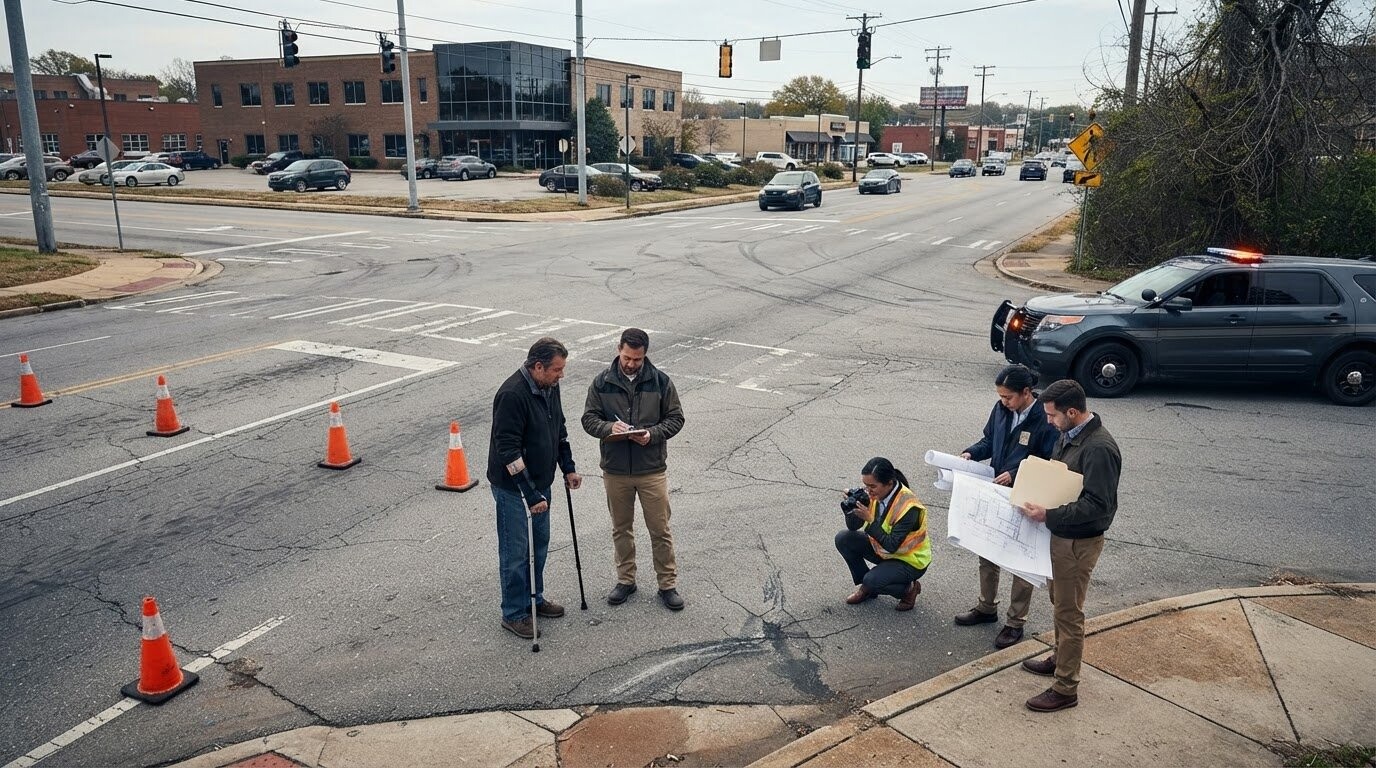
Suing the City for Poor Road Design: What Injured People Should Know
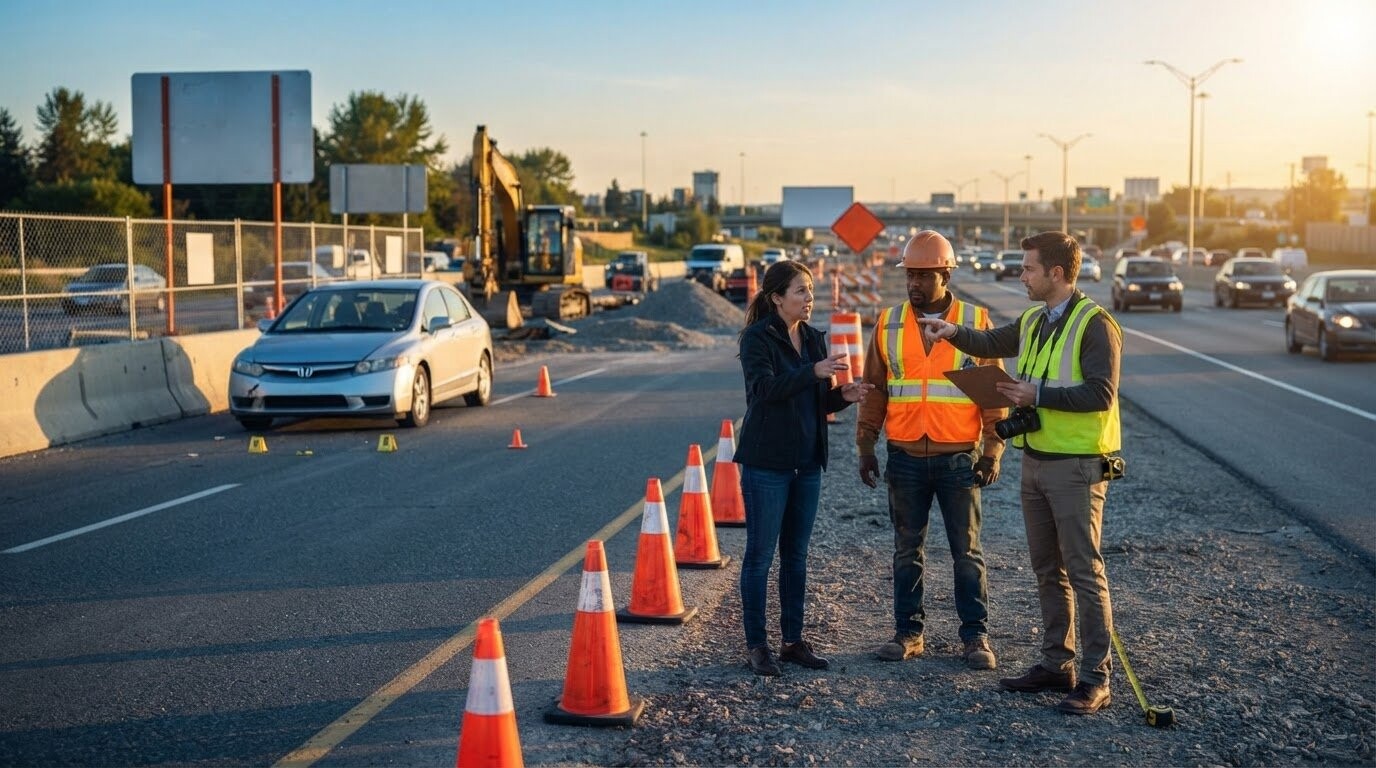
Who Is Liable for Accidents in a Construction Zone?
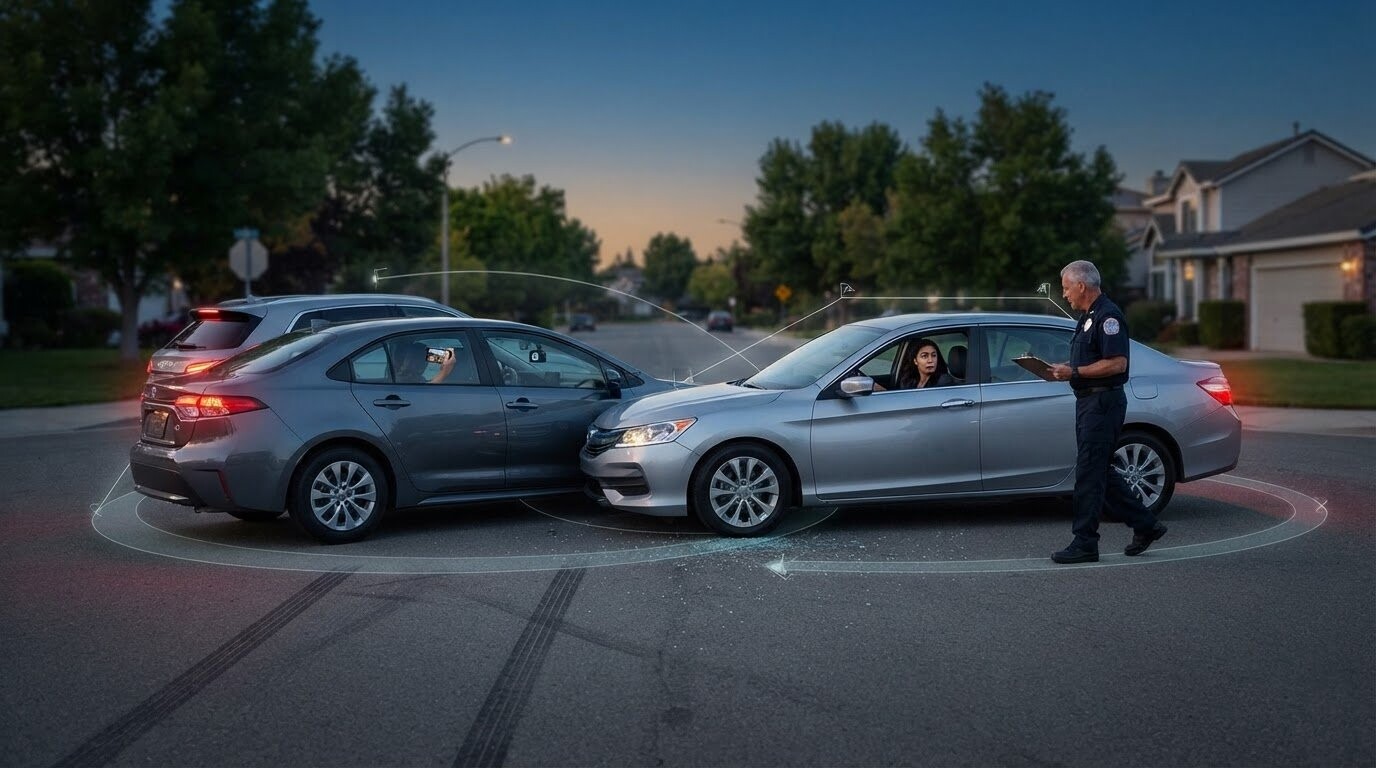
Sudden Emergency Doctrine: A Guide for Accident Victims
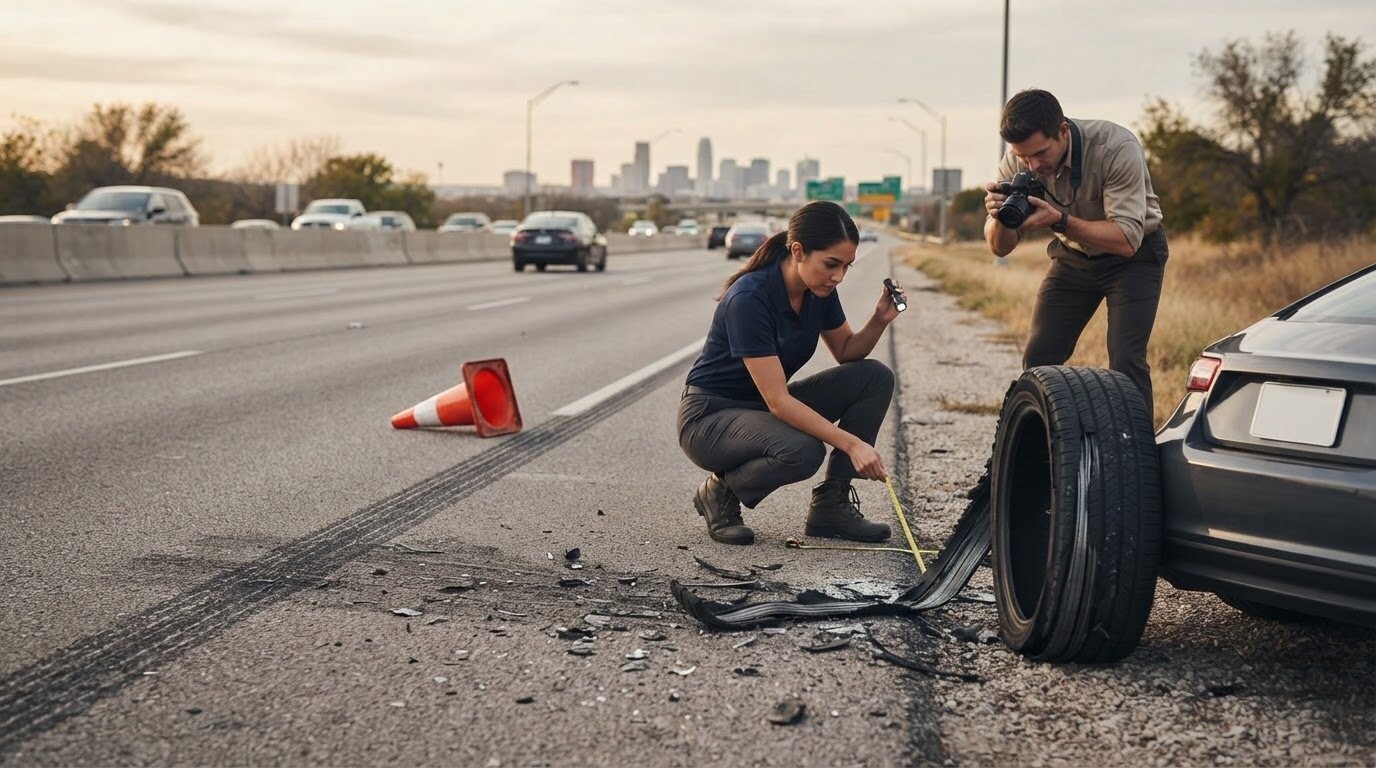
Tire Blowout Liability: A Guide to Fault and Claims
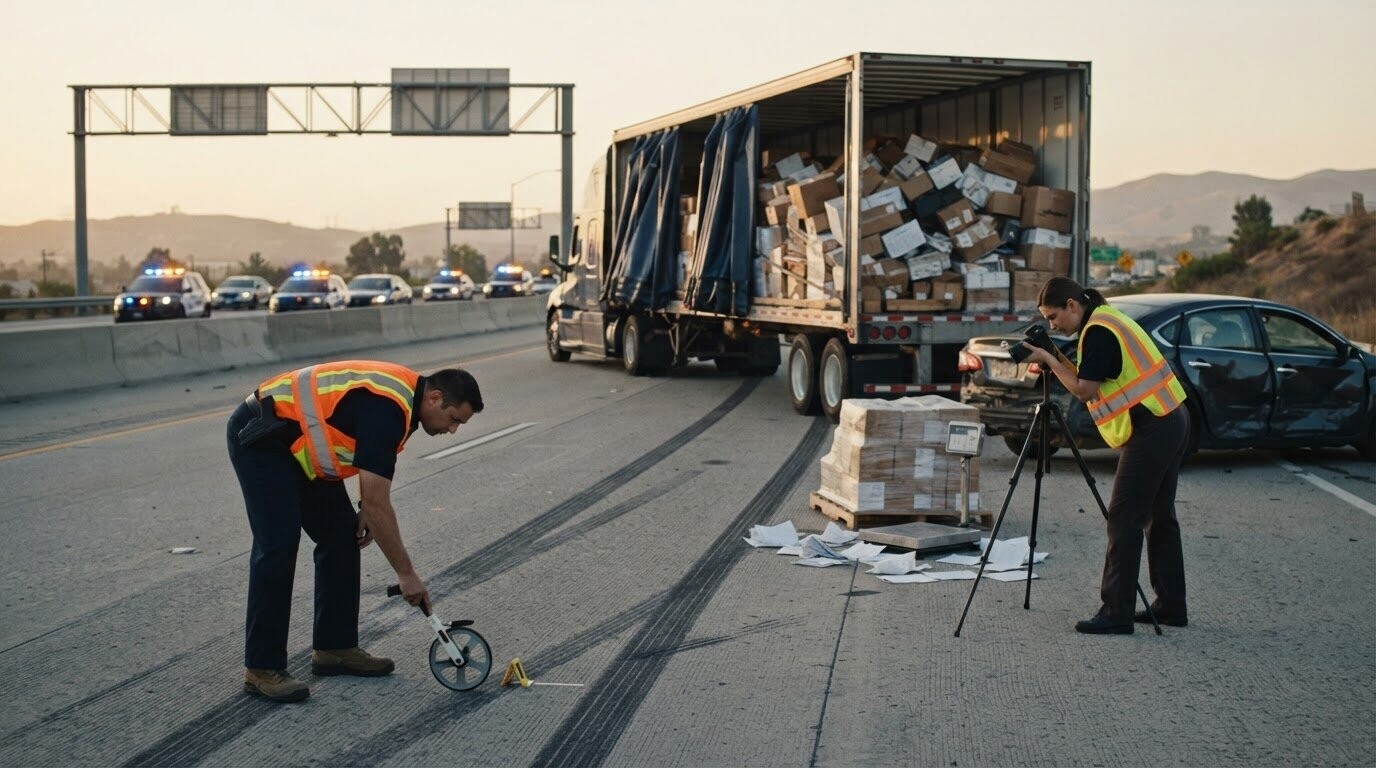
Overloaded Truck Accident Lawsuit: Who May Be Liable and What Evidence Matters
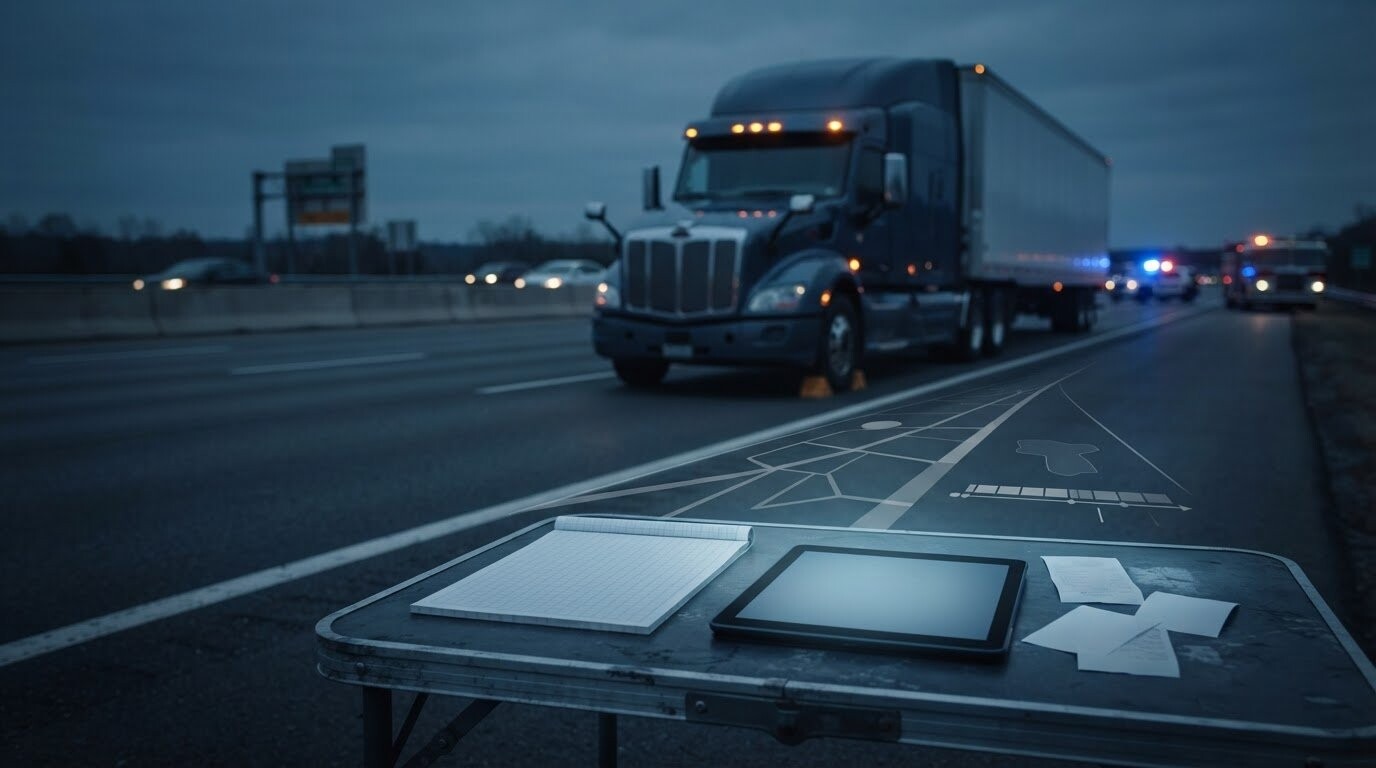
Log Book Falsification in Truck Accidents: What Injured People Should Know
“Oberg Law Office represented me in a personal injury case due to a car wreck. Oberg, himself, made a point to keep me up to date and educated on how the process would go, from day one. He was ve(...)
Katrina C.
“Mr. Oberg & his team at Oberg Law Office were AMAZING!! Very patient, made sure I understood everything, & answered all of my questions even when I called back to back to back lol. They never ma(...)
Miranda B.
“Attorney Oberg's honestly is what stood out to me, I went to see him about a car accident and rather than abuse the situation, he acknowledged it would be better if I handled the claim myself. F(...)
Gidget H.
“Oberg was great handling my case. I originally used another lawyer that after months never requested my medical records or anything else and told me that I would be lucky to get 1200.out of my s(...)
Janice C.
Client Success Stories
With over 38 years of experience helping injured Texans achieve fair compensation for their injuries, we have accumulated a lot of satisfied clients. Here are some of their stories….
Request Your Free Strategy Session
Contact Us Today
"*" indicates required fields