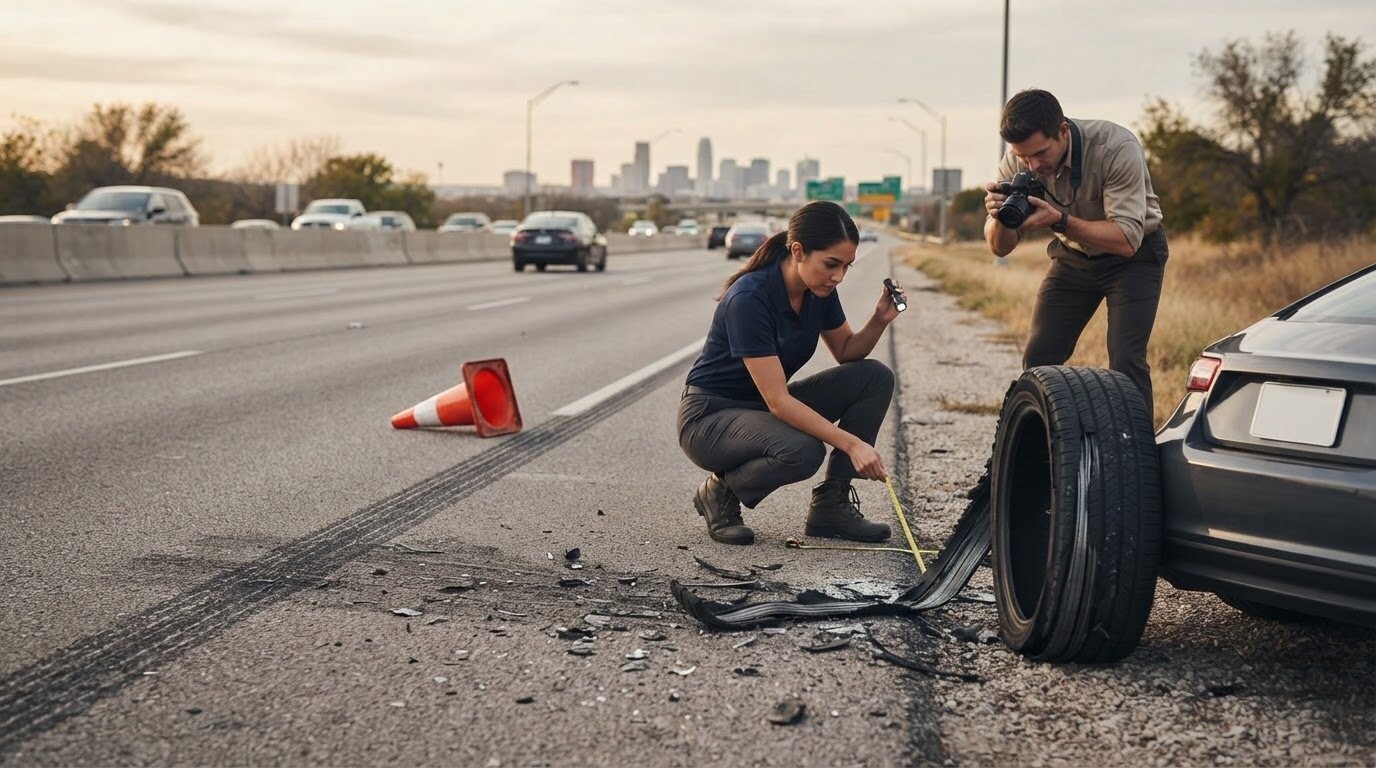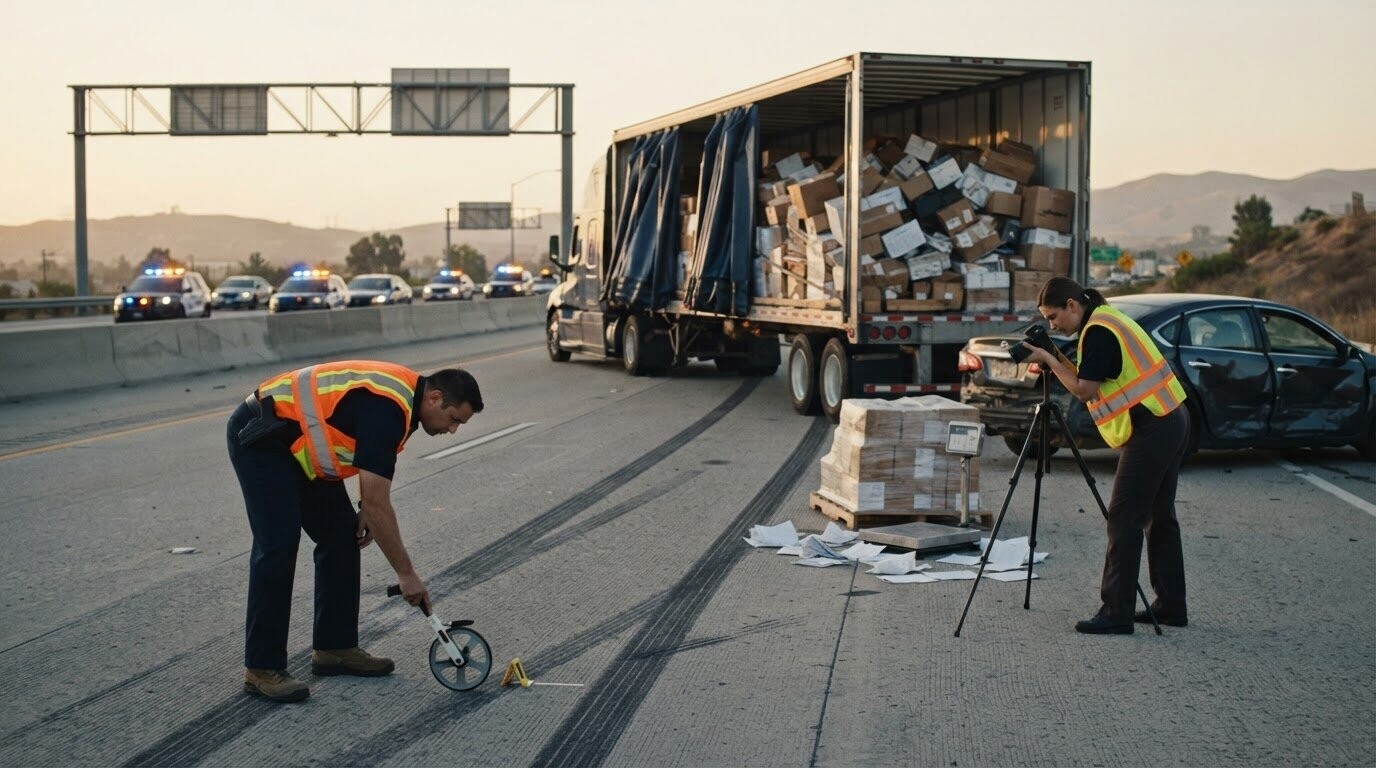
A tire blowout tells you what happened, not who caused it. If you’re asking who is liable for a tire blowout accident, the answer depends on why the tire failed. Responsibility may rest with the driver, a tire manufacturer, a repair shop, a trucking company, or another party. You shouldn’t have to guess or assume the crash will automatically be blamed on you.
After a collision, it’s natural to focus on injuries, vehicle damage, and calls from insurers. Gathering evidence can feel like one more burden, but the tire’s condition, maintenance records, repair history, and crash details may help show what led to the failure. When several causes are possible, an investigation may be needed to connect the evidence to the crash.
This guide explains who may be responsible, what evidence can help establish why a tire blew out, and what practical steps to take next. You’ll also learn why preserving the tire and related records matters, and why deadlines vary by state. The goal is to help you protect your health and understand your options without jumping to conclusions.
Key Takeaways
- Who is liable for a tire blowout accident depends on what caused the tire to fail, not simply on who was driving.
- Drivers, tire manufacturers, repair shops, trucking companies, or a government entity may warrant investigation, but identifying a possible party does not prove fault.
- Compare clues such as tire damage, maintenance and repair records, and road conditions to help investigators assess competing explanations for the blowout.
- Put safety and medical care first after a crash. Document the scene and vehicle only when it’s safe to do so.
- A lawyer may help assess potential defendants, preserve evidence, and manage insurer communications while evaluating documented injury related losses.
Who Is Liable for a Tire Blowout Accident? Start With the Cause
A sudden tire blowout can be frightening, especially if it sends your vehicle out of control or causes a collision. But the tire’s failure alone doesn’t establish who is at fault. A blowout is an event to investigate, not automatic proof that the driver was careless or that the tire was defective.
In legal terms, liability means responsibility for harm under the law that applies to the case. Investigators and, if necessary, a court may consider what each party did, the tire’s condition, whether a particular action or defect caused the crash, and the rules in the jurisdiction where it happened. More than one party may share responsibility. Fault rules and potential claims vary by state, so there isn’t one answer for every accident.
Does a tire blowout automatically make the driver liable?
No. A blowout by itself doesn’t prove driver negligence, and it shouldn’t end the investigation. Relevant questions include what happened before the tire failed and how the vehicle was being used. Evidence of worn tread or improper inflation may raise maintenance questions, while signs of an impact or tire defect may point investigators in another direction. The facts matter, and the applicable rules differ by jurisdiction.
Why identifying the tire failure matters
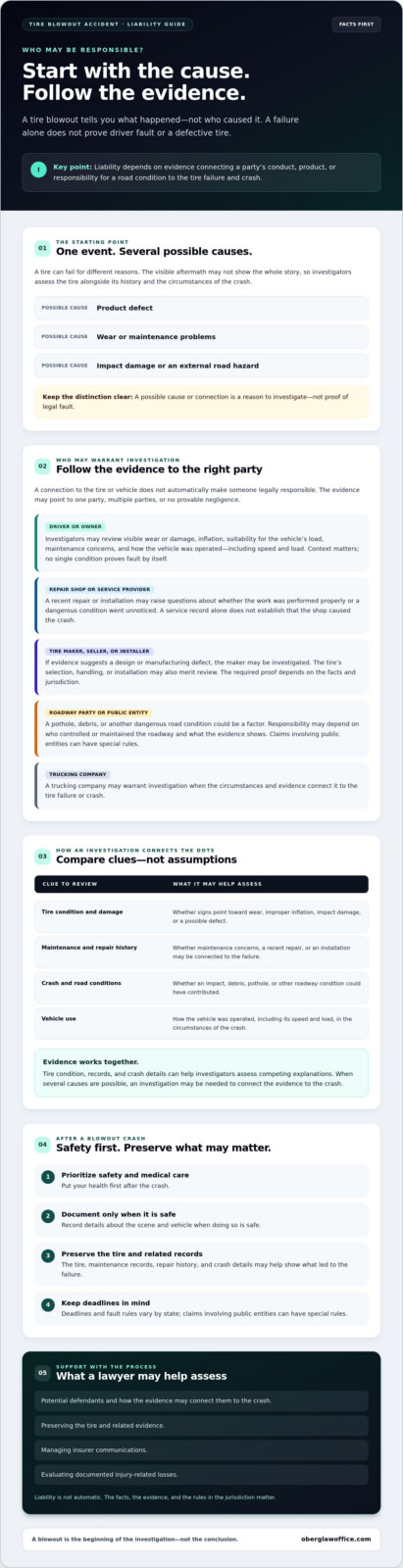
A tire can fail for different reasons, including a product defect, wear, impact damage, maintenance problems, or an external road hazard. Each possibility may lead investigators to examine a different person or business, such as a driver, manufacturer, repair shop, or party responsible for road maintenance. A possible connection is a reason to investigate, not proof of legal fault.
The general Tire blowout overview describes possible causes, including impact damage. That’s one reason the visible aftermath may not tell the whole story: the tire needs to be assessed alongside the circumstances of the crash.
Liability depends on evidence connecting a party’s conduct or product to the crash. Establishing that connection may involve examining the failed tire, maintenance or repair history, and the circumstances surrounding the collision. So, if you’re asking who is liable for a tire blowout accident, start with the cause rather than assuming fault based on who was behind the wheel or who made the tire.
Who May Be Responsible for a Tire Blowout Crash?
Several people or organizations may warrant investigation after a blowout, but being connected to the tire or vehicle doesn’t automatically make someone legally responsible. The key is whether reliable evidence links a party’s conduct, product, or responsibility for a road condition to the tire failure and resulting crash. The evidence may point to one party, multiple parties, or no provable negligence.
Use the tire’s history and the circumstances of the crash to guide the inquiry. For example, damage consistent with a road impact raises different questions from signs of a faulty repair or a possible manufacturing defect.
When driver, owner, or maintenance decisions may matter
A driver or vehicle owner may warrant review if the tire was visibly worn or damaged, improperly inflated, unsuitable for the vehicle’s load, or affected by maintenance concerns that went unaddressed. Investigators may consider whether the person knew, or reasonably should have known, about a safety issue, as well as how the vehicle was operated, including its speed and load. These details need context; no single condition proves fault by itself. The National Highway Traffic Safety Administration offers guidance on Tire safety and maintenance, including tire care and recalls.
A repair shop or other service provider may also warrant investigation if its work could be connected to the failure. For instance, records showing a recent repair or installation may help investigators ask whether the work was performed properly or whether a dangerous condition went unnoticed. A service record alone doesn’t establish that the shop caused the crash.
When a tire maker, seller, or road condition may matter
If evidence suggests a defect in the tire’s design or manufacture, the maker may be investigated under product liability rules. The proof required depends on the jurisdiction and the facts. A seller or installer may also merit review if the tire’s selection, handling, or installation is implicated. Investigators typically need more than the fact that a tire failed to connect a specific product or service to the crash.
A pothole, debris, or another dangerous road condition could also be a factor. Responsibility may depend on who controlled or maintained the roadway and what the evidence shows about the hazard. Claims involving public entities can have special rules and deadlines, so don’t assume the same process applies as in a claim against a private party.
So, who is liable for a tire blowout accident? The answer depends on the evidence and applicable law, not a preset list of defendants. If you’re sorting through a car or truck crash involving several possible causes, you can discuss crash-related legal options with a lawyer.
How Do Investigators Determine What Caused the Tire Blowout?
Investigators look for clues that distinguish among competing explanations, such as a tire defect, worn tread, impact damage, maintenance problems, or vehicle operating conditions. No single clue necessarily tells the whole story. The tire’s condition, records, and crash evidence should be considered together. This combined picture can help determine which causes merit further review and whether the evidence supports a claim.
Physical evidence can be altered, repaired, or discarded, so preserve it promptly when it’s safe. Don’t put yourself in traffic or handle a damaged tire if doing so could expose you to further danger. If the vehicle or tire is in someone else’s control, note its location and who has it. If possible, seek guidance before it’s moved or repaired.
What tire and vehicle evidence can help?
If it’s safe, keep the damaged tire and wheel intact. Don’t clean, repair, or discard them before getting guidance. Photograph tire markings and identification details, and keep purchase receipts, maintenance records, and repair invoices. A qualified professional may need to examine the physical condition; photos alone might not reveal what caused the failure.
Vehicle inspection findings and available event data may also help explain what happened before or during the crash. Qualified professionals should review these materials and interpret them in context. Ask before authorizing repairs or disposal that could change or remove relevant evidence.
How do records and crash documentation help?
Gather what you can without delaying medical care or risking your safety. Scene and vehicle photographs, witness names and contact details, incident records, and insurer communications may help establish the timeline and circumstances. Maintenance history can show what work was done and when. Keep copies together, and note where each item came from.
Use a comparison like this to organize questions for an investigator:
- Possible defect: What do the tire’s condition, identification details, and inspection findings show about a potential product problem?
- Wear or maintenance: What do tread condition, pressure information, service records, and repair history indicate?
- Impact or road hazard: Do photographs, scene details, or tire damage suggest contact with debris, a pothole, or another object?
- Operating conditions: What do vehicle records, witness accounts, or available event data indicate about loading and how the vehicle was being driven?
Check the National Highway Traffic Safety Administration (NHTSA) for current tire recalls or safety notices that may relate to the tire. A recall or prior repair is a lead, not automatic proof that it caused your crash. Carefully gathered evidence can help clarify who is liable for a tire blowout accident, but conclusions depend on the facts and applicable law.
What Should You Do After a Tire Blowout Accident?
A crash can leave you shaken, hurt, and unsure what to handle first. Start with safety, not evidence. Check for injuries and call emergency services when needed. Move yourself or your vehicle only if it’s safe to do so. Don’t step into traffic or approach a damaged vehicle to take photos if that could put you at greater risk.
Get medical care for injuries, even if they don’t seem serious at first. Follow the advice of your healthcare provider and keep records of treatment and related expenses. If you can, ask someone you trust to help with practical tasks while you focus on recovering.
What evidence should you preserve after the crash?
Once everyone is safe, document what you can without creating another hazard. If it’s safe and practical, keep the failed tire, wheel, and related parts in their post-crash condition. Don’t clean, repair, or discard them before seeking guidance. Save photographs of the scene and vehicle, purchase receipts, service and repair records, medical records, and the crash report when it becomes available.
Write down a timeline while your memory is fresh, including what you noticed before and after the tire failed. Record witness names and contact details if you can do so calmly and safely. Don’t confront other people involved. Avoid guessing about the cause or admitting fault at the scene. You can provide factual information without speculating about what happened.
When should you get legal guidance?
Consider speaking with a lawyer if you’ve suffered serious injuries, fault is disputed, or evidence suggests a possible tire defect or commercial vehicle involvement. The right next steps can depend on who may be responsible and what evidence still needs to be preserved. Deadlines and notice requirements vary by jurisdiction, so don’t rely on a single nationwide filing deadline.
Notify your insurer as required by your policy, and keep copies of communications, forms, and claim records. Before signing a settlement release, make sure you understand what claims it covers and what rights you may be giving up. If you’re unsure, ask for advice before signing.
If you’re weighing who is liable for a tire blowout accident, an initial strategy session can provide a place to discuss the facts and possible next steps. You can request a free initial strategy session with Oberg Law Office.
How Can a Tire Blowout Injury Lawyer Help Assess Liability?
After a crash, you may be dealing with injuries, vehicle damage, and questions from insurers while trying to understand what happened. A lawyer can help organize the available evidence, assess which parties may warrant investigation, and identify what remains unknown. Depending on the facts, that may include preserving the failed tire, reviewing repair and maintenance records, or coordinating an examination by qualified professionals.
Legal counsel may also handle communications with insurers and evaluate documented injury related losses, such as medical care and time away from work. This can help you respond with a clearer understanding of the claim. But hiring a lawyer can’t guarantee a particular liability finding, settlement, or recovery. The outcome depends on the evidence and applicable law.
What to ask before choosing a lawyer
Ask who will handle your case, how you’ll receive updates, and what investigation may be appropriate. Find out how the firm’s fees and case expenses work, and review the written fee agreement carefully before signing. Oberg Law Office describes its injury representation as contingency based, with no upfront legal fees. Fees are collected as a percentage of the final settlement or court ordered compensation. Ask how those terms apply to your case, and make sure your questions are answered.
What a first strategy session can clarify
A discussion can help you identify unanswered questions, consider practical next steps, and understand whether further investigation may be useful. If you have them, bring crash records, tire or repair information, insurance communications, and medical documentation. Don’t delay urgent care to collect paperwork; you can provide additional records later.
If you’re still asking who is liable for a tire blowout accident, a calm conversation can help you understand the options without committing to a particular outcome. Request a free initial strategy session with Oberg Law Office to discuss your circumstances and questions.
Take the Next Step Toward Understanding Your Options
A tire blowout doesn’t, by itself, establish who caused a crash. To understand who is liable for a tire blowout accident, investigators may need to connect evidence about the tire, vehicle, maintenance, road conditions, and events leading up to the collision. Preserving relevant records and parts when it’s safe can help clarify which parties, if any, may be responsible.
If you were injured, your priority is your health. You don’t have to sort through every unanswered question alone. A lawyer can review available evidence, discuss potential claims, and help you understand applicable deadlines without promising a particular outcome.
Oberg Law Office represents people injured in car and truck accidents and offers free initial strategy sessions to discuss their circumstances and possible next steps. The firm’s personal injury representation is contingency based, with no upfront legal fees. Fees are collected as a percentage of the final settlement or court ordered compensation. Review the written fee agreement and ask how its terms apply to your case. Discuss your situation in a free initial strategy session.
Taking one informed step at a time can help you move forward with greater clarity and confidence.
Frequently Asked Questions
Is a driver automatically liable when a tire blows out?
No. A blowout alone doesn’t prove that the driver acted negligently. If you’re asking who is liable for a tire blowout accident, investigators may examine the tire’s condition, maintenance and pressure, vehicle loading, driving circumstances, and other evidence. The cause might point to a driver, owner, repair provider, manufacturer, or road condition, or to more than one factor. Liability depends on the evidence and the law that applies to the claim.
Can a tire manufacturer be liable for a blowout accident?
A manufacturer may be investigated if evidence suggests a tire defect contributed to the failure and crash. A blowout by itself doesn’t prove the tire was defective. The tire’s condition and identification details, purchase and maintenance history, and an inspection by qualified professionals may help assess the issue. Product liability rules and proof requirements differ by jurisdiction, so any potential claim should be evaluated based on the specific evidence and applicable law.
Can a mechanic or tire shop be responsible for a blowout?
A repair shop or installer may warrant investigation if its work, advice, or handling could have contributed to the failure. Invoices, service notes, inspection findings, and the tire’s condition may help clarify what was done and whether it relates to the crash. A recent service visit alone doesn’t establish responsibility. The connection between the shop’s work, the tire failure, and the resulting collision must be assessed under the law that applies.
What evidence should I keep after a tire blowout accident?
Prioritize safety and medical care before collecting evidence. If it’s safe, preserve the damaged tire and wheel without cleaning, repairing, or discarding them. Keep photographs, tire identification details, purchase receipts, maintenance records, repair invoices, witness contact information, crash documents, and insurer communications. These materials may help qualified investigators assess what happened. Don’t delay urgent treatment or put yourself near traffic or unstable vehicle parts to gather evidence.
What happens if a pothole or road hazard caused the tire blowout?
A pothole or other road hazard may be a factor, but finding a hazard doesn’t automatically establish a valid claim against a public entity or another party. Investigators may consider the hazard’s condition, available photographs or reports, and whether it caused the tire failure and crash. Claims involving public entities can have special notice rules and deadlines, which vary by jurisdiction. Preserve relevant information when safe and seek advice promptly if you were injured.
Can more than one party be liable for a tire blowout crash?
Yes. The evidence may raise questions about multiple parties, such as a vehicle owner, maintenance provider, or tire manufacturer. It may also show that a suspected factor didn’t cause the crash, or that there isn’t enough evidence to establish anyone’s liability. Identifying a party for investigation isn’t the same as proving legal responsibility. How fault is established or allocated depends on the facts and the laws of the jurisdiction.
Should I talk to the insurance company before knowing why the tire blew out?
You may need to notify your insurer under your policy, but you don’t have to guess about the cause or treat an insurer’s explanation as proven fact. Keep communications and provide accurate information. Before signing a release or accepting a settlement, understand which claims it resolves and whether your injuries and losses are fully known. If the claim involves serious injuries or disputed fault, consider getting independent legal guidance before making decisions.