
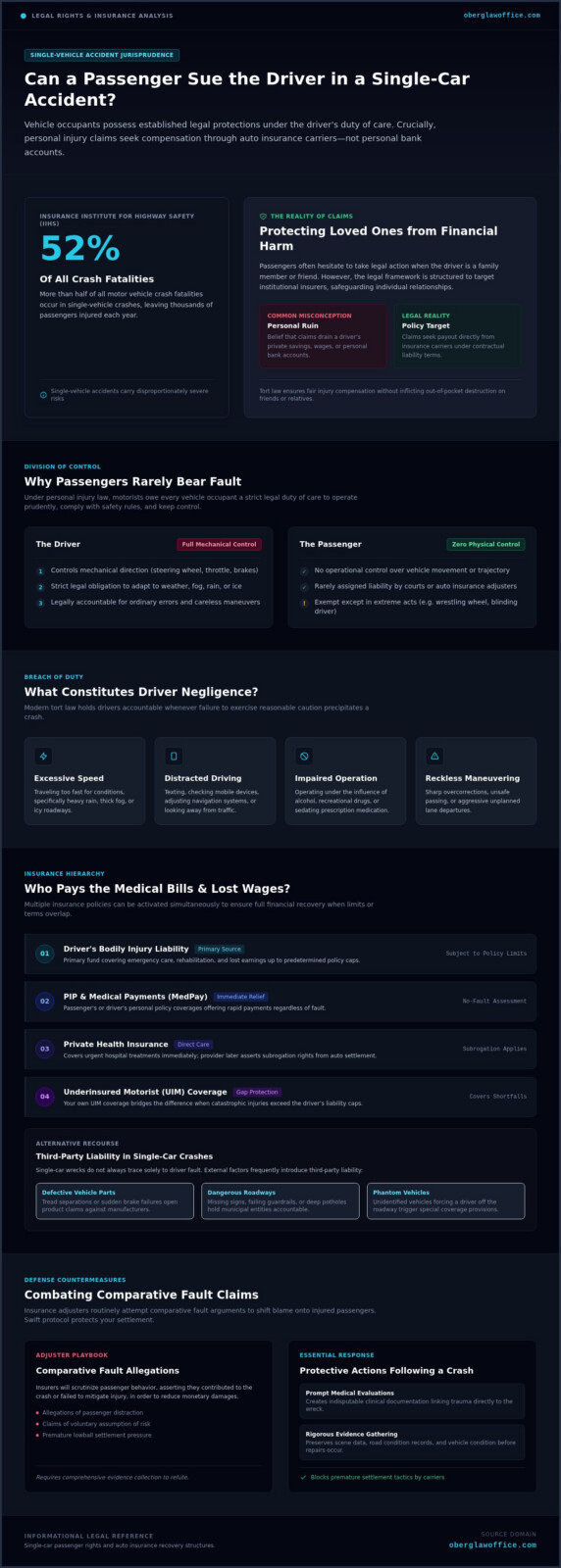
According to the Insurance Institute for Highway Safety, 52% of all motor vehicle crash fatalities occur in single-vehicle crashes. When you find yourself injured in the passenger seat, you are likely wondering: can a passenger sue the driver in a single-car accident? The short answer is yes, but the legal reality is far less adversarial than most people assume.
You might feel overwhelming guilt about taking legal action, especially if the person behind the wheel was a trusted friend or family member. Watching hospital bills mount while missing work creates immense stress, yet you hesitate because you don’t want to drain a loved one’s savings. That concern is completely understandable. However, personal injury claims target auto insurance carriers rather than personal bank accounts. In this guide, you’ll discover your legal rights under auto insurance policies, what evidence is needed to prove passenger negligence, and how to recover fair compensation without causing financial ruin for your driver.
Key Takeaways
- While many people ask whether can a passenger sue the driver in a single-car accident, established personal injury law protects vehicle occupants through the driver’s legal duty of care.
- Passenger injury claims seek compensation from auto insurance policies rather than personal bank accounts, shielding friends and family members from out-of-pocket financial harm.
- Several insurance avenues, including bodily injury liability, Personal Injury Protection, and Medical Payments coverage, can work together to handle your medical expenses and lost wages.
- Insurance companies routinely employ comparative fault arguments to shift blame onto injured passengers, which makes thorough evidence collection essential to protect your claim.
- Prompt medical evaluations create the necessary documentation to prove crash-related trauma while safeguarding your rights against premature settlement pressure.
Understanding Passenger Rights in a Single-Car Accident
When a vehicle leaves the roadway, rolls over, or collides with a guardrail or ditch, the physical aftermath is immediate and devastating. If you were sitting in the passenger seat, you had zero control over the outcome. Under established personal injury law, motorists owe every occupant in their vehicle a strict legal duty of care. This duty requires the driver to operate the car prudently, follow traffic laws, and maintain control at all times. So, can a passenger sue the driver in a single-car accident? In almost every circumstance, yes. You possess the legal right to seek compensation when a driver’s careless actions cause your injuries.
What Constitutes Driver Negligence in Single-Vehicle Crashes?
Driver negligence occurs when a motorist fails to exercise reasonable caution behind the wheel. In single-vehicle wrecks, this breach of duty often stems from several clear behaviors:
- Excessive speed: Traveling too fast for conditions, especially during heavy rain, fog, or icy road conditions.
- Distracted driving: Texting, adjusting navigation devices, checking a phone, or taking eyes off the roadway.
- Impaired operation: Driving under the influence of alcohol, recreational drugs, or sedating prescription medications.
- Reckless maneuvering: Sharp overcorrections, unsafe passing, or aggressive lane departures.
While early tort laws like automobile guest statutes once restricted guests from bringing claims against drivers for ordinary mistakes, modern legal frameworks hold negligent operators accountable for the harm they cause.
Why Passengers Rarely Bear Legal Responsibility
The law draws a sharp line between operating a vehicle and simply riding inside it. As a passenger, you don’t control the steering wheel, press the gas pedal, or manage the brakes. Because you lack mechanical vehicle control, insurance adjusters and courts rarely assign liability to you for a wreck.
If you’re asking, can a passenger sue the driver in a single-car accident when they were just riding along, the answer is grounded in this division of control. Absent extreme circumstances, such as physically wrestling the steering wheel or intentionally blinding the driver, passengers bear zero legal responsibility for a single-car wreck.
Who Pays Your Medical Bills? Insurance Coverage and Liability Options
Hospital visits and rehabilitation create immediate financial pressure. When exploring whether can a passenger sue the driver in a single-car accident, the conversation quickly turns to insurance priority. Multiple policies often step in to cover your losses, providing layers of financial protection. In these scenarios, third-party liability exists whenever an external defect, unmaintained road hazard, or phantom driver directly triggers the collision.
The Driver’s Bodily Injury Liability Coverage
The primary source of financial recovery is usually the at-fault driver’s bodily injury liability policy. This coverage pays for your emergency room care, physical therapy, and lost earnings. However, policies carry predetermined caps. If your injuries are catastrophic, basic policy limits might fall short, requiring you to explore secondary insurance layers to cover the remaining balance.
Using Your Own Auto and Health Insurance Policies
You can also turn to your own auto and medical policies for financial relief:
- Personal Injury Protection (PIP) & MedPay: These coverages provide immediate payments for crash-related medical bills regardless of who caused the wreck.
- Private Health Insurance: Your health plan covers urgent hospital treatments, though the provider will generally assert a subrogation claim to seek reimbursement from your final auto settlement.
- Underinsured Motorist (UIM) Coverage: If the driver’s liability limits cannot fully cover your losses, your own UIM coverage bridges the gap.
Third-Party Liability: Defective Parts and Dangerous Roadways
Single-car wrecks don’t always stem solely from driver error. Faulty vehicle parts, such as tread separations or sudden brake failures, allow you to file product liability claims against auto manufacturers. In other cases, missing warning signs, failing guardrails, or deep potholes make municipal road maintenance agencies liable. Even “phantom vehicle” wrecks, where an unidentified car cuts off your driver and flees, can open up uninsured motorist claims.
Insurance companies often raise defenses under the doctrine of comparative negligence to minimize their financial exposure. Securing experienced car accident representation helps ensure that every applicable policy is identified, investigated, and pursued on your behalf.
Suing a Friend or Family Member: The Reality Behind Passenger Claims
Hesitation is natural when the person behind the wheel is someone you love. You might wonder, can a passenger sue the driver in a single-car accident without ruining a friendship or creating a family rift? The key is understanding that you aren’t asking your loved one to write a personal check. Drivers pay costly monthly premiums specifically so that their auto insurance company steps in to protect everyone inside the car if a crash happens. Clear, compassionate communication helps your loved one understand that this process allows an insurance company to honor its contractual obligations, shielding both of you from medical debt.
Dissecting the Legal Process: Policy Limits vs. Personal Assets
The vast majority of passenger injury cases settle entirely within the driver’s insurance policy limits. When an injury claim is filed, the insurance carrier takes over the legal defense, assigning and paying for an attorney to represent the policyholder. Personal bank accounts, family homes, and future wages remain untouched. Understanding basic auto insurance coverage types makes it clear that the insurer, not your relative, handles negotiations, claim evaluations, and financial payouts.
Family Member Exclusions and Household Coverage Rules
Complications can arise if you share a physical address with the person who was driving. Some auto policies include specific provisions that alter coverage:
- Household Exclusions: Certain policies attempt to exclude bodily injury liability payouts if the injured passenger resides in the same home as the policyholder.
- Step-Down Provisions: Other contracts reduce the available liability coverage down to the state statutory minimum if a resident relative files a claim.
- Alternate Coverage Routes: When household limits apply, you can often turn to medical payments coverage, separate personal policies, or underinsured motorist provisions to secure your recovery.
These policy restrictions exist to prevent fraudulent claims, but they can create real confusion for injured relatives. Reviewing policy declarations alongside experienced legal counsel ensures you identify every valid avenue for financial relief. When addressing whether can a passenger sue the driver in a single-car accident under these specific household conditions, the contract language dictates the best path forward.
Comparative Fault and Defenses Insurance Companies Use Against Passengers
Insurance companies protect their bottom line above all else. Even though you were purely a rider, claims adjusters often search for ways to shift blame onto you. Under comparative negligence laws, any percentage of fault assigned to your actions directly reduces your financial payout. In states with strict fault thresholds, being assigned even a portion of the blame can bar recovery entirely. Adjusters will also scrutinize your medical gaps to claim your injuries were pre-existing or exaggerated. Following all medical advice and attending every follow-up visit stops these bad-faith tactics in their tracks.
Assumption of Risk: Entering a Vehicle with an Impaired Driver
If substance use caused the crash, the driver’s insurer will likely claim you assumed the risk by entering the vehicle. They will argue that you knowingly accepted the danger of riding with an intoxicated motorist. Overcoming this defense requires proving you had no reasonable way of recognizing the driver’s impairment. Witness statements, restaurant receipts, and timeline evidence help demonstrate that the driver showed no visible signs of intoxication when you accepted the ride.
The Seatbelt Defense and Allegations of Passenger Distraction
Insurers frequently look inside the cabin to manufacture passenger negligence:
- The Seatbelt Defense: Adjusters may argue that failing to buckle up worsened your injuries, attempting to slash your medical damages based on failure to mitigate harm.
- Passenger Distraction Claims: An insurer might allege that you showed the driver a phone, adjusted the radio abruptly, or obstructed the rearview mirror right before the impact.
Disproving these assertions requires objective evidence. Vehicle event data recorders, cabin inspections, and cell phone records demonstrate that you were simply seated quietly when the wreck happened. Can a passenger sue the driver in a single-car accident when an insurance company pushes back with these strategies? Absolutely, but you must counter their claims with hard physical proof.
If an insurer is attempting to pin the blame on you, reach out to Oberg Law Office for aggressive car accident representation to safeguard your rights with zero upfront legal fees.
Steps to Take Following a Single-Car Crash as an Injured Passenger
The chaotic moments following a wreck can leave you disoriented, but the choices you make immediately afterward directly shape your physical and legal recovery. If you are questioning whether can a passenger sue the driver in a single-car accident, building a solid foundation begins right at the scene. Taking methodical steps ensures your physical well-being remains the priority while protecting your legal rights against aggressive insurance practices.
Documenting Medical Treatment and Protecting Your Well-Being
Adrenaline often masks serious trauma like concussions, traumatic brain injuries, and internal organ damage. Seek an immediate medical evaluation at an emergency room or urgent care center, even if you feel uninjured. Prompt examinations establish a verified medical timeline linking your symptoms directly to the crash. Follow every doctor’s order, attend physical therapy appointments, and avoid treatment gaps that adjusters love to exploit.
Gathering Crash Evidence and Avoiding Recorded Statements
Evidence disappears rapidly once tow trucks clear the roadway. Safeguard key proof by taking specific actions:
- Secure official records: Request a copy of the formal police collision report as soon as it becomes available.
- Document the scene: Photograph vehicle resting positions, skid marks, road conditions, deploying airbags, and all visible physical injuries.
- Preserve vehicle data: Modern cars store event data recorder (EDR) information detailing vehicle speed, braking, and steering inputs right before impact.
- Decline recorded statements: Politely refuse to give recorded interviews to the driver’s insurance adjuster without an attorney present. Adjusters craft questions designed to elicit statements they can twist into passenger fault.
How Contingency Legal Representation Levels the Playing Field
Facing corporate claims adjusters alone places you at an immediate disadvantage. Operating on a contingency-fee basis means you pay zero upfront legal fees, aligning your advocate’s incentives directly with your restoration. With over 25 years of legal experience, attorney Gregg Oberg provides direct, client-first advocacy to handle stubborn insurers while you focus on healing. If you are wondering how can a passenger sue the driver in a single-car accident while preserving personal relationships, Oberg Law Office delivers the compassionate guidance and tenacious car accident representation needed to secure the full financial recovery you deserve.
Protect Your Health and Future After a Single-Car Collision
Physical injuries, mounting hospital debt, and lost wages place a heavy burden on your shoulders after a wreck. Still wondering, can a passenger sue the driver in a single-car accident without damaging an important relationship? Remember that your claim focuses on corporate insurance policies designed for this exact circumstance, shielding your loved ones from personal financial loss.
You don’t have to face corporate insurance adjusters or confusing policy exclusions on your own. Attorney Gregg Oberg brings over 25 years of courtroom and negotiation experience, providing compassionate advocacy while confronting stubborn insurers directly. Our firm operates on a contingency-fee structure, which means you pay zero upfront legal fees unless financial compensation is recovered on your behalf.
Take control of your physical and financial restoration today. Schedule a free, confidential consultation with Oberg Law Office to discuss your rights and take the first step toward lasting peace of mind.
Frequently Asked Questions
Can I still sue the driver if I was not wearing a seatbelt during the single-car crash?
Yes, you can still pursue a claim, although not wearing a seatbelt may affect your final payout. In states that permit the seatbelt defense, the driver’s insurer will argue that unbuckled travel worsened your physical trauma. This comparative fault argument can reduce compensation for specific injuries caused by the lack of restraint, but it doesn’t eliminate the driver’s underlying responsibility for causing the wreck.
What happens if the driver in the single-vehicle accident is an immediate family member?
You can still seek financial recovery, but the driver’s auto insurance policy terms dictate how your claim proceeds. If you live in separate residences, bodily injury liability coverage applies normally. When living under the same roof, resident relative exclusions or step-down provisions may limit liability payouts. An attorney helps uncover alternate avenues, such as MedPay or underinsured motorist benefits, resolving medical debts without targeting family savings.
Will filing an injury claim cause my friend to lose their driver’s license or go to jail?
No, filing an insurance claim or civil lawsuit will not send your friend to jail or automatically revoke their driver’s license. Civil claims remain completely separate from traffic citations or criminal court. When asking whether can a passenger sue the driver in a single-car accident, understand that you are pursuing financial recovery through an insurance company. The claim is a financial negotiation handled directly by civil attorneys and insurance adjusters.
What compensation can an injured passenger recover after a single-car accident?
Injured passengers can recover both economic and non-economic damages caused by the collision. Economic damages cover emergency room treatment, surgery, physical therapy, prescription medication, and lost wages from missed work. If your trauma impacts future employment, you can pursue diminished earning capacity. Non-economic damages compensate you for physical pain, emotional distress, and reduced quality of life, ensuring your overall recovery addresses the full impact of the wreck.
Can I file an injury claim if I was a passenger in an Uber, Lyft, or taxi single-car wreck?
Yes, rideshare and taxi passengers enjoy substantial insurance coverage when a single-vehicle crash occurs during an active trip. Commercial rideshare services carry third-party liability policies that activate once a driver accepts a ride request. These corporate policies provide robust bodily injury limits to protect paying occupants. If your driver strikes a barrier or loses control, the commercial carrier acts as the primary payer for your medical bills and recovery.
How long do I have to file a personal injury lawsuit as a passenger after an accident?
Your deadline depends on your state’s personal injury statute of limitations, which generally ranges between one and three years from the date of the crash. Missing this strict legal filing deadline permanently bars your ability to recover compensation. If a road defect contributed to the wreck and requires action against a government entity, administrative notice deadlines can be as short as a few months, making prompt action vital.
What if the driver claims the single-car crash was caused by bad weather or an animal on the road?
Drivers still owe occupants a legal duty to adjust their speed and vehicle handling for adverse weather and unexpected roadway obstacles. Motorists must anticipate slick pavement, low visibility, and wildlife hazards. When evaluating whether can a passenger sue the driver in a single-car accident involving sudden hazards, investigation often reveals that traveling too fast for conditions or overcorrecting the steering wheel actually caused the crash.