
Imagine you’re at your kitchen table in Mesquite, just three days after a crash on I-635, when a friendly adjuster calls and asks how you’re doing. You naturally say, “I’m doing okay,” but that one polite phrase can be used to argue your injuries aren’t severe. It’s vital to know what not to say to an insurance adjuster during these early conversations, as a single slip can jeopardize your entire personal injury claim. It’s exhausting to feel like you have to watch every word while you’re still processing the pain and stress of an accident.
You deserve to focus on your recovery without worrying about being tricked by a voice that seems neighborly but is actually looking for ways to save their company money. We’re here to give you the confidence to handle these calls throughout 2026. This guide reveals the specific phrases that can ruin your settlement so you can protect your rights and secure the compensation your family needs. We’ll walk through the conversational traps to avoid, provide a script for that first stressful phone call, and explain the hidden motives behind the questions adjusters ask.
Key Takeaways
- Understand the hidden motives behind early insurance calls and why the adjuster’s priority is their bottom line, not your well-being.
- Identify specific conversational traps and learn what not to say to an insurance adjuster to protect your right to full compensation.
- Learn the legal reality of recorded statements and how to avoid providing evidence that could be used to undermine your testimony later.
- Implement a simple communication protocol that limits your interaction to basic facts, keeping your claim secure while you recover.
- See how a compassionate attorney acts as your shield, handling all adjuster negotiations so you can focus on getting your life back on track.
The Hidden Agenda: Why Insurance Adjusters Call You Early
You just returned home to Mesquite after a collision, and the phone is already ringing. It’s a friendly voice from the insurance company asking how you’re feeling. This isn’t just a courtesy call; it’s a calculated tactic. In 2026, insurance carriers use predictive modeling to identify high-exposure claims within 24 hours of an incident. They want to reach you before you’ve seen a specialist or spoken to a local advocate. Understanding the Role of an Insurance Adjuster is essential for your protection. They don’t work for your recovery. They work to protect the company’s surplus. This early interaction is often a data-mining mission where small, casual details are fed into AI settlement software to lower your potential payout.
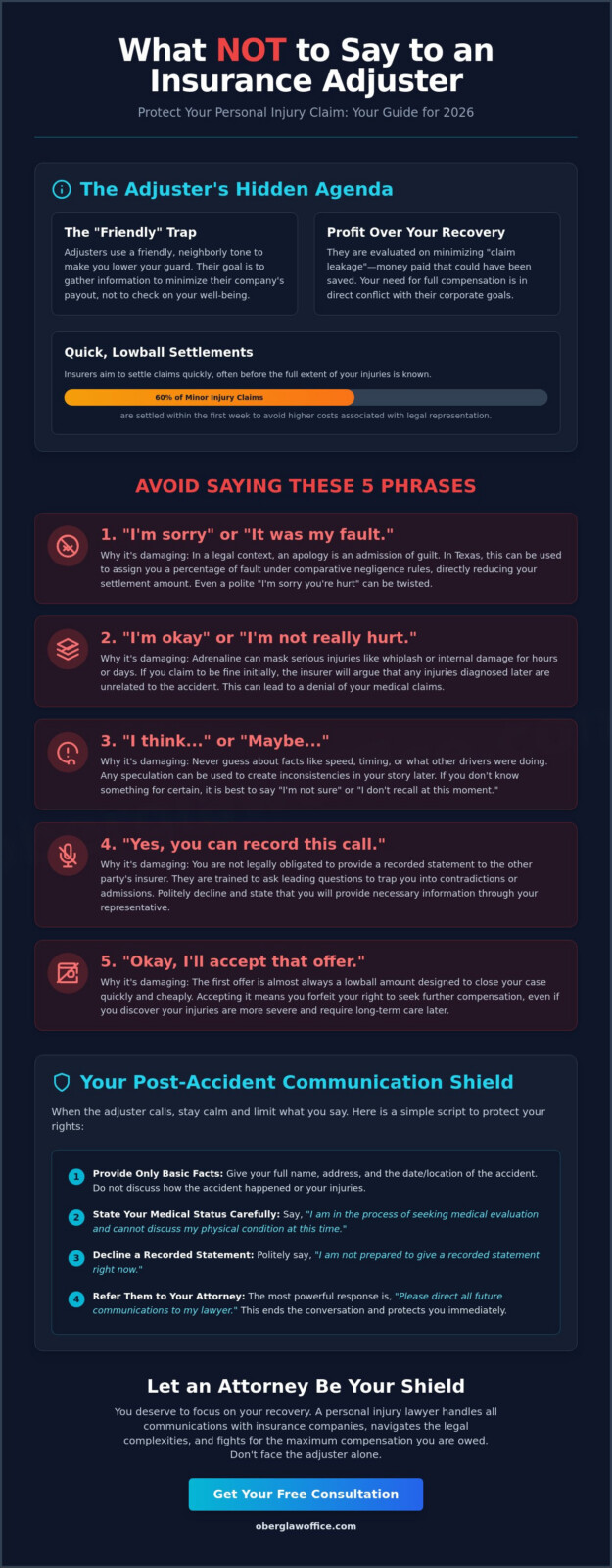
The “Friendly Trap” is a common tool in the adjuster’s kit. By using a neighborly tone and expressing empathy, they encourage you to lower your defenses. You might feel like you’re just chatting with a helpful guide, but they’re documenting every word. If you mention you’re “doing okay” or “feeling better,” those phrases are logged as evidence that your injuries aren’t serious. Knowing what not to say to an insurance adjuster during these initial moments is the first step in securing the justice you deserve.
The Profit Motive vs. Your Recovery
Adjusters are evaluated on a metric called “claim leakage.” This refers to any money paid out that the company could have saved through aggressive negotiation or quick closures. According to industry data from 2024, insurers aim to settle 60% of minor injury claims within the first week to avoid the higher costs associated with legal representation. A quick check might seem like a relief when bills are piling up, but it’s almost always a lowball offer. These offers are designed to close your file permanently before you realize your neck pain is actually a long-term disc injury. Your need for full medical compensation stands in direct opposition to their corporate goal of maximizing quarterly profits.
Understanding Urgency Bias
Adjusters often use a “now or never” tone to create a false sense of pressure. They might claim that an offer is only valid for 48 hours or that they can’t process the claim without a recorded statement right now. These are myths. You have no legal requirement to give an immediate recorded statement while you’re still in pain or potentially on medication. Taking a breath period allows you to understand the full extent of your physical and emotional trauma. We believe in a collaborative partnership where you have the time to heal before making life-altering legal decisions. Taking a few days to consult with a professional ensures you don’t fall victim to a manufactured deadline.
- The 24-Hour Rule: Insurers try to contact you within one day to catch you before you seek legal advice.
- Software Scoring: In 2026, adjusters use tools like ClaimIQ to assign a “value score” based on your initial comments.
- No Legal Obligation: You can politely decline to discuss the accident until you are ready.
The 5 Most Damaging Things You Can Say After an Accident
You might think you’re just being polite. In the wake of a crash on I-635 or a local Mesquite street, emotions run high and adrenaline surges. However, your words are legal evidence. Knowing what not to say to an insurance adjuster is the difference between a fair recovery and a denied claim. Adjusters are trained to listen for specific phrases that shift liability away from their company and onto you.
Why Apologies are Lethal to Your Claim
In a social setting, saying “I’m sorry” shows kindness. In a legal setting, it’s a confession. Texas follows a modified comparative negligence rule under Civil Practice and Remedies Code Chapter 33. If an adjuster can pin even 1% of the fault on you because you apologized at the scene, they can slash your settlement by that same percentage. Avoid phrases like “I didn’t see you” or “I should’ve been more careful.” These notes stay in your file forever and serve as the foundation for a lowball offer.
The Danger of Minimizing Your Injuries
Adrenaline is a powerful chemical. It masks pain for hours or even days after a collision. If you tell an adjuster “I’m fine” or “I’m okay” during that first phone call, you’re handing them a weapon. They’ll use those words to argue that your later medical bills for whiplash or disc herniations aren’t related to the accident. Instead of downplaying your pain, simply state, “I am still seeking medical evaluation.” This keeps the door open for your physical recovery and ensures your medical records speak for you.
- The “I Think” Error: Never guess your speed or the distance of the other car. If you say “I think I was going 40” but the vehicle’s Event Data Recorder shows 42, they’ll label you as dishonest. Stick to “I don’t know” if you aren’t 100% certain.
- The “No Lawyer” Promise: Telling an adjuster you don’t plan to hire an attorney makes you an easy target. They know that without legal pressure, they don’t have to offer a penny more than their lowest internal estimate.
- The “Specific Injury” List: Don’t give a full list of your hurts until you’ve completed all diagnostics. You might mention your neck hurts but forget to mention your knee; later, the insurance company will claim the knee injury happened elsewhere because it wasn’t in your initial statement.
If you’re feeling pressured by a phone call today, reaching out to a compassionate legal guide can help you protect your future. We understand the tactics these companies use and we’re here to stand between you and their investigators.
Navigating the Recorded Statement Trap
The phone call usually comes when you’re most vulnerable. You’re likely still processing the shock of a crash on Highway 80 or a busy Mesquite intersection. The adjuster sounds friendly, like they’re just checking in to see how you’re doing. They’ll ask to record the call “just for the file” or as a “routine part of the process.” This is a tactic designed to catch you off guard. In reality, that recording is a piece of evidence they’ll use in a courtroom later if it helps their case. They aren’t looking for the truth; they’re looking for contradictions.
You aren’t legally required to provide a recorded statement to the other driver’s insurance company. While your own policy might require cooperation, the other side’s company is looking for reasons to deny your claim. They want to find a single word that contradicts your later testimony. Immediately after a wreck, your brain is in survival mode. Adrenaline masks pain, and your memory of the event is often fragmented. Giving a statement during this 48 to 72 hour window is dangerous because your physical symptoms and your narrative of the event haven’t fully settled yet.
Your Right to Say No to a Recording
You can decline a recording without sounding difficult or guilty. It doesn’t make you uncooperative; it makes you protected. If an adjuster pushes you, use a simple script: “I’m happy to provide the basic facts of the incident, but I am not comfortable being recorded at this time.” This is a complete and sufficient answer. At the Oberg Law Office, we remind our neighbors that a permanent record of your initial shock isn’t an accurate reflection of the truth. It’s always better to wait until you’ve spoken with a lawyer and fully understand the extent of your injuries. You have the right to provide a written statement later when you are calm and prepared.
The Problem with Leading Questions
Adjusters are trained to lead you toward specific answers that benefit their bottom line. They use “loaded” questions to frame the narrative. They might say, “You didn’t see the other car until the last second, right?” If you say “yes,” you’ve just admitted you weren’t paying attention. If they ask, “The weather was clear, so you had a perfect view?” and you agree, you’ve waived the ability to discuss visibility issues later.
When considering what not to say to an insurance adjuster, remember that “I don’t know” is a valid response. Stick to the verifiable facts:
- The date and time of the accident.
- The location of the crash.
- The contact information for any witnesses.
Avoid guessing about speeds or distances. A mistake of just 5 miles per hour in your estimate can be used to shift 15 percent or more of the blame onto you under Texas liability laws. Keep your answers short, stay focused on the facts, and don’t let them put words in your mouth.
Your Post-Accident Communication Protocol
After a collision, your phone will likely ring within 24 to 48 hours. This call is a high-stakes moment for your legal recovery. Knowing what not to say to an insurance adjuster can be the difference between a fair settlement and a denied claim. We want you to feel empowered when you pick up that phone. Follow this five-step protocol to protect your rights and your family’s future.
- Step 1: Verify the caller. Ask for the adjuster’s full name, the company they represent, and the specific claim number they are referencing. Write this down immediately.
- Step 2: Keep it basic. Limit your conversation to your name, contact details, and the current location of your vehicle. Do not offer more than what is asked for in these categories.
- Step 3: Decline all investigative questions. If they ask about who was at fault, how the crash happened, or how your body feels, politely decline to answer.
- Step 4: Request written communication. Inform the adjuster that you prefer to conduct all future business through mail or email, or directly through your legal representative.
- Step 5: Protect your peace. If the adjuster becomes aggressive, repetitive, or tries to guilt you into a statement, end the call. You are not legally required to stay on the line.
A Script for the First Call
Adjusters often lead with a friendly “How are you feeling today?” It sounds like a polite greeting, but it’s a trap. If you say “I’m fine,” they will use that against you later to argue you weren’t actually injured. Instead, use this template: “I am still undergoing medical evaluation and am not prepared to discuss my health at this time.”
If they prompt you to “Tell me what happened in your own words,” don’t fall for it. Use the “Broken Record” technique. Simply repeat: “I am not discussing the mechanics of the accident today.” No matter how many different ways they ask, stick to that single sentence. This consistency prevents you from accidentally providing conflicting details that could sink your case later.
Transitioning to Written Communication
Moving the conversation to a paper trail is your strongest defense. Phone calls are often recorded and can be easily misconstrued. Written statements allow you to review every fact carefully with a personal injury lawyer mesquite tx before you hit send. This ensures your words are accurate and your interests are protected.
You have the right to set boundaries. Tell the adjuster your preferred contact method and specify that you will only respond during business hours. This stops the constant pestering and allows you to focus on healing. By controlling the flow of information, you shift the power dynamic back in your favor. If you’re feeling pressured by an insurance company, reach out to our team to learn how we can handle the adjusters for you.
How a Personal Injury Lawyer Acts as Your Shield
Dealing with an insurance company can feel like a full-time job you never applied for. When you hire an attorney, you gain an immediate “Buffer Effect.” Under Texas legal standards, once you have representation, the insurance adjuster is legally barred from contacting you directly. This stops the relentless phone calls and high-pressure tactics instantly. You can finally focus on your physical recovery while we handle the complex chess match of negotiations. We step between you and the insurance company to ensure you aren’t bullied into a low settlement.
Professional guidance is vital because knowing what not to say to an insurance adjuster is only half the battle; you also need someone to say the right things on your behalf. While an adjuster might offer a quick check to cover your current bills, they often ignore the long-term impact of your injuries. A dedicated lawyer calculates the true cost of your claim by looking at future medical needs and the emotional weight of pain and suffering. Insurance companies are known to increase their offers when they know a firm is prepared to take a case to a jury. We also work on a contingency model, which means you don’t pay any upfront costs. We only get paid if we secure a settlement or verdict for you.
Stopping the Harassment
A car accident lawyer mesquite takes over every email, phone call, and piece of paperwork. This protection ensures your words aren’t twisted against you during a deposition or trial. Adjusters are trained to find contradictions in your story, often using friendly conversation to catch you off guard. By letting a professional handle the communication, you remove the stress of the “chess match” and ensure your rights remain protected throughout the process.
Damage Control: If You Already Said the Wrong Thing
If you already gave a recorded statement or admitted fault early on, don’t panic. Many people accidentally say the wrong thing before they understand their rights. We can provide context through medical evidence and expert testimony to correct the record. If you’re worried about what not to say to an insurance adjuster because you’ve already spoken to one, a free strategy session can help us assess the current state of your claim. We use facts and data to push back against any statements the insurance company is trying to use to devalue your recovery.
Take Control of Your Recovery Today
Navigating an accident claim in 2026 requires more than just caution; it demands a proactive strategy. You now understand that knowing what not to say to an insurance adjuster is the first step in protecting your family’s future. These companies often call early to catch you off guard, but you have the right to step back and seek professional guidance. Protecting your rights isn’t just about avoiding mistakes; it’s about ensuring you have the resources needed to heal properly.
At Oberg Law Office, we’ve spent over 25 years fighting insurance companies across Texas. We believe in a personal touch, which is why you’ll work directly with Attorney Gregg Oberg instead of being passed to a paralegal. We share the risk of your legal journey by offering a model where there’s no fee unless we win. You don’t have to carry this burden by yourself. Let us act as your shield against aggressive adjusters while you focus on getting back on your feet. Your story matters, and we’re here to make sure it’s heard. You have the power to protect your claim, and we’re ready to help you use it.
Get Your Free Case Strategy Session with Oberg Law Office
Frequently Asked Questions
Do I have to talk to the other driver’s insurance adjuster at all?
No, you aren’t legally required to speak with the other driver’s adjuster. They often use these calls to find reasons to deny your claim. In Texas, 1 in 8 drivers remains uninsured, and insurance companies for those who are covered prioritize their own profits. You can simply tell them to contact your attorney at the Oberg Law Office to handle all communications. This protects your rights and prevents them from twisting your words during a stressful time.
What if the adjuster says they will close my claim if I don’t give a statement?
Insurance adjusters cannot legally close your claim solely because you refuse to give a recorded statement. This is a common pressure tactic used to force you into making mistakes early in the process. According to the Texas Department of Insurance, companies must follow specific timelines for processing claims regardless of your statement. If they threaten you, it’s a sign you need professional protection. We ensure they respect your rights without you falling for their intimidation strategies.
Is it okay to tell the adjuster I am seeing a doctor?
Yes, you should confirm you’re seeking medical care, but don’t provide specific details about your injuries yet. Knowing what not to say to an insurance adjuster includes avoiding phrases like “I’m feeling better” or “It’s just a minor ache.” Keep it brief by stating you’re following a treatment plan and will provide full medical records once your recovery is complete. According to the 2025 Texas Insurance Code, companies rely on early statements to set their initial reserve amounts.
Can I change my story if I realized I was wrong in the first call?
Yes, you can correct a previous statement, but doing so often damages your credibility with the insurance company. Adjusters look for inconsistencies to lower your settlement. In 2024, Texas reported over 550,000 traffic accidents, and adjusters used statements to deny thousands of those claims. If you realize you made a mistake, contact us immediately. We’ll help you file a formal correction that clarifies the facts of the accident based on the official police report or witness testimony.
How do I know if a settlement offer is fair?
A fair offer must cover all medical bills, lost wages, and future care needs. Most initial offers are low-ball figures designed to save the company money. A 2023 study by the Insurance Research Council found that claimants with legal representation receive settlements 3.5 times higher than those without. We review every line of an offer to ensure it supports your family’s recovery. Don’t let a quick check prevent you from receiving the full justice you deserve.
Should I sign the medical authorization release they sent me?
You should never sign a blanket medical release without legal review. These documents often give the adjuster access to your entire medical history, not just the records related to the accident. They’ll search for pre-existing conditions from years ago to blame for your current pain. We provide a limited release that only includes relevant treatment since the date of the crash. Protecting your privacy is essential to ensuring the insurance company doesn’t use your past against you.
What happens if I admit I was partially at fault for the accident?
Admitting fault can drastically reduce or even eliminate your compensation under Texas proportionate responsibility laws. If you’re found more than 50 percent at fault, you cannot recover any damages. Understanding what not to say to an insurance adjuster is vital here because even a polite apology is often twisted into an admission of guilt. Let us handle the liability discussions for you. We focus on the facts to ensure the negligent party is held fully accountable for your injuries.
How long do I have to decide whether to hire a lawyer?
You generally have two years from the date of the accident to file a personal injury lawsuit in Texas. However, the first 30 days are critical for gathering evidence and securing witness statements. Waiting too long allows the insurance company to build a case against you. Our Mesquite-based team is ready to step in today so you can focus on healing while we handle the legal work. We work on a contingency model to ensure you have immediate help.