
If you miss your filing deadline by even a single day, the Texas court system will likely close its doors to your case forever, regardless of how much evidence you have or how badly you’ve been hurt. It’s a harsh reality that many people don’t realize until it’s too late. You’re already dealing with mounting medical bills and the stress of physical recovery, so it’s completely natural to feel overwhelmed by the conflicting dates you see online. You deserve a clear answer so you can focus on healing without the constant anxiety of a ticking clock.
This guide will show you exactly how the personal injury statute of limitations texas applies to your situation in 2026. You’ll learn about the standard two year window mandated by the Texas Civil Practice and Remedies Code, but more importantly, you’ll discover the critical exceptions that could save or sink your claim. We will walk through the specific rules for minors, the “discovery rule” for hidden injuries, and the surprisingly short notice periods required when a government entity is involved. By the end of this article, you’ll have a clear plan of action and the peace of mind that comes from knowing exactly where your legal journey stands.
Key Takeaways
- Understand the standard two-year window established by state law and why this “expiration date” is non-negotiable for most claims.
- Identify the specific legal exceptions that can “toll” or pause the personal injury statute of limitations texas, such as cases involving minors or mental incapacity.
- Learn why claims against government entities require much faster action, often involving strict notice deadlines that can be significantly shorter than the standard two years.
- Discover how acting early protects critical evidence like dashcam footage and witness statements that naturally fade or disappear over time.
- See how a dedicated legal advocate handles the complex filing calendar for you, allowing you to focus entirely on your physical recovery.
Understanding the Texas Personal Injury Statute of Limitations
You’re likely here because you’re worried about time, and that’s a valid concern. A statute of limitations isn’t just a legal suggestion; it’s a firm expiration date on your right to seek justice. In Texas, the law is very specific. If you don’t file your lawsuit within the allowed window, the court will dismiss your case automatically. It doesn’t matter how clear the other party’s fault was or how severe your injuries are. Once that window closes, your legal path to recovery is gone. We want to make sure that never happens to you.
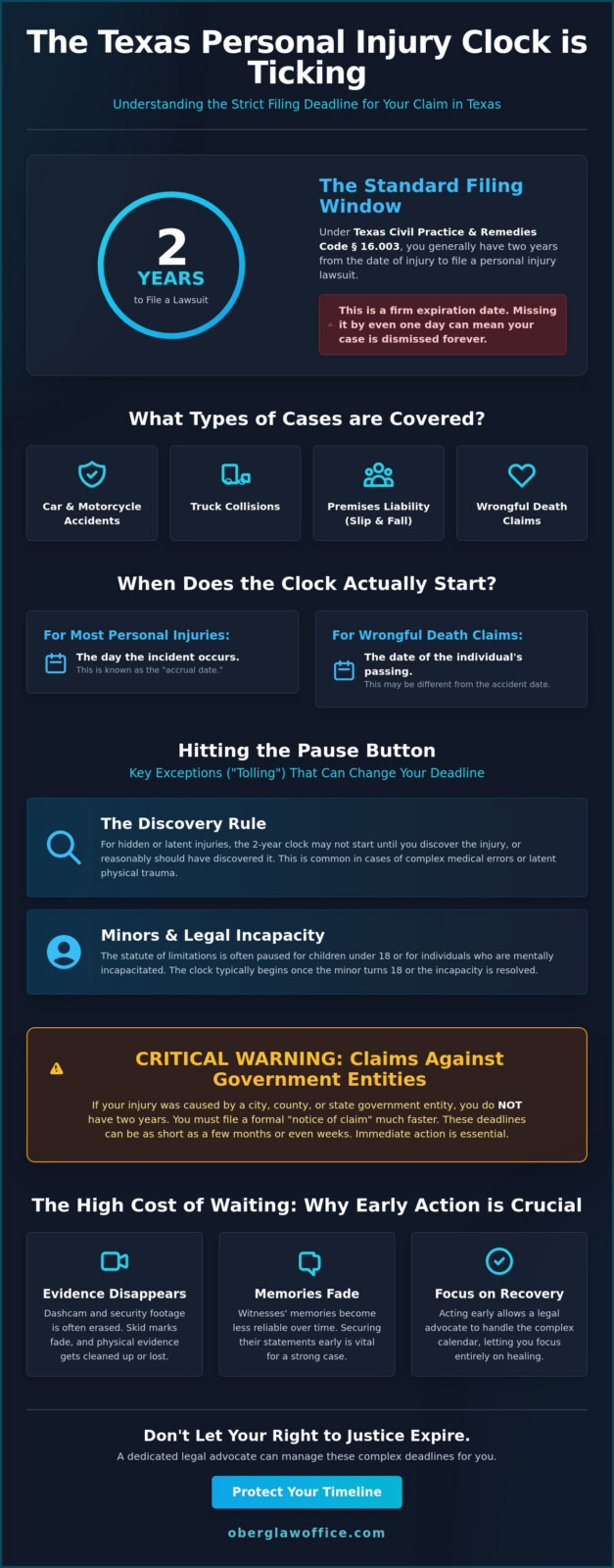
Under the Texas Civil Practice & Remedies Code § 16.003, the personal injury statute of limitations texas is generally two years. This timeline exists to keep the legal process fair for everyone involved. Over time, memories fade, witnesses move away, and physical evidence like skid marks or damaged property disappears. By requiring cases to be filed within two years, Texas ensures that disputes are settled while the facts are still fresh and reliable. It’s about protecting the integrity of the evidence and reaching a fair resolution for our neighbors.
Types of Cases Covered by the Two-Year Rule
This two-year deadline applies to almost every situation where someone else’s negligence caused you harm. Whether you were hurt in a car accident, a truck collision, or a motorcycle crash, the clock is running. It also covers premises liability cases like slip and fall incidents on someone else’s property. If you’ve suffered catastrophic injuries or are seeking justice for a wrongful death, these same strict Texas deadlines apply to your claim. You shouldn’t have to carry the burden of these deadlines alone while you’re trying to heal.
When Does the Clock Actually Start Ticking?
In most cases, the clock starts on the day of the incident. This is known as the “accrual date.” For a car crash, it’s the date of the impact. However, wrongful death claims are a bit different. The two-year window for a wrongful death action begins on the date of the individual’s passing, even if the accident happened weeks or months earlier. Calculating your exact deadline is critical. Even a small calendar error can end your case before it begins. It’s always best to treat the date of the injury as your primary marker to ensure you stay well within the safe zone for filing your claim.
Key Exceptions: When the Two-Year Clock Pauses or Changes
Life doesn’t always happen in neat, two-year blocks. While the standard personal injury statute of limitations texas is strict, the law recognizes that certain situations deserve more time. This process is called “tolling.” Think of it as hitting the pause button on the legal clock. It ensures that people who are physically or legally unable to file a claim aren’t unfairly punished for circumstances outside their control. We’ve seen how these exceptions provide a vital safety net for families who were initially told they were out of time.
The Texas Civil Practice & Remedies Code outlines these protections clearly. It’s not about giving anyone an unfair advantage; it’s about making sure the doors to justice stay open for those who truly need it. If you’re unsure if your case qualifies for one of these pauses, talking to a neighborly advocate can help you find the clarity you need to move forward. In rare cases, a defendant might even actively hide their negligence or the facts of an accident. If someone lies to cover up their fault, Texas law may prevent them from using the deadline as a defense through a concept called fraudulent concealment.
The Discovery Rule and Latent Injuries
Sometimes, an injury doesn’t show up on an X-ray the day of the accident. You might feel fine, only to discover internal damage or a medical complication months later. The Discovery Rule states that the clock shouldn’t start until you actually discover the injury, or until a reasonably diligent person should have discovered it. This is a vital protection for victims of complex medical errors or latent physical trauma. However, you can’t simply ignore symptoms. The court expects you to seek medical attention when something feels wrong. If you waited to see a doctor because you didn’t realize you were hurt, this rule might be what saves your claim.
Minors and Legal Incapacity in Texas
Children under 18 cannot legally file a lawsuit on their own. Because of this legal disability, the two-year clock is tolled until their 18th birthday. This means a child injured in a car wreck at age 10 would technically have until they turn 20 to file a claim. A similar rule applies to individuals of unsound mind or those mentally incapacitated at the time of the injury. While this extension exists, we always encourage parents to act much sooner. Evidence disappears quickly, and waiting ten years to file can make proving your case much harder. If you are managing a child’s recovery, speaking with a compassionate attorney early on helps preserve the facts while the law protects the timeline.
Critical Notice Deadlines: Why Two Years Isn’t Always Two Years
You might feel a sense of relief knowing the law generally allows two years to act, but that feeling can be dangerous if your accident involved a city bus, a police cruiser, or a government vehicle. While the standard personal injury statute of limitations texas gives you a two-year window to file a formal lawsuit, a separate, much faster clock often starts ticking immediately. This is the “notice of claim” deadline. It’s a procedural requirement that demands you inform a government entity of your intent to sue long before you ever step foot in a courtroom. If you miss this notice window, your right to recover compensation could vanish before the two-year mark even arrives.
Understanding the nuances of Texas statute of limitations laws is essential for protecting your family’s future. When a government employee’s negligence causes a car accident or a slip and fall on public property, the Texas Tort Claims Act dictates the rules. These rules are designed to protect public institutions, but they often create a minefield for injured neighbors who are just trying to get their medical bills paid. We believe you shouldn’t be penalized for not being a legal expert while you’re still in physical pain. Identifying the responsible party early is the only way to ensure these hidden deadlines don’t sink your case.
Suing Government Entities in Texas
State law generally requires you to provide formal notice of a claim within six months of the incident. However, don’t let that six-month window lull you into a false sense of security. Many Texas cities have municipal charters that shorten this period significantly. Some local governments require notice in as little as 30, 60, or 90 days. If you’re hit by a city-owned truck or injured at a public park, failing to send a detailed, formal notice within these tiny windows often leads to an automatic dismissal of your case. It’s a harsh outcome for an honest mistake. This is why we prioritize identifying the owner of the vehicle or property immediately after you contact us.
Dram Shop and Other Specialized Deadlines
Other specific claims carry their own unique timing pressures. For example, if a bar or restaurant overserved a driver who then caused your injuries, you may have a liquor liability claim. While the primary lawsuit still follows the standard personal injury statute of limitations texas, your own insurance policy might have “prompt notice” requirements. Many policies require you to report an accident within days or weeks to remain eligible for Uninsured Motorist or Personal Injury Protection benefits. These contractual deadlines don’t change the law, but they can definitely change how much money is available to help you recover. Balancing these overlapping timelines is exactly why we suggest reaching out for guidance as soon as you’re physically able.
The High Cost of Waiting: Why Early Action Beats the Deadline
Thinking of the two-year window as a target rather than a final boundary is a common mistake that can hurt your recovery. Even though the personal injury statute of limitations texas gives you time, the physical evidence doesn’t wait. Skid marks on the road fade with every Texas rainstorm, and debris is cleared away within hours. If you wait eighteen months to start your claim, the scene of your accident will be unrecognizable. We want to help you capture the facts while they’re still undeniable.
Witnesses are another concern. People’s memories are surprisingly fragile. A bystander who saw everything clearly on the day of the crash will likely struggle to recall specific details two years later. They might forget which driver had the green light or whether the other person was looking at their phone. By acting quickly, we can record their statements while the events are still fresh in their minds. This creates a solid foundation for your claim that time cannot erode.
Insurance companies often use your hesitation against you. When you wait until the last minute to file, adjusters may assume you’re desperate or that your injuries aren’t as serious as you claim. They love to see the clock running out because it gives them more leverage during negotiations. We believe in taking that leverage back. Starting your case early shows the opposition that you’re prepared and that you’re prioritizing your health and your rights.
Preserving Critical Accident Evidence
Photos of the scene and vehicle inspections must happen immediately to be effective. Surveillance cameras at nearby businesses often overwrite their footage every few days or weeks. Without a prompt legal request to preserve that data, it could be lost forever. It’s especially critical in complex cases; physical evidence in a truck accident can vanish within days. We act fast to secure black box data and maintenance logs before they are deleted or lost.
Building Negotiation Leverage Early
Consistent medical documentation is your strongest tool. If you wait months to see a doctor, the insurance company will point to those “gaps in treatment” as proof that you weren’t actually hurt. We help you stay on track with your recovery plan so your medical records tell a clear, honest story of your journey. If you’re ready to protect your future, reach out for a personal consultation so we can begin securing the evidence you need today.
How an Experienced Texas Attorney Protects Your Timeline
Managing the personal injury statute of limitations texas isn’t just about marking a date on a calendar; it’s about a series of complex legal filings and strategic moves. You shouldn’t have to spend your days worrying about court rules while you’re trying to regain your strength. Our role is to act as your steadfast protector, handling the intricate deadlines and notice requirements so you can focus on what matters most: your health and your family. We believe in a collaborative partnership where you’re never just a case number, but a neighbor we’re helping through a difficult time.
Many people hesitate to call a lawyer because they worry about the cost. We remove that barrier by using a performance-based fee structure. This means you don’t pay us unless we win your case. This shared risk allows you to take early action, which is the best way to protect your right to recovery. Considering that approximately 95% of personal injury lawsuits end in a pre-trial settlement, having a team that knows how to build leverage from day one is essential for your security. We take on the financial risk so you can focus on your restoration.
The Investigative Power of a Law Firm
We use the power of subpoenas to gather evidence that’s usually out of reach for individuals. Whether it’s cell phone records to prove a driver was distracted or internal company emails, we dig deep. We also bring in accident reconstruction experts to analyze the scene before the trail goes cold. This ensures we identify every possible defendant, from the driver to the manufacturer, before the personal injury statute of limitations texas expires. In a state where motor vehicle fatalities lead the nation with over 4,000 deaths per year, having this level of professional oversight can make the difference between a dismissed case and a successful recovery.
Navigating the Complexities of Texas Injury Law
Every case has its own unique hurdles. This is especially true for catastrophic injury cases where the long-term costs of care must be accurately calculated. We handle the mountain of paperwork and the aggressive tactics of insurance companies with unwavering determination. You’ll work directly with experienced professionals who are personally invested in your restoration. Our goal is to move you from a state of uncertainty to a feeling of empowerment. We stand as a formidable shield against large institutions, ensuring your voice is heard and your future is protected.
Schedule your free personal injury strategy session with Oberg Law Office today.
Take Control of Your Recovery Today
You’ve taken a vital step by learning the rules that govern your claim. Understanding that the personal injury statute of limitations texas is a firm deadline, rather than a suggestion, empowers you to act before your rights expire. Whether you’re dealing with a standard two year window or a much shorter government notice period, the most important thing you can do is preserve the evidence while it’s still fresh. Waiting only gives insurance companies more leverage; acting now puts the power back in your hands.
At Oberg Law Office, we bring over 25 years of experience in Texas law to every case we handle. You won’t be passed off to support staff; you’ll interact directly with senior attorneys who are personally invested in your restoration. Because we work on a contingency-based fee structure, you don’t pay us anything unless we win your case. This removes the financial burden, allowing you to focus entirely on your physical and emotional healing.
Your journey toward fairness and security is just beginning. Secure your rights with a free personal injury strategy session today. We’re ready to stand as your steadfast protector and guide you toward the results you deserve.
Frequently Asked Questions
Can I still file a personal injury claim if it has been more than two years?
In most cases, you cannot file a claim once the two-year window closes. Texas courts are very strict about this deadline and will dismiss cases filed even one day late. However, if you were a minor at the time of the accident or were mentally incapacitated, the clock may have been paused. It’s best to have an attorney review your specific timeline to see if an exception applies to your situation.
What is the Texas statute of limitations for a car accident?
The standard personal injury statute of limitations texas for car accidents is two years from the date the crash occurred. This timeframe applies to drivers, passengers, and pedestrians involved in the collision. Because evidence like vehicle damage and witness memory disappears quickly, we recommend starting the process much earlier than the final deadline. Taking action within the first few months helps ensure your case is built on solid, fresh facts.
How does the ‘Discovery Rule’ work in Texas injury cases?
The Discovery Rule pauses the countdown until you actually discover your injury or until a reasonable person should have noticed it. This is often used in cases involving medical complications or internal trauma that isn’t visible immediately. You must show that you were diligent in seeking medical care. If the court finds you ignored clear symptoms, they may decide the clock started much earlier than you realized.
Is the statute of limitations different for a wrongful death claim in Texas?
Yes, the timeline for a wrongful death claim begins on the date of the individual’s death rather than the date of the accident that caused the injury. While the two-year duration is the same as other personal injury cases, the starting point is different. This distinction is vital for families seeking justice after a long medical battle following a tragic event. We handle these cases with the deep empathy they deserve.
Does the two-year deadline apply to claims against a city or government?
While the two-year limit for a formal lawsuit still exists, you must provide a formal notice of claim much sooner. Depending on the city or state entity involved, you might only have 30 to 180 days to notify them of the incident. Failing to meet this notice requirement can disqualify you from filing a lawsuit later. Identifying government involvement immediately is the only way to protect your right to recover.
What happens if I discovered my injury 6 months after the accident?
If you were aware of the accident but didn’t feel pain until later, the clock typically still runs from the date of the incident. The Discovery Rule is generally reserved for injuries that were truly impossible to detect earlier. If you find yourself in this situation, document your symptoms and medical visits immediately. We can help you determine if your delayed symptoms qualify for a legal extension under Texas law.
Do I need to have my lawsuit finished or just filed within two years?
You only need to have your lawsuit formally filed in the appropriate court before the two-year deadline. The legal process itself, including discovery and negotiations, can often take much longer than two years to reach a final resolution. As long as the initial paperwork is accepted by the court within the personal injury statute of limitations texas, your right to seek compensation is preserved. We manage these filings to ensure your case stays on track.
Can an insurance company extend the statute of limitations for me?
No, an insurance company does not have the legal authority to change or extend a court-mandated deadline. In fact, adjusters may intentionally slow down negotiations to move you closer to the expiration date. Never assume that because you are in active talks with an insurer, your deadline is safe. Only a formal filing in a Texas court can pause the clock and protect your legal interests.