
What if the most important day of your legal journey doesn’t take place in a crowded courtroom, but in a quiet office with a bowl of mints on the table? Knowing how does mediation work in a personal injury lawsuit is the first step toward calming the anxiety you might feel about confronting the insurance company. It’s normal to worry about being pressured into a low settlement or feel confused about how this phase affects your recovery timeline. We understand that you’ve already been through enough, and you deserve a process that feels like a supportive partnership rather than a distant transaction.
This guide promises to show you exactly what happens behind those closed doors so you can walk into the room feeling empowered. You’ll learn how to use this critical phase as a strategic tool to secure the maximum settlement you deserve for your injuries. We’ll walk you through the step-by-step process of a 2026 mediation session, from the opening statements to the final negotiations. You will see how your lawyer acts as your steadfast protector, ensuring you have the clarity to say no to unfair offers while we handle the heavy lifting against large institutions.
Key Takeaways
- Understand the step-by-step phases to learn how does mediation work in a personal injury lawsuit, moving from the initial introduction to the final signed agreement.
- Discover why moving to a separate room during the “caucus” stage actually gives you more leverage and protection against insurance company tactics.
- Learn how documenting your physical recovery and dressing for “jury readiness” signals to the defense that you’re fully prepared for a courtroom battle.
- See how working with a firm known for trial readiness, like Gregg Oberg, often forces insurance adjusters to bring more serious settlement offers to the table.
- Gain the confidence to reject unfair settlement offers by understanding your right to walk away if the final numbers don’t reflect your true needs for restoration.
Demystifying Mediation: The Bridge Between Litigation and Recovery
You’ve likely spent months dealing with insurance adjusters who treat your recovery like a line item on a spreadsheet. It’s exhausting. Mediation offers a different path toward the restoration you deserve. At its core, Mediation is a structured, confidential negotiation where both sides meet with a neutral third party to find a resolution. Think of it as a “peace talk” held in a safe space. It isn’t about being forced into a corner; it’s about exploring a settlement that honors your journey and provides the security you need to move forward.
In many jurisdictions, courts actually mandate this step before they’ll allow a case to proceed to trial. Judges understand that the courtroom can be unpredictable and stressful for everyone involved. By requiring you to sit down and talk, the court gives you a final opportunity to keep the decision-making power in your own hands. Knowing how does mediation work in a personal injury lawsuit helps you see this mandate not as a hurdle, but as a strategic opening. The primary goal is simple: resolve your case faster and with more control than you’d ever have in front of a jury of strangers.
This process is designed to be a collaborative partnership between you and your legal team. While the insurance company might bring their high-priced lawyers, you have a steadfast protector by your side. We use this time to show the defense that we’re prepared for a fight, which often makes them more willing to offer a fair sum right then and there. It’s a controlled environment where you can seek fairness without the public spectacle of a full trial.
Mediation vs. Arbitration: Knowing the Difference
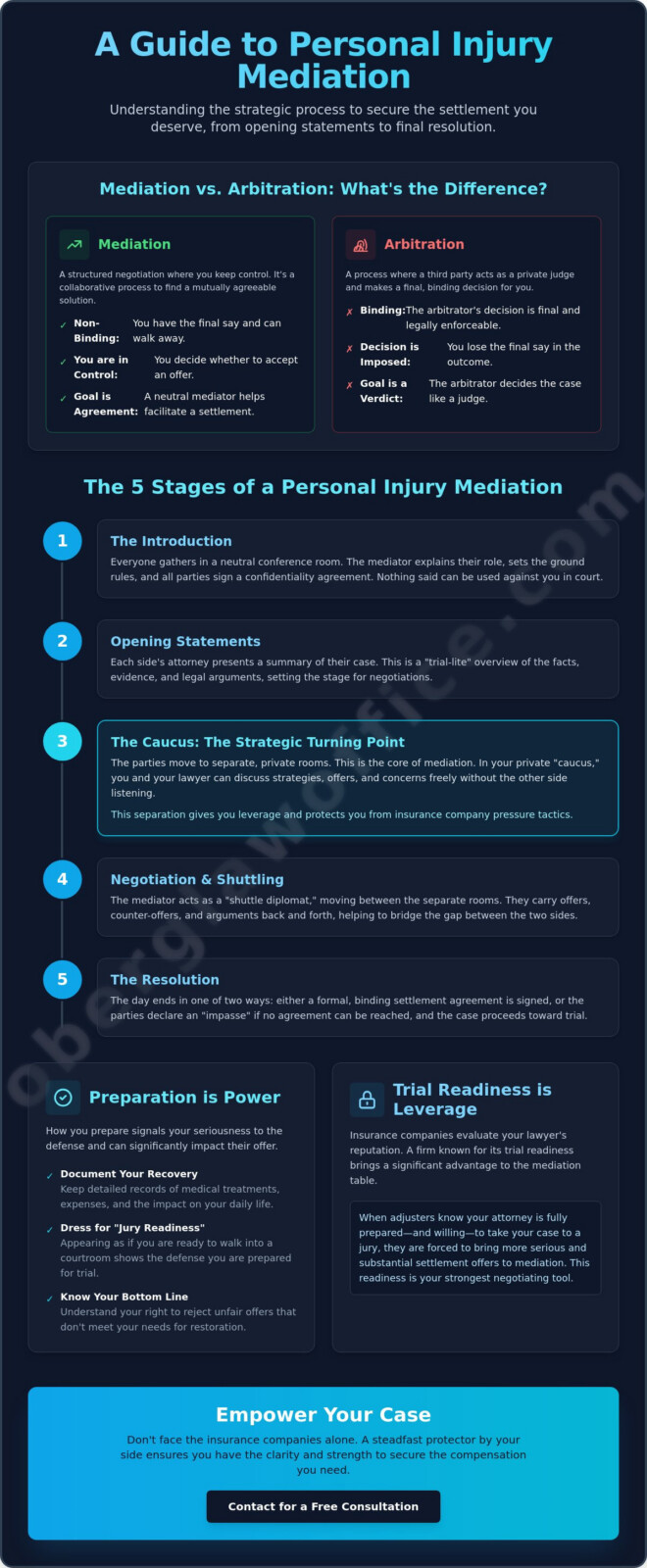
People often confuse these two terms, but the difference is vital for your peace of mind. Mediation is non-binding. This means you don’t have to agree to anything. You only walk away with a settlement if you and your lawyer decide the offer is fair. Arbitration is different; there, a third party acts like a private judge and makes a final decision that you’re stuck with. Most of our clients prefer mediation because it keeps you in the driver’s seat. You have the final say on what your future looks like.
The Role of the Mediator
The mediator isn’t there to decide who’s right or wrong. They aren’t a judge, and they don’t hand out verdicts. Instead, they act as a “shuttle diplomat.” They move between rooms, carrying offers and helping both sides see the risks of going to trial. When you understand how does mediation work in a personal injury lawsuit, you realize the importance of a mediator with specific injury experience. They need to understand medical billing and long-term care needs to facilitate a truly fair conversation. They help bridge the gap between what the insurance company wants to pay and what you actually need to recover.
The 5 Stages of a Personal Injury Mediation Session
Walking into a mediation session can feel like stepping into the unknown. It’s a day filled with high stakes, but it follows a very specific rhythm. Understanding how does mediation work in a personal injury lawsuit becomes much clearer when you view it as a five-act play. Each stage is designed to peel back the layers of the dispute until only the core numbers remain. If you feel overwhelmed by the process, reaching out to an experienced personal injury attorney can help you prepare for each of these critical stages.
- The Introduction: Everyone gathers in a neutral conference room. The mediator explains their role, sets the ground rules, and ensures everyone signs a confidentiality agreement. This agreement is your shield; nothing said here can be used against you if the case goes to trial later.
- Opening Statements: Your lawyer and the insurance company’s attorney each give a presentation. This is a “trial-lite” version of the case where the facts are laid bare.
- The Caucus: This is the turning point. The parties move to separate rooms. You and your lawyer will have a private space to discuss the case without the insurance company listening in.
- Negotiation and Shuttling: The mediator becomes a messenger. They walk between the rooms, carrying offers, counter-offers, and difficult questions meant to test the resolve of both sides.
- The Resolution: The day ends in one of two ways. Either we draft a formal, binding settlement agreement, or we declare an impasse and prepare for the next steps in litigation.
The Opening Statement: Your Opportunity to be Heard
The opening statement is more than just a legal summary. It’s the first time the insurance adjuster sees you as a human being rather than a file number. Your attorney uses this time to show the defense that you’re a credible, sympathetic witness who a jury would likely believe. We often use this phase to set a “valuation ceiling.” By presenting the full extent of your medical trajectory and the “day-in-the-life” impact of your injuries early on, we signal that we won’t accept anything less than a fair restoration of your life.
The Shuttling Process
Most of your day will be spent in the shuttling phase. This is where the mediator earns their fee by testing the strengths and weaknesses of each side’s arguments. They might point out a specific piece of evidence that could hurt the insurance company at trial, or they might ask us to consider a specific legal hurdle. This phase takes the most time, often lasting several hours. It’s a slow-motion “numbers game.” Patience is your best ally here. While it feels like nothing is happening, the mediator is actually working to chip away at the insurance company’s resistance. We stay focused on the long-term goal: ensuring you don’t walk away with a low settlement that leaves your future unsecure.
The Art of the Caucus: Strategic Negotiations Behind Closed Doors
Once the opening statements conclude, you’ll likely notice a shift in the room’s energy. You and your legal team will move to a private space, and you probably won’t see the defendant or their insurance adjuster for the rest of the day. This is the caucus phase. It’s where the “candid talk” happens. In this private room, we can speak freely about the strengths of your case and the hurdles we might face at trial. Understanding how does mediation work in a personal injury lawsuit means recognizing that this isolation is a strategic advantage. It protects you from the defense’s “hardball” tactics and high-pressure stares, allowing us to negotiate from a position of calm strength.
During these hours, we often engage in “bracket” negotiations. This is a technique used to narrow the gap between our demand and their offer. Instead of just trading single numbers back and forth, we might suggest a range. This forces the insurance company to move more significantly than they originally planned. We act as your steadfast protector here, filtering out the noise and focusing on the results that will actually restore your security and peace of mind.
Dealing with the “Lowball” Initial Offer
Expect the first offer to be low. In fact, it might even feel like an insult. Insurance companies often start with a “lowball” figure to test your resolve and see if you’re desperate for a quick exit. We don’t let these numbers rattle us. Our strategy involves a “meaningful counter-offer.” We respond with a figure that shows we are serious about negotiating but also fully prepared to walk away and head to trial if they don’t treat your injuries with the respect they deserve. Staying calm is part of the win.
The Mediator as a Reality Check
A skilled mediator acts as a mirror for both sides. They’ll come into our room and point out the risks of a jury trial, just as they are doing in the other room with the defense. It’s important to listen to this feedback without feeling like your case is being attacked. The mediator is helping us “vet” how a local jury might react to certain evidence or testimony. This reality check is invaluable. It ensures our strategy is grounded in the current legal climate, helping us secure a settlement that is both fair and final. By the time the sun sets, you’ll have a much clearer picture of how does mediation work in a personal injury lawsuit and how it serves your recovery.
Preparation is Power: How to Present Your Best Case
Anxiety often stems from a lack of control. When you understand how does mediation work in a personal injury lawsuit, you realize that preparation is the specific tool that hands that control back to you. We don’t just show up and hope for the best. Instead, we spend the weeks leading up to your session refining your narrative. This involves a deep dive into your medical trajectory, documenting not just the bills, but the “day-in-the-life” impact of your injuries. We want the mediator to see that your life has changed in tangible, painful ways that deserve restoration.
Accuracy is the foundation of a successful negotiation. We work together to ensure every medical lien and outstanding bill is updated to the cent. If the numbers are fuzzy, the insurance company will use that confusion to stall. We also discuss “jury readiness.” While mediation is informal, your appearance sends a message. Dressing professionally signals to the insurance adjuster that you are a credible, prepared witness who would look great in front of a jury. If you are ready to have a dedicated legal team prepare your case for maximum impact, now is the time to focus on these details.
Finally, we prepare you for the “Mediation Hangover.” This is the emotional exhaustion that hits after eight hours of discussing your trauma and negotiating your future. It is draining. By acknowledging this fatigue ahead of time, you can stay mentally sharp when the most important offers typically arrive late in the afternoon.
Your Role in the Room
You are the heart of the case, but you don’t have to carry the legal burden. In the opening session, your attorney will handle most of the talking. When it is your turn to speak, honesty is more powerful than exaggeration. Describe your pain and limitations clearly. Then, embrace the power of silence. You don’t need to fill every gap in conversation. Often, staying quiet after a firm statement forces the other side to grapple with the weight of your words.
The Evidence Binder
We arrive with a comprehensive evidence binder that leaves no room for doubt. This isn’t just a stack of papers. It is a curated collection of high-quality scene photos, injury progression images, and expert reports. We include witness statements that add a human element to the facts. We also organize your lost wage documentation so the mediator can verify your financial losses instantly. When the mediator sees we have every “receipt” for your suffering, they can more effectively push the insurance company toward a fair settlement.
Beyond the Table: The Oberg Advantage and Trial Readiness
Success at the negotiation table isn’t just about what happens during the session. It’s about what happened in the months of preparation before you ever walked through the door. Gregg Oberg brings over 25 years of experience to the table, navigating the specific rhythms of Texas-style negotiations with a blend of professional authority and neighborly care. When you’re asking how does mediation work in a personal injury lawsuit, you have to consider the reputation of the people standing next to you. Insurance companies keep detailed records on law firms. They know which attorneys are looking for a quick settlement and which ones are ready to pick a jury. Because we are known for our trial readiness, adjusters often walk into the room with higher authority to settle your claim.
Our commitment to your restoration is backed by a “No-Risk” promise. We operate on a performance-based fee structure, meaning you only pay if we secure a recovery for you. This shared risk ensures that we are personally invested in the outcome of your case. Once a settlement is reached, we handle the complex post-mediation paperwork with precision. We push to ensure your check arrives as fast as possible so you can focus on the next chapter of your life. You aren’t just a case number here; you’re a neighbor who deserves a steadfast protector against large institutions.
What Happens if Mediation Fails?
A day that ends without a signed settlement isn’t a failure. It’s a data-gathering mission. If the insurance company refuses to offer a fair amount, we use the session to refine our strategy for the upcoming trial. We see their arguments, hear their witnesses, and identify exactly where their defense is weak. Interestingly, many cases that don’t settle on the day of mediation actually settle in the weeks that follow. The “reality check” the mediator provides often sinks in with the insurance adjuster once they realize we aren’t backing down from a courtroom battle.
Steadfast Protection for Your Future
Navigating the aftermath of a catastrophic event is difficult enough without feeling like a distant transaction in a legal machine. We pride ourselves on accessible advocacy where you interact directly with senior professionals who know your name and your story. This personal touch prevents insurance bullying and ensures your voice is never lost in the shuffle. You deserve a guide who is compassionate toward you but formidable against those who caused you harm. Schedule your free personal injury strategy session with Oberg Law Office today.
Take the Next Step Toward Restoration
Mediation is more than just a meeting; it’s a powerful opportunity to reclaim your peace of mind and secure the financial resources you need to heal. By understanding how does mediation work in a personal injury lawsuit, you can navigate the five stages of negotiation with clarity and confidence. You now know that the caucus phase is designed to protect you from pressure, while your trial-ready evidence binder forces the insurance company to take your claim seriously. You have the right to say no to unfair settlements and the power to demand a future that is fully restored.
Gregg Oberg brings over 25 years of experience in Texas personal injury law to your side, ensuring you always have direct access to senior legal counsel rather than support staff. We operate on a contingency-based fee structure, which means there is no fee unless we secure a recovery for you. We are ready to act as your steadfast protector, handling the complex legal hurdles so you can focus on your health. Get your free personal injury strategy session with Gregg Oberg today. You’ve been through a difficult event, but you don’t have to walk the path to recovery alone.
Frequently Asked Questions
How long does a typical personal injury mediation last?
A typical session lasts between four and eight hours. While some simple cases might wrap up in a half day, most complex injury claims require a full day of negotiation to reach a fair outcome. We ask our clients to clear their schedules entirely to avoid feeling rushed. This patience allows the mediator enough time to move between rooms and chip away at the insurance company’s resistance.
Do I have to accept the insurance company’s final offer at mediation?
You are never required to accept an offer that doesn’t feel right. One of the most important aspects of how does mediation work in a personal injury lawsuit is that the process is entirely voluntary. You retain total control over the final decision. If the insurance company refuses to provide a settlement that offers true restoration for your injuries, we are fully prepared to walk away and continue toward trial.
Who pays for the mediator in a personal injury case?
The cost of the mediator is almost always split equally between you and the defendant. This ensures the mediator remains a neutral third party with no financial loyalty to either side. In our firm, these costs are typically handled as part of our performance-based fee structure. This means we advance the costs of the mediation, so you don’t have to worry about out-of-pocket expenses while you’re recovering.
Is what I say in mediation confidential if we go to trial later?
Yes, your privacy is strictly protected by Texas law and the confidentiality agreements signed at the start of the day. Nothing said during the negotiation can be used as evidence against you in a courtroom later. This legal shield is designed to encourage open, honest talks without the fear of legal repercussions. It creates a safe environment where we can explore settlement options while keeping your trial strategy secure.
Can I bring a family member with me to the mediation session?
You can certainly bring a supportive family member or spouse for emotional comfort. Dealing with the aftermath of an accident is draining, and having a trusted loved one nearby can reduce your anxiety. However, they will stay in the private room with us rather than participating in the joint opening session. We always recommend discussing your guest list with your legal team beforehand to ensure the environment remains focused on your recovery.
What should I wear to my mediation appointment?
We recommend dressing in professional attire, often described as business casual or your Sunday best. Your appearance signals jury readiness to the insurance adjuster. It shows them that you are a credible, serious witness who would present well in front of a local jury. This simple choice helps establish your authority in the room and reinforces the value of your claim from the moment you arrive.
What happens if we reach an impasse and cannot agree on a number?
If we cannot reach an agreement, the mediator will declare an impasse, and your case will proceed toward a trial. An impasse isn’t a failure; it simply means the insurance company isn’t yet ready to offer a fair settlement. We use the information gathered during the day to strengthen our trial strategy. Many cases that end in an impasse at mediation actually settle in the following weeks once the defense realizes we won’t back down.
How soon after a successful mediation will I receive my settlement check?
You can generally expect to receive your funds within 30 to 60 days of signing the final agreement. This timeline allows both legal teams to process the formal release documents and resolve any outstanding medical liens or bills. We work diligently to handle this post-mediation paperwork as quickly as possible. Our goal is to ensure your restoration is completed promptly so you can move forward with financial security and peace of mind.