
What if the “minor” fender bender you just walked away from is actually a five-figure debt waiting to happen? You’re likely sitting there staring at a scuffed bumper and wondering, is it worth hiring a lawyer for a minor car accident? It’s a common dilemma, especially when you’re already stressed about rising insurance premiums and the headache of vehicle repairs. You want to believe the insurance adjuster is on your side, but deep down, there’s a lingering anxiety that a “stiff neck” today could become a chronic medical bill tomorrow.
We understand that you don’t want to make a mountain out of a molehill. However, we also know that what an insurance company calls “minor” is often a strategic label designed to save them money at your expense. In this guide, we’ll show you exactly how a legal professional evaluates these claims to ensure you aren’t left paying for an accident that wasn’t your fault. You’ll learn the clear 2026 criteria for when to handle a claim alone versus when you need an expert, especially as states like New York and Louisiana shift their fault systems. We’ll help you secure fair compensation for medical checkups and provide the peace of mind that no future complications are being ignored.
Key Takeaways
- Understand why the term “minor” is often a subjective label used by insurance adjusters to devalue your legitimate recovery.
- Learn how to counter the “MIST” defense where companies use low vehicle repair costs to argue against your medical necessity.
- Identify the specific red flags that help you decide if is it worth hiring a lawyer for a minor car accident to protect your future financial security.
- Master the essential evidence protocol that preserves your rights, regardless of how small the initial collision seems.
- Discover how a professional strategy session and performance-based fees ensure you only partner with an expert when it benefits your case.
What Defines a “Minor” Car Accident?
In the eyes of an insurance adjuster, a minor accident is usually defined as a low-speed collision where there is very little visible damage to the vehicles involved. You might know these as “fender benders” or “tap-and-go” incidents. While the metal and plastic of your car might only show a small scuff, the label “minor” is often a strategic choice by insurance companies. They use this language to devalue your claim before you’ve even had a chance to see a doctor. When you start wondering, is it worth hiring a lawyer for a minor car accident, you’re essentially deciding whether to accept the insurance company’s definition of your experience or to seek a fair evaluation based on the facts.
There’s a dangerous discrepancy between a vehicle’s toughness and human vulnerability. Modern cars are engineering marvels designed to withstand significant force, but your body isn’t. A “minor” accident can still have major legal and financial consequences if you’re left with chronic pain and a stack of medical bills that the insurance company refuses to cover. We’ve seen many neighbors in our community realize too late that a small scratch on a bumper didn’t mean they were unhurt.
Property Damage vs. Personal Injury
It’s a common misconception that a car without scratches means the passengers are fine. Modern bumper technology is designed to absorb impact to protect the vehicle’s frame; however, that kinetic energy doesn’t just disappear. Instead, it’s often transferred directly to the occupants, resulting in significant jarring of the neck and spine. You might feel fine at the scene, but soft tissue injuries often take days to manifest. The cost of a paint touch-up should never be used as a metric to determine the necessity of your medical care.
The Legal Threshold for a Claim
To have a valid personal injury claim, you don’t need a totaled vehicle. You only need to prove negligence and damages. If another driver failed to use reasonable care and caused you harm, the legal threshold is met. Even the smallest paint transfer or a tiny dent serves as vital evidence to establish the point of impact and liability. Documenting these details immediately is crucial. It’s about proving that the other driver’s mistake, regardless of the speed, has caused a real disruption in your life. When considering if is it worth hiring a lawyer for a minor car accident, remember that even “small” cases require professional evidence gathering to succeed against aggressive adjusters.
Why Insurance Companies Love the Term “Minor”
Insurance companies aren’t just being descriptive when they call your crash “minor.” They’re setting a trap. By labeling an incident a “fender bender,” adjusters trigger the MIST (Minor Impact Soft Tissue) defense. This internal policy assumes that if the car isn’t crushed, the human inside can’t be hurt. They’ll show you a repair estimate for a few hundred dollars and argue that a medical bill is “unnecessary.” It’s a cold calculation designed to protect their bottom line, not your recovery. This tactic is specifically used to make you feel like your injuries aren’t “serious enough” to warrant professional help.
You might receive a call within hours of the crash. The adjuster sounds neighborly and empathetic. They’ll ask for a recorded statement “just to get the facts straight while they’re fresh.” Don’t fall for it. You’re likely still in shock, and your body hasn’t had time to process the physical trauma. Anything you say now, like “I feel okay,” can be used to deny your claim later when the pain actually sets in. To truly Protect Your Rights, you need to be cautious about what you disclose before speaking with a professional.
The Latent Injury Risk
Some of the most debilitating injuries don’t show up immediately. Adrenaline is a powerful mask. Whiplash, concussions, and internal bruising often take 48 to 72 hours to manifest. If you accept a “Quick Settlement” check in the first week, you’re signing away your right to ever ask for more. You might realize a month later that you need weeks of physical therapy, but by then, the case is closed. This is exactly why you might wonder, is it worth hiring a lawyer for a minor car accident? An attorney ensures you don’t trade your future health for a small, immediate check.
Tactics of the Insurance Adjuster
Adjusters are trained to be your “friend” until it’s time to pay. They’ll offer a lowball settlement that barely covers your initial medical checkup, hoping you’ll take the bait to avoid “legal hassle.” They know that once you have an advocate, the playing field levels. A knowledgeable guide can help you see through these billion-dollar tactics. If you’re feeling pressured, reaching out for a professional evaluation can provide the clarity you need to move forward with confidence. Having an advocate means you aren’t fighting a massive institution alone while trying to heal.
Evaluating the Value: When Is a Lawyer Truly Necessary?
Deciding if is it worth hiring a lawyer for a minor car accident often comes down to the specific circumstances of the crash rather than the size of the dent in your bumper. If the other driver is pointing the finger at you, the situation is no longer “minor.” Disputed liability can lead to you losing your right to any recovery at all. This is a critical concern in 2026, as states like Louisiana and New York have recently transitioned to modified comparative fault systems. In these jurisdictions, if you’re found to be more than 50% or 51% at fault, you could be barred from receiving any compensation. Having a knowledgeable guide ensures that fault is assigned fairly and accurately.
You also face a much steeper climb if the other vehicle involved was a commercial delivery van or a rideshare driver. These companies are backed by massive legal teams whose primary goal is to minimize payouts. Similarly, if you have a pre-existing back or neck condition that was aggravated by the impact, insurance adjusters will fight tooth and nail to claim your pain isn’t related to the accident. A steadfast protector knows how to use medical evidence to separate your prior health history from the new trauma you’ve endured. They ensure that your right to restoration is fully respected.
The “Net Recovery” Calculation
Many people worry that a legal fee will consume their entire settlement. In reality, the goal of professional advocacy is to secure a higher net recovery. This is the actual “take-home” amount you keep after all medical bills and fees are settled. Lawyers don’t just negotiate with insurance companies; they also negotiate with your medical providers to reduce “medical liens.” By lowering what you owe a hospital or physical therapist, an expert can often put more money in your pocket than you could have secured on your own. A DIY settlement often leaves you with unpaid bills that eat up your entire check.
Complexities in Small Crashes
Even a simple collision becomes complex when you’re dealing with an uninsured motorist. In states like California, where roughly 15% to 17% of drivers are currently uninsured, you might find yourself filing a claim against your own insurance policy. A professional advocate handles these “first-party” claims with the same determination as a lawsuit against a third party. They take over the burden of professional evidence gathering, from securing dashcam footage to interviewing witnesses. This ensures that the “comparative negligence” arguments used by adjusters don’t unfairly slash your recovery or leave you stuck with the bill for someone else’s mistake.
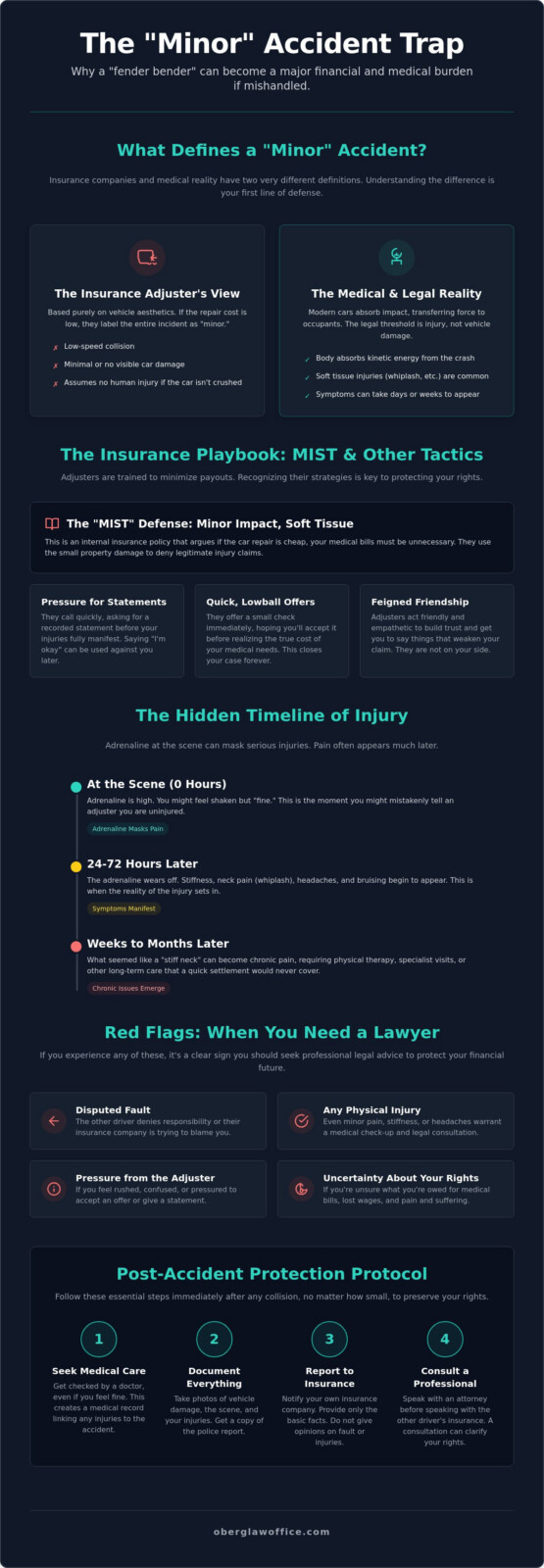
Steps to Take After a Small Collision to Protect Your Rights
It is tempting to trade phone numbers and drive away after a small bump. You might think that a formal process is overkill for a scratched bumper. However, the protocol for evidence does not change just because the impact felt “minor.” In 2026, even a low-speed tap can damage hidden ADAS sensors or internal brackets, leading to repair costs that far exceed initial estimates. If you find yourself questioning is it worth hiring a lawyer for a minor car accident, the answer often lies in how well you protected your rights in the minutes following the crash. Call the police and insist on a formal report. This document provides an objective record that prevents the other driver from changing their story later.
After securing the scene, notify your own insurance company that an incident occurred. Keep this conversation brief and factual. Avoid speculating about your health or the exact speed of the vehicles. Your goal is to fulfill your policy requirements without giving the company ammunition to devalue a future claim. If you feel pressured or confused by their questions, obtaining professional car accident representation can ensure your words aren’t twisted to serve the insurer’s interests.
At the Scene Documentation
Your smartphone is your best tool for defense. Take photos from multiple angles, including wide shots of the entire intersection and close-ups of the paint transfer. Look for skid marks or debris on the road; these environmental factors tell the story of the collision’s force. If anyone stopped to help, gather their contact information immediately. Most importantly, never apologize at the scene. While it feels neighborly to say “I’m sorry,” insurance adjusters view those words as a legal admission of fault that can slash your recovery.
Post-Accident Medical Care
You should seek a medical evaluation within 24 hours, even if you only feel a slight ache. Insurance companies look for a “Gap in Treatment” to argue that your injuries weren’t caused by the crash. If you wait a week to see a doctor, they will claim something else caused your pain. Be aware that your primary care physician might not be the best choice; many general practices are not equipped to handle the specific billing and record-keeping required for legal claims. We recommend seeing a specialist who understands accident trauma. Start a daily journal to track your symptoms, as these personal notes provide a powerful narrative of your journey toward restoration.
How Professional Legal Advocacy Secures Your Recovery
The most common reason people hesitate to call a firm is the fear of being “that person” who makes a big deal out of a small collision. You might still be asking yourself, is it worth hiring a lawyer for a minor car accident? We believe you deserve a clear answer without any financial risk. That’s why we offer a Strategy Session to evaluate your claim. During this conversation, we look past the surface-level damage to see the true impact on your life. If we determine that an insurance company is treating you fairly, we’ll tell you so directly. Our goal is to provide clarity, not to complicate your life with unnecessary litigation.
When you choose to work with us, you’re choosing a neighborly advocacy approach. Unlike large “settlement mills” where you might never speak to an attorney, we ensure you interact directly with senior professionals who are personally invested in your restoration. We understand the physical and emotional exhaustion that follows even a small crash. By taking over the aggressive calls from adjusters and the complex paperwork, we allow you to focus entirely on your physical recovery. We act as your steadfast protector, standing between you and the institutions that want to minimize your experience.
The Power of Contingency Fees
One of the greatest advantages for our neighbors is the use of contingency-based legal representation. This structure completely removes the financial barrier to high-quality legal help. It aligns our interests perfectly with yours; we only succeed if you succeed. This model is especially beneficial in minor claims because it ensures that a lawyer won’t take your case unless they truly believe they can add significant value to your recovery. You pay nothing unless a recovery is secured. This shared risk promise means you can pursue justice without worrying about hourly bills or upfront costs.
Your Next Steps Toward Justice
Time is a critical factor in any car accident case. While you might have two or three years under most statutes of limitations, evidence begins to disappear the moment you leave the scene. Security footage is overwritten, witnesses forget details, and insurance companies move quickly to close files. Preparing for a consultation is simple: bring your police report, any photos you took, and a record of your medical visits. Taking action now prevents the “minor” accident from becoming a major long-term burden. Don’t wait for the insurance company to deny your claim before seeking a knowledgeable guide. Schedule your free strategy session today to ensure your rights are fully protected in 2026 and beyond.
Secure Your Future After a Small Collision
You’ve seen how the “minor” label is often a strategic tool used by insurance adjusters to devalue your legitimate recovery. Protecting your rights means looking past a simple repair estimate to account for latent injuries and the long-term impact on your health. When you ask, is it worth hiring a lawyer for a minor car accident, the real question is whether you want a massive institution or a dedicated advocate to decide the value of your well-being.
At Oberg Law Office, we provide the neighborly support you need backed by over 25 years of experience fighting insurance companies. You’ll communicate directly with senior legal professionals who are personally invested in your restoration. Because we believe in accessibility for all our neighbors, we offer a performance-based fee structure where you pay no fees unless we win your case. Don’t let a small crash lead to a large financial burden. Get Your Free Strategy Session with Oberg Law Office today and move forward with the peace of mind you deserve.
Common Questions About Minor Accident Claims
Do I really need a lawyer if the insurance company already offered me a settlement?
You aren’t required to hire an advocate, but an early offer is often a “lowball” designed to close your case before you know the full extent of your injuries. Adjusters frequently use these quick settlements to save the company money. A legal professional ensures that any offer you accept covers not just today’s scuffed bumper, but also the potential for long term medical needs that haven’t appeared yet.
How much does a car accident lawyer cost for a minor case?
Most personal injury professionals work on a contingency fee basis, which means you don’t pay any money upfront. In 2026, the typical fee is approximately 33% of the final settlement if the case is resolved before a lawsuit is filed. This structure ensures that your advocate is motivated to secure the highest possible recovery for you. You only pay if your legal team successfully wins your case.
What if the other driver says it was my fault in a minor accident?
Disputed liability is one of the most important reasons to seek professional help. When considering is it worth hiring a lawyer for a minor car accident, remember that many states have recently moved to modified comparative fault systems. If you’re found to be more than 50% or 51% at fault, you may be barred from recovering anything. We gather evidence to ensure the blame is placed where it belongs.
Can I still recover compensation if I didn’t feel hurt at the scene?
Yes, you can still recover compensation because adrenaline often masks pain immediately following a collision. Soft tissue injuries, such as whiplash or internal bruising, frequently take 48 to 72 hours to become fully apparent. It’s vital to seek a medical evaluation within 24 hours of the crash. This creates a clear link between the accident and your injuries, which is essential for any successful claim.
How long does it take to settle a minor car accident claim?
A minor claim can take anywhere from three months to a year to settle. The timeline depends heavily on the duration of your medical treatment. We never recommend settling until you have reached maximum medical improvement. If you settle too early, you lose the right to ask for more money if your “minor” pain turns into a chronic condition requiring physical therapy.
Will my insurance rates go up if I hire a lawyer?
Hiring a lawyer does not directly cause your insurance premiums to increase. Your rates are generally determined by who was at fault for the collision rather than whether you sought legal advice. In many jurisdictions, insurance companies are legally prohibited from raising your rates for an accident that wasn’t your fault. An advocate can actually help prove your innocence to prevent unfair rate hikes.
What is the “statute of limitations” for a minor car accident in 2026?
The deadline to file a lawsuit varies significantly by state, typically ranging from two to three years. For example, Florida recently reduced its statute of limitations to two years, while other states like Maine allow up to six years. It is crucial to understand your local laws. Missing this deadline will result in a total loss of your right to seek compensation for your damages.
What happens if the other driver doesn’t have insurance?
If the at-fault driver is uninsured, you can often recover compensation through your own Uninsured Motorist (UM) coverage. This is a common scenario in states like California, where approximately 15% to 17% of drivers currently lack insurance. We help you navigate your own policy to ensure your insurance company fulfills its promise to protect you, providing the security and restoration you’ve already paid for through your premiums.