Imagine sitting at a stoplight on Belt Line Road in Mesquite, Texas, on a Tuesday afternoon when a sudden, violent jolt shatters the quiet. In those first 60 seconds of shock, your mind fills with questions about your car, your health, and your family’s future. You need to know exactly what to do when you get in a car crash to ensure you don’t accidentally forfeit your rights to an aggressive insurance adjuster. It’s a terrifying moment that 6 million American drivers face every year, and the choices you make in the next few minutes will dictate your financial recovery for years to come.
You’ve likely heard that insurance companies are there to help, but you probably feel the underlying pressure to settle quickly for less than you deserve. At Oberg Law Office, we believe you shouldn’t have to handle this burden alone while you’re in physical pain. This 2026 guide gives you a clear, step-by-step checklist to protect your health and secure the maximum compensation for your injuries. We’ll show you how to document the scene, handle predatory tactics, and move forward with the confidence of a dedicated legal partner by your side.
Key Takeaways
- Prioritize your safety and legal protection by following our immediate scene-response checklist to ensure a solid foundation for your claim.
- Learn how to document the crash like a professional, ensuring you capture the vital evidence and witness details needed to prove liability.
- Discover exactly what to do when you get in a car crash to safeguard your physical well-being and avoid common mistakes that hide serious injuries.
- Protect your future compensation by learning how to handle insurance adjusters and their tactics before you say a single word to them.
- Recognize when it’s time to bring in a steadfast legal protector to handle complex negotiations so you can focus on your family and healing.
Immediate Steps at the Scene: Prioritizing Safety and the Law
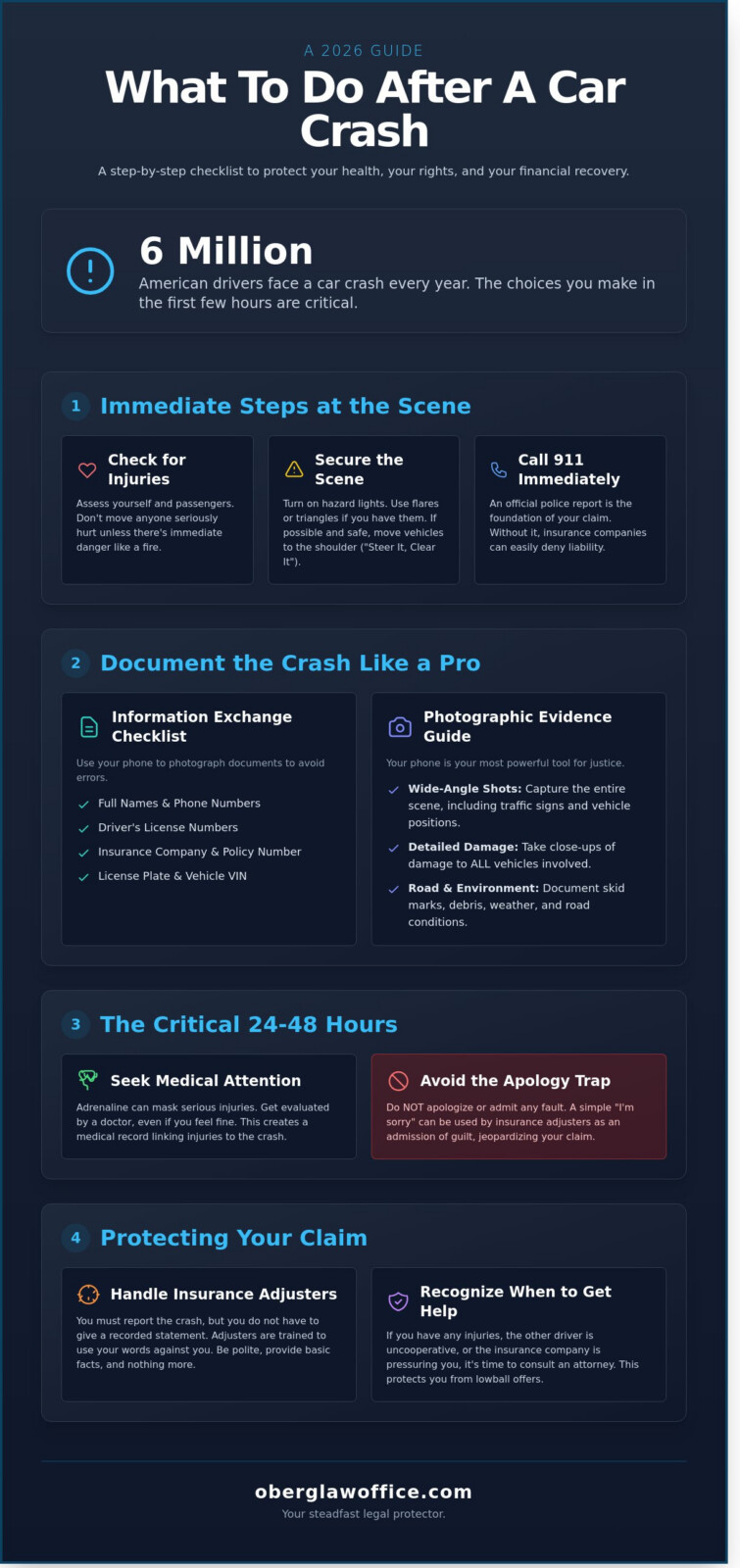
The moments following a collision feel like a blur. Your heart is racing, and adrenaline often masks physical pain. However, the choices you make in these first few minutes are the most critical for your physical recovery and your future legal claim. Knowing what to do when you get in a car crash starts with a single, focused priority: safety. First, check yourself and your passengers for injuries. If anyone is hurt, don’t attempt to move them unless there’s an immediate threat of fire, as you could worsen a spinal injury.
Once you’ve assessed the health of everyone involved, you must secure the area. Activate your hazard lights immediately. If you have flares or reflective triangles in your trunk, set them up at least 50 feet behind your vehicle to alert oncoming drivers. Secondary crashes are a major risk on busy Texas highways. In 2023, the Texas Department of Transportation reported over 15,000 serious injury crashes across the state; many of these occur because following drivers don’t realize a wreck has blocked the lane. Stay at the scene until law enforcement tells you it’s okay to leave. Leaving early isn’t just a mistake; it’s a potential felony under Texas Transportation Code Chapter 550.
The Vital Importance of Calling 911
You might feel tempted to skip the police if the damage looks minor, but a handshake agreement at the scene is a dangerous trap. It’s common for drivers to realize they’re injured 24 to 48 hours later once the adrenaline fades. Without a police report, an insurance company will likely deny your claim, calling it a “word versus word” dispute. This official record serves as the foundation for your recovery. If local police are spread thin and can’t respond to a minor fender bender, you must still document the event. In these cases, Texas law allows you to file a Driver’s Crash Report (CR-2) to ensure the incident is on the books.
Securing the Crash Site
If the vehicles are operable and there are no serious injuries, use the “Steer It, Clear It” rule. Move your cars to the shoulder or a nearby parking lot to prevent a pileup. Before you move them, use your phone to take quick photos of the initial positions and the debris field. This evidence is vital for proving liability later. When you speak to the other driver, keep the conversation focused on exchanging insurance and contact information. Don’t apologize or discuss who caused the wreck. Even a simple “I’m sorry” can be twisted by an insurance adjuster into an admission of fault, which could cost you the compensation your family needs to heal.
Gathering Evidence: How to Document the Crash Like a Pro
The moments following a collision are often a blur of adrenaline and stress. You might feel shaky, but this is the most vital window of time to protect your rights. Knowing exactly what to do when you get in a car crash allows you to stay calm and gather the facts we need to build a strong case for your recovery. Insurance adjusters will look for any reason to deny your claim; your documentation prevents them from twisting the truth while memories are still fresh.
The Information Exchange Checklist
You must collect specific details from every driver involved. Don’t rely on a verbal promise or a hand-written note that might be illegible later. Use your phone to take clear pictures of their documents so there’s no room for error. You need to secure:
- Full names, current phone numbers, and driver’s license numbers.
- Insurance company names and specific policy numbers.
- License plate numbers and the 17-digit Vehicle Identification Number (VIN) located on the driver’s side dashboard.
Texas Transportation Code Section 550.023 requires drivers to provide this information. If someone refuses to cooperate, wait for the police to arrive and let them handle the exchange. We want to ensure you have everything necessary to hold the negligent party accountable.
Mastering Photographic Evidence
Your phone is your best tool for justice. Start by taking 10 to 15 wide-angle shots that show the entire scene, including traffic lights, stop signs, and the position of the vehicles. This provides context that a close-up cannot. Next, take detailed photos of the damage to all vehicles involved. Don’t forget the ground. Capture skid marks or the absence of them; this helps experts calculate braking distances and speed. Document the environment too. If it’s a rainy afternoon in Mesquite or the streetlights are burned out, these factors play a role in proving liability. Proving the exact road conditions at the time of the impact can be the difference between a denied claim and a fair settlement.
Witness Statements and Dashcam Footage
Independent witnesses are gold in a legal dispute. Approach bystanders and ask if they saw what happened. If they say yes, ask for their contact information immediately. A 2025 industry report indicates that 38% of disputed claims are resolved faster when a neutral third party provides a statement. If you have a dashcam, secure that footage before it’s overwritten. Look around for local businesses with security cameras. If you aren’t sure how to request that footage, a dedicated personal injury lawyer can help you subpoena those records before they’re deleted. A recorded account from a stranger often outweighs the conflicting stories of the drivers involved, providing the clarity needed to move your case forward.
The Critical 24 Hours: Medical Care and Avoiding the Apology Trap
You just survived a collision. Your heart is racing and your hands are shaking. While you might feel like you walked away unscathed, your body is likely hiding the truth from you. Adrenaline and cortisol flood your system after a trauma, acting as natural painkillers that mask serious issues for hours or even days. This biological mask is why a professional medical evaluation is the most important step in knowing what to do when you get in a car crash. You need a doctor to look for internal bleeding or organ damage that doesn’t show on the surface.
We see it often at the Oberg Law Office. A client feels fine at the scene, goes home, and wakes up the next morning unable to move their neck. Don’t wait for the pain to become unbearable. Visit an urgent care center or your primary physician within the first 24 hours. This creates a contemporaneous medical record that links your injuries directly to the accident.
Why Delayed Symptoms Are a Legal Red Flag
Internal injuries don’t always scream for attention immediately. A 2024 clinical report found that 43% of patients with whiplash didn’t experience peak pain until 48 hours after the impact. Concussions also frequently have a “latent period” where symptoms like dizziness or confusion emerge slowly. If you wait two weeks to seek help, insurance adjusters will argue that your injuries happened elsewhere. This gap in treatment is a primary tactic used to devalue claims. For those facing long-term struggles, our guide on catastrophic injury recovery explains how we protect your future when healing takes months instead of days.
Avoiding the Apology Trap
We’re Texans. We’re polite by nature. However, at a crash scene, your kindness can be weaponized against you. Saying “I’m sorry” or “I didn’t see you” is often recorded in police reports as an admission of liability. You can be compassionate without accepting blame. Stick to the facts when speaking to the other driver or the police. Ask if they need an ambulance, but do not discuss the mechanics of the collision. This firm boundary is a vital part of what to do when you get in a car crash to protect your legal rights.
Keep your recovery private. Stay off social media entirely. A single photo of you smiling at a family dinner can be used by an insurance company to “prove” you aren’t actually in pain. Instead, channel that energy into a daily recovery journal. Document these specific items every evening:
- Your pain levels on a scale of 1 to 10.
- Specific tasks you couldn’t perform, like lifting groceries or driving to work in Mesquite.
- How your injuries affected your sleep and mood.
- Dates and times of all medical appointments and phone calls.
This journal becomes a powerful piece of evidence. It turns abstract pain into a concrete timeline of how your life was disrupted, making it much harder for a negligent party to dismiss your experience.
Navigating Insurance Adjusters Without Hurting Your Claim
After a collision, the phone calls start almost immediately. The insurance adjuster on the other end might sound like a helpful neighbor, but you must remember their primary goal is protecting their employer’s bottom line. In Texas, adjusters often reach out within the first 24 to 48 hours to offer a quick settlement. While $1,500 or $2,500 might seem helpful for immediate bills, these “exploding offers” usually require you to sign away your right to sue before you even know the full extent of your injuries. Knowing what to do when you get in a car crash means recognizing that these early offers rarely cover the long-term reality of your recovery.
The Danger of Recorded Statements
You aren’t legally required to give a recorded statement to the other driver’s insurance company the day of the accident. Adjusters are trained to use “trick questions” that can subtly shift the blame onto you. They might ask, “How are you feeling today?” and a polite “I’m okay” can be used later to deny a claim for a back injury that worsens three days later. Having a lawyer handle these communications ensures your words aren’t twisted. We step in to be your voice, so you can focus on healing while we handle the legal heavy lifting.
Evaluating Your True Damages
Calculating the cost of a crash goes far beyond the repair estimate for your vehicle. You have to account for future medical treatments, physical therapy sessions that could last six months, and lost earning capacity if you can’t return to work at full strength. Non-economic damages, such as pain and suffering, are also vital components of a fair settlement. If you need assistance with the official paperwork to prove what happened, see our accident report guide to ensure your documentation is solid.
Adjusters often rely on a “lowball” strategy, hoping you’ll take a small amount of cash now rather than fighting for the full value of your claim. Research indicates that insurance companies often save upwards of $10,000 per claim by settling before an attorney is involved. In 2026, medical costs in the Mesquite area continue to rise, and a settlement that covers today’s ER visit might not cover next month’s specialist appointment. When you are deciding what to do when you get in a car crash, remember that you have the right to decline any medical release that gives them access to your entire health history. We don’t let our neighbors get pushed around by big insurance companies.
Don’t let an insurance company dictate the value of your recovery; contact the Oberg Law Office today to protect your family’s future.
When to Consult a Personal Injury Attorney for Your Recovery
You have already taken the right immediate steps at the scene. Now, the real weight of the situation begins to settle in. Knowing exactly what to do when you get in a car crash involves recognizing when the legal burden is too heavy to carry alone. If your medical bills exceed $5,000 or you have missed more than three days of work, your case has likely moved beyond a simple insurance claim. Insurance companies often use sophisticated software to offer the lowest possible settlements, frequently targeting unrepresented individuals with offers that cover less than 40% of their actual long-term needs.
Complex signs that you need professional help include:
- Disputed liability where the other driver denies their role in the collision.
- Accidents involving three or more vehicles or commercial trucks.
- Injuries that require specialist referrals, surgery, or physical therapy.
- Adjusters who pressure you to give a recorded statement or sign a quick release.
The Value of an Experienced Advocate
Proving negligence requires more than just a police report. A dedicated car accident attorney investigates the crash by securing black box data, interviewing witnesses, and reviewing local Mesquite traffic camera footage. We stand as a shield between you and billion-dollar insurance corporations. These companies have teams of adjusters working to protect their profits, but we negotiate from a position of strength to ensure your future isn’t compromised by a low-ball offer. Our goal is to secure justice that reflects the true cost of your recovery.
Your Recovery Starts Here
Your primary job is to focus on physical healing and spending time with your family. We take over the phone calls, the records requests, and the aggressive negotiations. Many families worry about the cost of legal help, but our “No Fee Unless We Win” promise removes that barrier entirely. A contingency fee is a risk-free partnership for the client where the law firm covers all upfront litigation costs and only receives a percentage of the final settlement if the case is successful. This model ensures that every Texan has access to high-quality legal protection regardless of their bank account balance.
Understanding what to do when you get in a car crash means choosing a partner who treats you like a neighbor, not a case number. Data from the Insurance Research Council shows that settlement payouts are often 3.5 times higher for victims who hire an attorney compared to those who go it alone. Don’t leave your family’s stability to chance. Reach out for a free strategy session today so we can start building your path toward a full recovery together.
Take Control of Your Recovery Today
The moments following a collision are often overwhelming. You now have the tools to prioritize your safety, gather professional-grade evidence, and avoid the common traps set by insurance adjusters. Knowing what to do when you get in a car crash in 2026 is the first step toward reclaiming your peace of mind. Remember to seek medical attention within the first 24 hours and keep your statements strictly to the facts to protect your future claim.
You don’t have to navigate the complex Texas legal system by yourself. The Oberg Law Office brings over 25 years of experience in Texas law to your side. We provide a personal touch that big firms often lack. You’ll speak directly with your attorney throughout the process, not a paralegal or an assistant. We’re committed to your success; we charge no fees unless we win your case. We stand as a formidable advocate against negligent parties while providing the neighborly support you deserve.
Get Your Free Accident Strategy Session Today
You’ve already taken the hardest step by educating yourself. Now, let us help you finish the journey toward the justice and compensation your family needs.
Frequently Asked Questions
Should I call the police for a minor fender bender with no injuries?
Yes, you should always call the police to ensure an official record exists. In Texas, Transportation Code Section 550.062 requires a report if damage likely exceeds $1,000. Even a small bumper dent can cost $1,250 to repair in 2026. Having a peace officer document the scene protects you from the other driver changing their story later. It’s the safest way to secure the facts for your insurance claim.
What if the other driver doesn’t have insurance or leaves the scene?
You should immediately contact the police and then look to your own Uninsured Motorist (UM) coverage. About 8.3% of Texas drivers lacked insurance in 2023, and hit and run incidents remain a challenge in Mesquite. We’ll help you navigate your own policy to recover compensation for medical bills and repairs. Your insurance company is required to offer this coverage unless you rejected it in writing during your last renewal.
Is it okay to apologize to the other driver if I feel bad?
No, you should avoid apologizing or admitting fault at the scene. While you’re a kind person, a simple “I’m sorry” can be used by insurance adjusters as an admission of liability under Texas evidence rules. Stick to exchanging contact info and checking on everyone’s safety. Knowing what to do when you get in a car crash means staying polite but protecting your legal rights by remaining neutral.
How long do I have to file a personal injury claim after a car crash?
You generally have two years from the date of the accident to file a lawsuit in Texas. This strict timeline is set by Texas Civil Practice and Remedies Code Section 16.003. If you miss this 24 month deadline, the court will likely dismiss your case forever. It’s best to start the process within 30 days to ensure evidence like skid marks or dashcam footage is still available for our team.
Should I go to the doctor if I don’t feel hurt right away?
Yes, you must seek a medical evaluation within 72 hours of the incident. Adrenaline often masks internal injuries or soft tissue damage that might not appear for 3 or 4 days. Insurance companies often deny claims if there’s a gap in treatment of more than 5 days. Getting checked out immediately at a Mesquite clinic ensures your health is prioritized and your injuries are documented for your future recovery.
What information should I never give to an insurance adjuster?
You should never provide a recorded statement or sign a medical release form without legal counsel. Adjusters for the other side often look for ways to reduce your settlement by 20% or 30% based on a stray comment. They aren’t your friends; they’re protecting their bottom line. Tell them you’re focused on recovery and that your attorney will handle all communication to ensure your family is treated fairly during this process.
How do I get a copy of the official accident report for my records?
You can obtain your Crash Report (Form CR-3) through the Texas Department of Transportation’s online portal. These reports usually become available 10 days after the incident and cost a small fee, typically $6 for a regular copy. If the Mesquite Police Department responded, you can also visit their records division in person. This document is a vital piece of the puzzle when deciding what to do when you get in a car crash.
Can I still recover compensation if I was partially at fault for the crash?
Yes, you can still recover money as long as you’re 50% or less at fault. Texas follows a “modified comparative negligence” rule. If a jury finds you 20% responsible, your total $50,000 award would be reduced by $10,000. We fight to ensure the insurance company doesn’t unfairly shift the blame onto you. Our goal is to maximize your recovery so you can focus on healing and moving forward with your life.