The moment of impact is often a blur of noise and sudden pain, but the choices you make in the minutes that follow will define your recovery for years to come. Knowing exactly what to do after being hit by a car as a pedestrian is the difference between a future of mounting medical debt and the financial security you deserve. While your adrenaline might be masking serious internal injuries, the clock is already ticking on insurance deadlines and legal requirements.
We understand that you’re likely feeling a mix of physical trauma and deep anxiety about how you’ll pay your bills. It’s a heavy burden to carry alone, especially when you’re facing insurance adjusters who don’t always have your best interests at heart. This guide provides the essential safety, medical, and legal steps you need to take right now to protect your health and your right to a fair settlement. We will walk you through a clear roadmap that covers everything from gathering time-sensitive evidence at the scene to navigating the latest 2026 traffic laws and state-specific filing deadlines. You don’t have to figure this out by yourself; we’re here to help you move from a state of uncertainty to a position of strength.
Key Takeaways
- Prioritize your physical safety by calling 911 immediately to ensure both emergency medical responders and law enforcement document the scene.
- Seek a professional medical evaluation within 48 hours to uncover serious internal injuries that may be hidden by your body’s natural adrenaline response.
- Gather essential evidence at the scene, including the driver’s insurance details and photos of the vehicle’s position and traffic signals.
- Protect your legal rights by learning exactly what to do after being hit by a car as a pedestrian to avoid falling for common insurance lowball tactics.
- Secure your financial future by partnering with an experienced advocate who ensures you work directly with senior professionals focused on your restoration.
Immediate Post-Accident Safety and Emergency Response
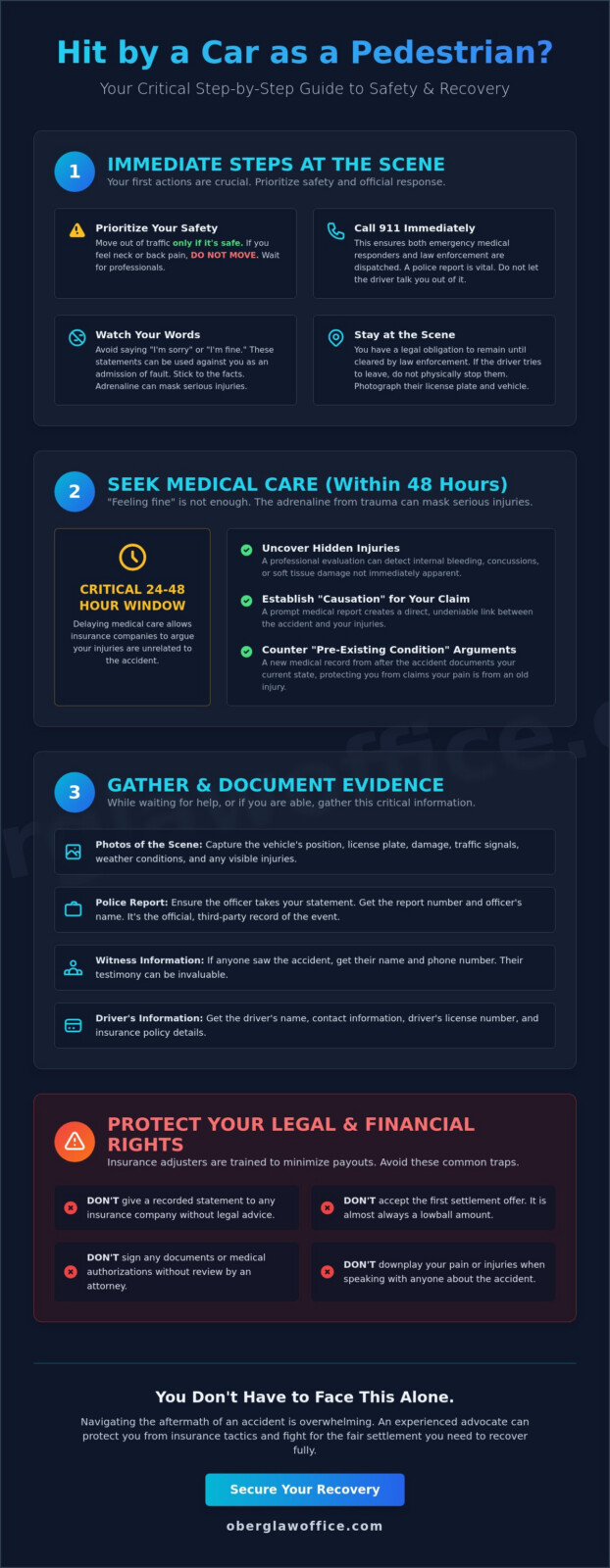
The seconds following a traffic collision are terrifying. Your first instinct is likely to get up and check on others, but you must prioritize your own physical safety above all else. If you are able to move and it’s safe to do so, get out of the flow of traffic to avoid a secondary accident. However, if you feel any sharp pain in your neck or back, stay exactly where you are. Moving a person with a potential spinal injury can lead to permanent damage, so let the professionals handle your transport if you’re in significant pain.
Call 911 immediately. Even if the driver seems kind or the impact felt low-speed, you need professional help on the way. This call ensures that emergency medical technicians can assess you for hidden trauma and that law enforcement can secure the area. Understanding exactly what to do after being hit by a car as a pedestrian starts with getting the right authorities to your location as quickly as possible. Don’t let a driver talk you out of calling for help; their desire to avoid a ticket shouldn’t come at the expense of your health.
Be careful with your words during these initial moments. It’s human nature to say “I’m sorry” or “I didn’t see you,” but these phrases are often interpreted as admissions of fault by insurance companies later. Stick to the facts when speaking with the driver and bystanders. Avoid discussing how you feel physically until a medic examines you. Your body is currently flooded with adrenaline, which can easily mask significant pain or internal bleeding that won’t become apparent for hours.
The Critical Role of the Police Report
A formal police report serves as an objective, third-party record of the event. It captures the weather conditions, the position of the vehicle, and the officer’s initial assessment of the scene. Ensure the responding officer speaks to any witnesses who saw the car hit you, as their statements provide vital corroboration for your version of events. A detailed police report is often the cornerstone of a successful personal injury lawyer claim.
Staying at the Scene
You have a legal obligation to remain at the scene until law enforcement clears you to leave. Leaving too early can complicate your ability to seek compensation or even result in legal penalties. If the driver attempts to leave, do not try to stop the vehicle physically. Instead, try to memorize or photograph the license plate, the car’s color, and the make and model. While you wait for help, focus on your breathing. Inhale for four seconds and exhale slowly. This simple technique helps manage the shock and keeps you grounded while you wait for the support you need.
Prioritizing Medical Care: Why “Feeling Fine” Is Not Enough
You might feel remarkably okay in the moments after the impact. This is your body’s natural defense mechanism, often called the “adrenaline mask.” When you face a traumatic event, your brain floods your system with hormones that temporarily block pain signals. This survival response is helpful in an emergency, but it’s dangerous for your long-term restoration. Many people walk away from a scene thinking they’ve escaped with just a few bruises, only to wake up the next morning unable to move without severe pain. Understanding that your internal state doesn’t match your outward appearance is a vital part of knowing what to do after being hit by a car as a pedestrian.
You must seek a professional medical evaluation within 24 to 48 hours of the accident. This isn’t just about your health; it’s about your legal security. Insurance companies look for any reason to deny a claim, and a “gap in treatment” is their favorite excuse. If you wait a week to see a doctor, the adjuster will argue that your injuries weren’t serious or that they happened during a separate incident. By getting checked out immediately, you establish “causation,” which is the direct link between the car hitting you and the physical damage you’ve suffered. For more guidance on staying safe on the road, you can review NHTSA pedestrian safety tips to understand common risk factors.
Skipping a doctor’s visit allows insurance companies to claim your injuries were pre-existing. They’ll dig through your past medical records to find any old back strain or knee ache to avoid paying for your current trauma. A fresh medical report acts as a shield against these tactics, documenting your condition exactly as it is now. If the financial pressure of medical bills is causing you stress, remember that a dedicated pedestrian accident advocate can help you manage these hurdles while you focus on getting better.
Common Pedestrian Injuries to Monitor
Some of the most dangerous injuries aren’t visible to the naked eye. Internal bleeding or traumatic brain injuries (TBIs) can be life-threatening if they aren’t caught early. We often help clients seeking catastrophic injury representation for these types of life-altering conditions. You should also watch for symptoms of soft tissue damage, such as whiplash or torn ligaments, and hairline fractures. These conditions often take days to fully manifest. Always follow through with every specialist referral and physical therapy session your doctor recommends to ensure a complete recovery.
Creating a Medical Paper Trail
Documentation is the foundation of your fairness and restoration. Start a “pain journal” today to record how your injuries affect your daily life, your sleep, and even your neighborly interactions with friends and family. Keep every piece of paper you receive, including discharge summaries, imaging results, and prescriptions. Most importantly, never sign a medical authorization for the driver’s insurance company without talking to a lawyer first. These documents give them unlimited access to your entire medical history, which they’ll use to find ways to reduce your settlement.
Building Your Case: Evidence Collection for Injured Pedestrians
Once you’ve secured your immediate safety, your focus must shift toward gathering the facts. The scene of the accident is a temporary environment that changes the moment the tow trucks arrive. To protect your future restoration, you need to act quickly to preserve the truth. This phase of knowing what to do after being hit by a car as a pedestrian is about capturing the details that insurance companies might later try to twist or ignore. You are your own best advocate in these early moments.
Start with the basics. Gather the driver’s full name, phone number, insurance provider, and specific policy number. Don’t simply assume this information will be perfect in the police report; clerical errors happen. While you’re at it, note the exact time of the collision, the weather conditions, and the lighting. Was the sun in the driver’s eyes? Was a streetlamp flickering? These small details matter. According to the National Safety Council on pedestrian safety, factors like driver distraction and environmental visibility play a massive role in these accidents, so documenting the environment is essential for your claim.
The Power of Visual Evidence
Your smartphone is a powerful tool for justice. Take wide-angle photos of the entire scene, including the vehicle’s position, any visible skid marks, and the status of traffic signals. You should also photograph the vehicle’s damage, even if it seems unrelated to your impact. A dent or a cracked windshield can help experts reconstruct the speed and angle of the collision. If you’re too shaken to type, use your phone to record a quick voice memo of your immediate recollections while they’re fresh. Look around for nearby security cameras or doorbell cameras on residential streets. These digital witnesses often capture the hit with undeniable clarity, but the footage is frequently deleted within days.
Witness Statements and Credibility
Identify and secure contact information for any bystanders who witnessed the collision. Approach them in a calm, neighborly manner and ask if they would be willing to share what they saw. Neutral third-party testimony carries significant weight because these individuals have no financial stake in the outcome. Their perspective can be the deciding factor in a car accident lawyer case. However, be careful with your own words. While you should be polite, avoid discussing the potential “value” of your case or the extent of your injuries with anyone at the scene. These conversations should be reserved for your legal team and your doctor.
Navigating Insurance Tactics and Protecting Your Rights
Dealing with insurance adjusters is often the most stressful part of the recovery process. You’re trying to heal from a traumatic event, and they’re trying to close a file for as little money as possible. Knowing what to do after being hit by a car as a pedestrian means recognizing that the insurance company is not your friend. They are a multi-billion dollar institution focused on their own bottom line, not your restoration. Every interaction you have with them is a potential minefield for your future claim.
One of the most common tactics is the “Early Settlement Trap.” Within days of the accident, an adjuster might offer you a check. It looks like a relief when hospital bills are piling up, but it’s almost always a lowball figure. This offer is designed to get you to sign away your rights before you even know the full extent of your medical needs. Once you accept that money, you can’t go back for more if you discover you need surgery or long-term physical therapy months down the road. Patience is your greatest asset here.
The safest way to handle these companies is to direct all communication to your legal representative. This prevents you from accidentally saying something that could jeopardize your case. If an adjuster calls you, simply tell them you’re focused on your recovery and provide them with your lawyer’s contact information. This professional barrier ensures that your rights are protected by someone who understands the industry’s games. If you’re feeling overwhelmed by aggressive calls, seeking pedestrian accident representation can immediately stop the harassment and give you the space you need to breathe.
The “Friendly” Adjuster Myth
Adjusters are trained to be neighborly and empathetic. They’ll ask seemingly innocent questions like, “How are you feeling today?” It sounds like a kind gesture, but it’s a strategic trap. If you say “I’m doing okay,” they’ll use that statement to argue your injuries aren’t actually serious. A recorded statement is a tool used to lock you into a version of events before your injuries are fully known, and it should always be avoided without legal counsel present. Their goal is to find any reason to pay you less than you deserve.
Understanding Fault in Pedestrian Accidents
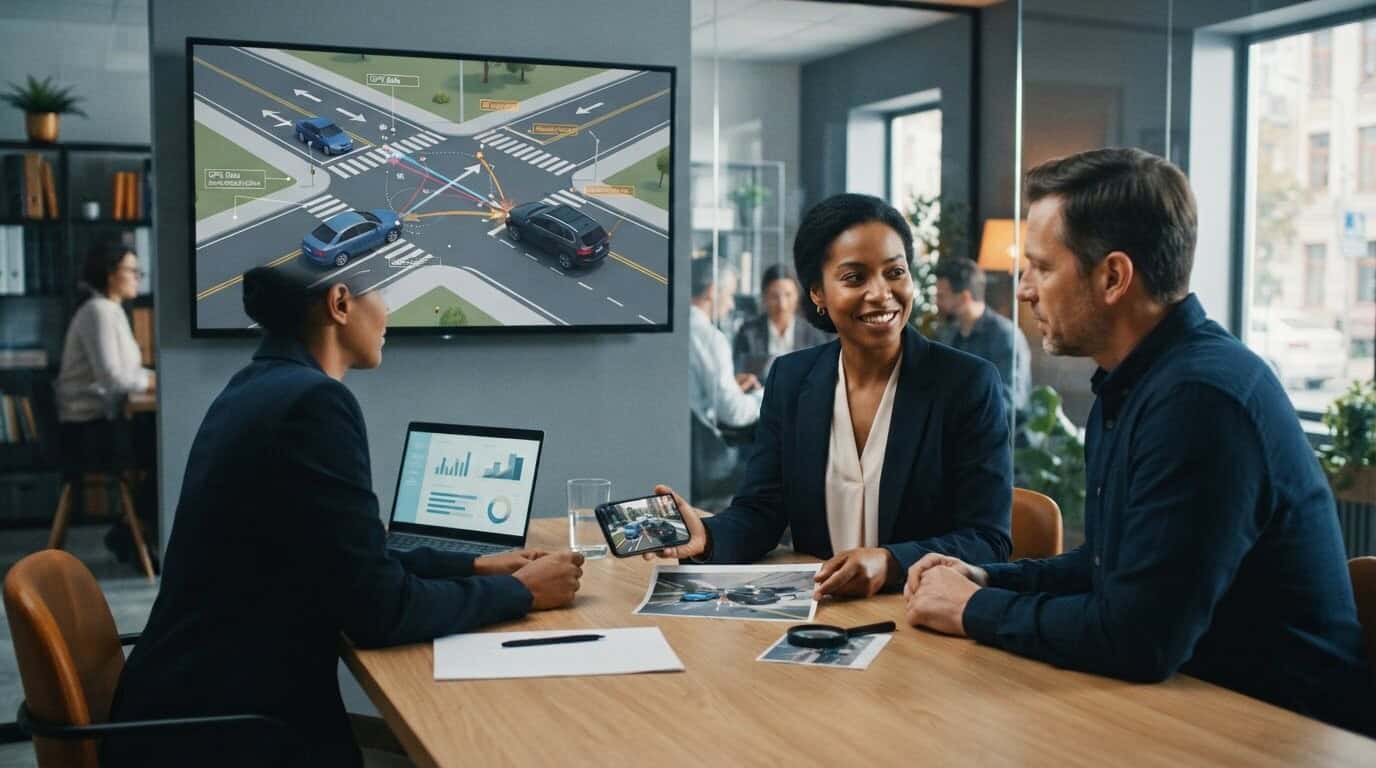
There is a persistent myth that the pedestrian always has the right of way. While drivers have a high duty of care, insurance companies frequently use “comparative negligence” to shift blame onto the victim. They might argue you were jaywalking, darting into traffic, or “distracted walking” while looking at your phone. Even if the driver was speeding, the adjuster will try to prove you were partially at fault to reduce your settlement. We counter these tactics with independent investigations that prove the driver’s negligence through data and scene reconstruction.
Securing Your Recovery with Oberg Law Office
After the initial chaos of the accident subsides, the real work of restoration begins. You’ve learned the critical steps of what to do after being hit by a car as a pedestrian, from securing the scene to avoiding the strategic traps set by insurance adjusters. Now, you need a steadfast protector to turn those steps into a successful recovery. Oberg Law Office brings over 25 years of experience to your side, specifically fighting against the large insurance institutions that try to minimize your suffering. We don’t just see a case number; we see a neighbor who needs help getting their life back on track.
One of the biggest frustrations in the legal world is being passed off to a junior assistant or support staff. At our firm, we’ve committed to a “Senior Professional Only” approach. This means you work directly with experts who have spent decades navigating the complexities of pedestrian accident law. We handle the heavy lifting of evidence gathering, witness interviews, and aggressive negotiation. This allows you to focus entirely on your physical healing while we secure your financial security. Our contingency-based fee structure ensures that our goals are perfectly aligned with yours. You don’t pay us a dime unless we win your case, removing the financial risk from an already difficult situation.
Personalized Advocacy for Pedestrian Victims
Every pedestrian accident is a personal crisis that requires a personal touch. We treat you with the compassion you deserve while maintaining an unwavering determination to hold the negligent driver accountable. We understand the local streets and the specific challenges our community faces in 2026. During your free initial strategy session with Gregg Oberg, you’ll receive a clear roadmap for your case. We’ll discuss your medical bills, your lost wages, and the impact this event has had on your daily life, ensuring no detail is overlooked in our pursuit of fairness.
Taking the First Step Toward Justice
Time is a critical factor in any legal claim. Evidence disappears, traffic camera footage is often overwritten within days, and the statute of limitations creates a hard deadline for filing your lawsuit. Reaching out for professional support is a simple process that requires no upfront costs or hidden fees. By acting now, you ensure that your rights are protected and your future is secure. Don’t let the weight of the aftermath overwhelm you when you can have a knowledgeable guide by your side. Contact Oberg Law Office today for your free personal injury strategy session.
Take the Next Step Toward Your Restoration
You’ve already navigated the most frightening moments of this crisis. By learning exactly what to do after being hit by a car as a pedestrian, you’ve taken the first vital steps toward protecting your future. Whether it’s ensuring you receive a proper medical diagnosis for hidden injuries or standing firm against lowball insurance offers, your proactive approach makes a significant difference in the outcome of your claim. Recovery isn’t just about physical healing; it’s about securing the resources you need to move forward with peace of mind.
Restoration is possible when you have the right advocate by your side. Oberg Law Office provides more than just legal advice. We offer a partnership rooted in over 25 years of experience and a commitment to direct communication with senior attorneys. Our contingency-based fee structure means you never have to worry about upfront costs; we only get paid when we secure a victory for you. We handle the complex negotiations and evidence preservation so you don’t have to carry that burden alone.
Get Your Free Pedestrian Accident Strategy Session Now
You’ve been through enough already. Let us be your steadfast protector in the legal arena so you can focus entirely on your physical and emotional healing. We’re ready to help you turn this difficult chapter into a story of recovery and fairness.
Frequently Asked Questions
What if I was partially at fault for the accident, like jaywalking?
You can still recover compensation in most states even if you were partially responsible for the collision. Under comparative negligence laws, your final settlement is simply reduced by your percentage of fault. However, in many states, if you are found to be 50% or more at fault, you may be barred from recovering any damages at all. We work hard to minimize the fault attributed to you by proving the driver’s negligence.
How long do I have to file a pedestrian accident claim?
The deadline to file a lawsuit depends on your state’s statute of limitations. For example, in states like Texas and California, you generally have two years from the date of the incident to take legal action. In other areas, such as Kentucky or Tennessee, you may only have one year. Missing this critical deadline usually means you lose your right to seek compensation forever. It is vital to consult a professional early to preserve your rights.
Will my own car insurance cover me if I was a pedestrian hit by another car?
Yes, your own auto insurance policy often provides a safety net even when you are walking. If you have Personal Injury Protection (PIP) or Medical Payments coverage, it can help pay for your immediate doctor visits regardless of who caused the hit. Additionally, your Uninsured or Underinsured Motorist coverage can protect you if the driver who hit you lacks sufficient insurance to cover your total medical costs and lost wages.
What kind of compensation can I recover after being hit by a car?
You are entitled to seek damages that cover both your financial losses and your physical suffering. This typically includes reimbursement for all medical bills, future rehabilitation costs, and any wages you lost while unable to work. You can also pursue compensation for “non-economic” damages like physical pain, emotional distress, and the loss of enjoyment of life. In cases of permanent disability, we fight for long-term support to ensure your future security.
Should I talk to the driver’s insurance company if they call me?
You should not speak with the driver’s insurance adjuster or provide a recorded statement without your lawyer present. While the adjuster may seem neighborly, their primary goal is to find information they can use to reduce your payout. Refer all their calls to your legal team. This is a key part of knowing what to do after being hit by a car as a pedestrian because it prevents you from making accidental admissions of fault.
What happens if the driver who hit me does not have insurance?
You can still pursue a recovery even if the driver is uninsured. Your first option is typically your own Uninsured Motorist (UM) coverage, which steps in to pay for your damages just as the driver’s insurance would have. If you don’t have this coverage, you may be able to file a personal lawsuit against the driver. We explore every possible avenue, including third-party liability, to find the resources needed for your restoration.
How much does it cost to hire a pedestrian accident lawyer?
Hiring a dedicated advocate should never add to your financial burden. We operate on a contingency fee basis, which means we only get paid if we successfully secure a settlement or verdict for you. There are no upfront costs or hourly fees to worry about while you are healing. Our fee is a pre-agreed percentage of the final recovery, ensuring that our interests are completely aligned with your own success.
Can I still file a claim if the police report says the accident was my fault?
Yes, you can still pursue a claim because a police report is an initial assessment, not a final legal verdict. Officers sometimes miss details or fail to interview every witness at a chaotic scene. We conduct our own independent investigations, using accident reconstruction experts and digital evidence like doorbell cameras to challenge inaccurate reports. Understanding what to do after being hit by a car as a pedestrian includes knowing that the police report is just one piece of evidence.