
What if rejecting that first check from the insurance company isn’t a mistake, but the smartest move you could make for your recovery? You’re likely feeling the heavy weight of mounting medical bills and the relentless pressure of an adjuster who wants your case closed as cheaply as possible. It’s natural to worry about what happens if I reject a settlement offer, especially when you need financial security and peace of mind right now. You might fear that the money will vanish forever or that you’ll be forced into a long, intimidating court battle against a massive institution.
We understand these anxieties because we see them every day. We want you to know that saying “no” to an unfair offer is often just the first step in a strategic process designed to uncover the true value of your claim. In this 2026 legal guide, you’ll learn exactly how to handle insurance pressure while positioning yourself for maximum compensation. We’ll walk you through the typical timeline after a rejection, the risks involved, and the strategic opportunities that arise when you choose to stand your ground for what is fair. You don’t have to face the legal unknown alone; you can feel empowered to demand the restoration you deserve.
Key Takeaways
- Understand that a rejection legally terminates the current proposal, meaning the offer is typically off the table unless the insurer specifically chooses to renew it.
- Learn how to calculate the true value of your claim by accounting for future medical expenses and the long-term impact on your earning capacity.
- Discover exactly what happens if I reject a settlement offer as we outline the strategic counteroffer process and how fresh evidence can reignite negotiations.
- Assess the potential risks of moving toward trial, including the extended timeline and the reality of leaving the final decision in the hands of a jury.
- See how professional legal advocacy serves as a protective buffer, using trial readiness to pressure insurance companies into a fairer, more comprehensive settlement.
What Does It Mean to Reject a Settlement Offer?
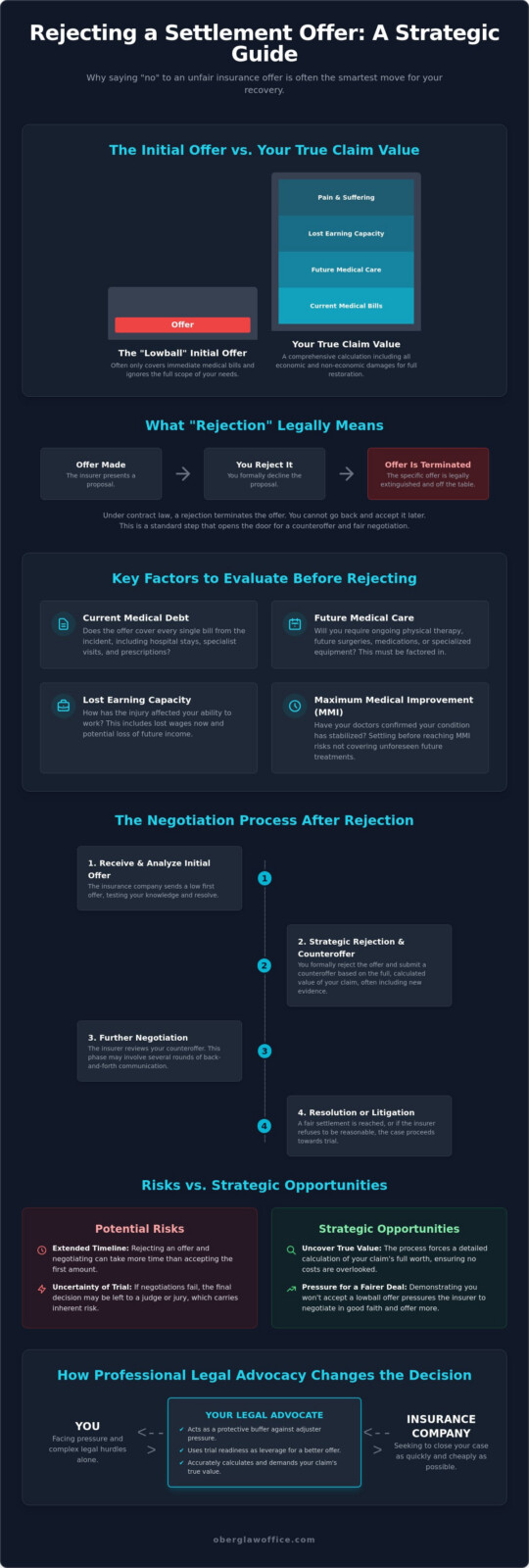
You’ve likely spent hours staring at a letter from an insurance company, wondering if the amount they’ve offered is enough to cover your recovery. It’s a heavy decision. When you decide to turn down a settlement offer, you aren’t just saying no to a check; you’re taking a specific legal action. Under contract law, rejecting an offer acts as a total termination of that proposal. Once you hit “send” on that rejection or tell the adjuster you won’t accept, the offer is legally extinguished. It doesn’t sit on a shelf waiting for you to change your mind. Unless the insurance company specifically agrees to keep it open, that specific deal is gone. While that might sound intimidating, it’s a very common and often necessary step in securing the compensation you need to move forward.
The Legal Reality of Saying “No”
In the legal world, we often look at the Mirror Image Rule. This principle suggests that for an acceptance to be valid, it must exactly match the offer. If you try to change even one small detail, you’ve technically rejected the original proposal and issued a counteroffer. It’s vital to understand what happens if I reject a settlement offer before you take that step. Once you reject it, you cannot usually go back and “un-reject” it a week later if you feel a sudden surge of financial anxiety. However, this doesn’t mean your case is over. Your right to pursue a lawsuit remains fully intact. In fact, most personal injury claims involve several rounds of rejection before a fair number is reached. We see this as a way to keep the door open for a better outcome rather than closing it on your rights.
Why Initial Offers Are Often Low
Insurance companies often use a volume strategy. They handle thousands of claims and want to resolve them as quickly and cheaply as possible to protect their bottom line. An adjuster might send a low initial offer just to see if you understand the true value of your claim. They’re testing your resolve and your knowledge. These early figures rarely account for the full scope of your needs. They might cover your current emergency room bill but ignore the physical therapy you’ll need next year or the wages you’ll lose because you can’t work full hours. We see this as a starting point rather than a final destination. Rejecting these “lowball” offers is a standard part of the journey toward a settlement that actually provides for your restoration and security. It’s about making sure the insurance company sees the person behind the file, not just a number on a spreadsheet.
Factors to Evaluate Before Rejecting a Settlement
Deciding whether to accept or decline an offer is a pivotal moment in your recovery. Before you determine what happens if I reject a settlement offer, you must look at the numbers through a clear lens of both your current reality and your future needs. The legal definition of a settlement is a formal agreement that ends your dispute and dismisses your litigation, but it only serves you if it truly covers the damage you’ve suffered. You aren’t just looking for a check; you’re looking for restoration. This requires a deep dive into your medical records, your work history, and the strength of the evidence against the other party.
Calculating the “Fair Value” of Your Claim
To understand if an offer is fair, you have to break your damages into two categories. Economic damages are the tangible costs, like your hospital bills and lost paychecks. Non-economic damages cover the intangible impact, such as your pain, suffering, and emotional distress. While many people hear about a “multiplier” method to calculate these, every case is unique and requires professional adjustment to reflect your specific life changes. It’s also vital to wait for Maximum Medical Improvement (MMI). This is the point where your doctors believe your condition has stabilized. If you settle before reaching MMI, you risk accepting a sum that doesn’t account for surgeries or treatments you might need next year. If you’re unsure if an offer meets these criteria, reaching out for a professional case review can help you evaluate your options with confidence.
- Current Medical Debt: Does the offer pay off every existing bill related to the accident?
- Future Care: Will you need ongoing physical therapy, medications, or specialized equipment?
- Lost Earning Capacity: If you can’t return to your previous job, does the settlement bridge that financial gap?
- Liability Strength: How clear is the evidence that the other party was at fault?
The Permanence of the Release Agreement
One of the most overlooked aspects of this process is the “Release of Liability” document. When you accept a settlement, you sign this contract, which permanently bars you from seeking more money later. Even if you discover a hidden injury or your condition worsens significantly a month from now, you cannot reopen the case. A Release of Liability is a total waiver of future legal claims. We often frame rejection as a necessary pause. It gives you the time to ensure every injury is fully diagnosed and every long-term consequence is understood. Taking this time protects you from being left with unpaid bills once the initial settlement money runs out. Understanding what happens if I reject a settlement offer helps you see that waiting for a fair deal is an act of self-protection, not just a delay in the process.
The Negotiation Chess Match: What Happens After Rejection?
Think of your rejection as the opening move in a strategic game. It’s a clear signal to the insurance company that you aren’t willing to settle for less than your claim is worth. Many people worry that they’ve burned a bridge by saying no, but the reality is quite the opposite. Rejection often opens the door to a much more serious and respectful conversation. When you understand what happens if I reject a settlement offer, you see that this is the stage where the power dynamic shifts. You move from being a claimant asking for help to a party demanding fairness. We see this transition as a vital part of the journey toward your restoration.
Crafting a Strong Counteroffer
Once you’ve turned down an offer, the next logical step is the counteroffer. This isn’t just about picking a higher number; it’s about providing a roadmap of your damages. A formal demand letter is drafted to outline the specific reasons the initial figure was insufficient. We often use this stage to introduce fresh evidence that wasn’t part of the initial discussion. This might include new MRI results, reports from vocational experts, or detailed statements about your daily struggles. If you are looking for a personal injury lawyer mesquite tx, you’ll want someone who knows how to build a case file that adjusters can’t ignore. When an adjuster sees a professional, evidence-backed counteroffer, their tone usually changes. They realize you’re prepared to do the work, and they often become more willing to negotiate in good faith.
Mediation and Arbitration
If direct negotiations hit a wall, we don’t just give up. We look toward Alternative Dispute Resolution, specifically mediation. Mediation is a non-binding meeting where a neutral third party, often a retired judge or experienced attorney, helps both sides find a middle ground. It’s a collaborative process rather than a confrontational one. You have the chance to explain the physical and emotional aftermath of your injury in a controlled environment. Mediation is a powerful tool to resolve cases that have stalled. It’s much faster than a trial, which can drag on for years. Mediation provides a sense of closure and security without the unpredictability of a jury box. It allows you to maintain control over the final outcome of your case while moving your life forward.
Potential Risks and Realities of Rejecting an Offer
Choosing to turn down an insurance company’s initial proposal is a bold step toward seeking fairness. However, we believe in being completely transparent about the path ahead. When you consider what happens if I reject a settlement offer, you must weigh the potential for a higher reward against the very real risks of litigation. This isn’t just about a bigger number on a page; it’s about the time, energy, and resources required to push through a system that often favors large institutions over individuals. We’re here to act as your guide, ensuring you understand every hurdle before we clear it together.
The Uncertainty of the Courtroom
Juries are fundamentally unpredictable. While we prepare every case as if it’s going to trial, we cannot guarantee how twelve strangers will interpret the evidence. They might be moved by your story, or they might be influenced by factors beyond our control. There’s also the reality of comparative negligence. In many states, if a jury decides you were even partially responsible for the accident, they can reduce your final award by that percentage. A trial is a win-or-lose scenario with no guaranteed minimum recovery. This means you could spend years in the legal system only to receive less than the insurance company’s original offer. It’s a high-stakes environment that requires a steady hand and a clear strategy.
Managing Litigation Costs
As your case moves from negotiation into active litigation, the costs of proving your claim will rise. We often need to bring in medical experts, vocational specialists, or accident reconstructionists to build an undeniable case. These professional fees, along with court filing costs and deposition expenses, are typically deducted from your final award. This affects your “net” recovery, which is the amount you actually take home after all fees and costs are settled. For example, a truck accident lawyer texas often deals with highly complex cases where these expert costs can be significant due to the specialized nature of the trucking industry.
You should also be aware that legal fees often increase as a case progresses. Based on 2026 industry standards, contingency fees often move from 33% for pre-lawsuit settlements to 40% or more once a case goes to trial. This reflects the intense labor and risk involved in a full-scale legal battle. We want you to feel empowered by this knowledge so you can make a decision that protects your financial future. If you’re struggling to decide whether to push forward, you can contact our team for a risk assessment of your current offer.
How Professional Advocacy Changes the Decision
Standing at the crossroads of a settlement decision can feel incredibly isolating. You’re balancing the immediate need for financial relief against the long-term reality of your recovery. This is where professional advocacy transforms the process from a stressful confrontation into a managed strategy. When you have a dedicated protector by your side, you no longer have to worry about what happens if I reject a settlement offer in a vacuum. A lawyer acts as a necessary buffer, handling every aggressive phone call and complex document so you can focus on your physical restoration. We believe that your only job right now should be getting better; our job is to handle the heavy lifting of the legal system.
One of the most powerful tools in our arsenal is the concept of “Trial Readiness.” Insurance adjusters are trained negotiators, and they keep close tabs on which law firms actually take cases to a jury and which ones simply settle every file that crosses their desk. When a firm is known for its willingness to fight in court, the insurance company’s risk assessment changes. They’re often more inclined to offer a fair figure during negotiations because they want to avoid the high costs and unpredictability of a trial. This reputation for unwavering determination serves as your greatest leverage, often resulting in higher offers without ever needing to step foot in a courtroom.
The Advantage of a Formidable Ally
Choosing a firm that offers a neighborly, accessible touch doesn’t mean sacrificing strength. In fact, it means you’re part of a collaborative partnership where leadership is personally invested in your outcome. You deserve direct interaction with senior legal professionals who understand the nuances of your case, rather than being passed off to support staff. This personal touch ensures that every detail of your suffering is articulated clearly to the opposing party. We also operate on a performance-based fee structure, which addresses a common concern about the cost of rejecting an offer. This contingency model means our interests are perfectly aligned with yours; we only succeed when we secure a result that truly reflects the fairness you deserve. It’s a shared risk that guarantees we’re pushing for the maximum possible restoration for you.
Your Next Steps Toward Fairness
You might feel pressured by “exploding offers” or tight deadlines set by an insurance adjuster. These are often tactics designed to trigger a fear of the unknown, making you settle before you fully understand the scope of your injuries. You shouldn’t feel rushed into a decision that affects the rest of your life. Even if you haven’t hired a firm yet, a mesquite personal injury lawyer can provide a professional review of your current offer to see if it meets the standards of 2026 medical and living costs. Understanding what happens if I reject a settlement offer starts with knowing your rights and the true value of your claim. We invite you to move from a state of uncertainty to a feeling of empowerment by getting the facts. Schedule your free strategy session today to evaluate your offer and plan your path toward a secure future.
Take Control of Your Financial Recovery
You don’t have to accept an offer that fails to address your long-term needs. By now, you understand that what happens if I reject a settlement offer is a shift toward a more strategic, evidence-based negotiation. You’ve seen how saying “no” to a lowball figure allows you to account for future medical bills and lost earnings while signaling to the insurer that you won’t be pressured. This process is about restoration and ensuring you aren’t left with the financial burden of an accident you didn’t cause.
With over 25 years of experience fighting insurance companies, our firm is ready to provide the steadfast protection you need. You’ll have direct access to Attorney Gregg Oberg for personalized advocacy, ensuring your voice is heard throughout the process. Our contingency-based fee structure means we don’t get paid unless you recover money, which removes the financial risk of standing up for your rights. Don’t let an adjuster’s deadline dictate your future. Get a Free Review of Your Settlement Offer today. You deserve a partner who is personally invested in your success and committed to your security.
Frequently Asked Questions
Can an insurance company withdraw their offer if I reject it?
Yes, an insurance company can withdraw an offer, and technically, your rejection legally terminates the proposal. Once you say no, the original offer is off the table and no longer exists under contract law. While adjusters often return to previous numbers during later negotiations, they aren’t legally required to do so. This is why we carefully evaluate the strength of your evidence before making a formal rejection to ensure we’re protected.
If I reject a settlement, can I change my mind and accept it later?
You generally cannot accept an offer once you’ve officially rejected it because the rejection “extinguishes” the deal. If you change your mind, your lawyer would have to ask the insurance company to renew the offer, which they may or may not do. It’s common for insurers to keep the same figure available as a baseline, but you should never assume a rejected offer will stay open indefinitely. We help you weigh these risks so you don’t lose a viable path to restoration.
Does rejecting a settlement offer mean I have to go to court?
No, rejecting an offer doesn’t automatically mean you’ll end up in a courtroom. Most personal injury cases are resolved through counteroffers, mediation, or direct negotiations long before a trial begins. Understanding what happens if I reject a settlement offer helps you see that rejection is often just a tool to move the conversation toward a fairer number. Filing a lawsuit is a separate step that we only take if the insurance company refuses to offer a settlement that covers your actual needs.
How long does it take to get a new offer after I reject the first one?
The timeline for a new offer can range from a few weeks to several months depending on the complexity of your case. A new proposal usually follows the submission of fresh evidence, such as updated medical records or expert reports that justify a higher demand. If we move into mediation, a new offer might emerge in a single day of intensive negotiation. We keep you informed at every step so the waiting period feels like a strategic pause rather than a state of uncertainty.
What is the “statute of limitations” and how does it affect my decision?
The statute of limitations is the legal deadline for filing a lawsuit, and it varies by state. For example, as of 2026, Florida has a two-year deadline, and Louisiana also uses a two-year period for injuries occurring on or after July 1, 2024. If you’re approaching this deadline, you can’t afford to spend months in back-and-forth negotiations without filing your case. We track these dates closely to ensure your right to seek fairness is never compromised by a ticking clock.
What happens if the insurance company refuses to negotiate after my rejection?
If the insurance company stops negotiating, we typically move forward by filing a formal lawsuit. This forces the insurer to respond through the court system and engage in the “discovery” process, where both sides exchange evidence. Often, the pressure of an impending trial date and the rising costs of their own legal defense will bring the insurer back to the table. We act as your steadfast protector during this phase, ensuring the insurance company knows we’re prepared for the long haul.
Can I reject a settlement offer if I already have a lawyer?
Yes, the final decision to accept or reject an offer always belongs to you. Your lawyer’s role is to provide professional guidance, explain the risks, and handle the communication, but they cannot force you to sign a settlement. We view our relationship with you as a collaborative partnership. We’ll give you our honest assessment of what happens if I reject a settlement offer in your specific case, but we’ll always respect your authority over your own recovery.
Is it possible to get a lower amount at trial than what was offered in settlement?
Yes, it’s a real possibility that a jury could award you less than the original settlement offer. While “nuclear verdicts” over $10 million are a growing trend in 2026, juries remain unpredictable and could even award nothing if they find you were primarily at fault. This is why we conduct a thorough risk assessment before recommending a trial. We want to ensure that the pursuit of a higher award is balanced against the security of the offer already on the table.