
What if the simple act of waiting for your final doctor’s visit cost you your entire legal claim? In Texas, missing the filing deadline by even a single day can mean a judge dismisses your case, leaving you responsible for every cent of your recovery. You’re likely feeling the heavy weight of medical bills while insurance adjusters encourage you to wait until you’re fully healed before taking action. It’s a common tactic designed to make you miss the statute of limitations for personal injury, which is typically two years from the date of your accident. We understand that you’re exhausted, but your right to justice shouldn’t have an expiration date you don’t understand.
This 2026 guide will give you a clear map of the deadlines that apply to your specific situation. You’ll discover how the discovery rule might offer a lifeline and what specific actions can protect your claim from being timed out. We’re here to provide the peace of mind that comes with knowing exactly where you stand, so you can focus on getting back on your feet while we handle the calendar.
Key Takeaways
- Understand how the statute of limitations for personal injury acts as a legal expiration date and why knowing your specific deadline is the first step toward protecting your family’s future.
- Learn about the “tolling” exceptions that could pause the clock on your filing deadline, potentially providing a vital second chance for your legal recovery.
- Discover why acting quickly is essential to preserving fading evidence and securing witness testimony before the strength of your case begins to decay.
- Explore how our compassionate, “no fee unless we win” partnership ensures you have a formidable legal protector by your side without any upfront financial stress.
- Identify the immediate steps you must take to initiate your claim and hold negligent parties accountable before your right to compensation disappears forever.
What Is the Statute of Limitations for Personal Injury?
When you’re hurting after an accident in Mesquite, your focus is naturally on your recovery and your family. The last thing you want to worry about is a ticking clock. However, the law creates a strict expiration date for your right to seek justice. This legal deadline, known as the Statute of limitations, acts as a final cutoff point for your case. If you don’t file your legal paperwork before this window closes, you lose the right to hold the negligent party accountable forever.
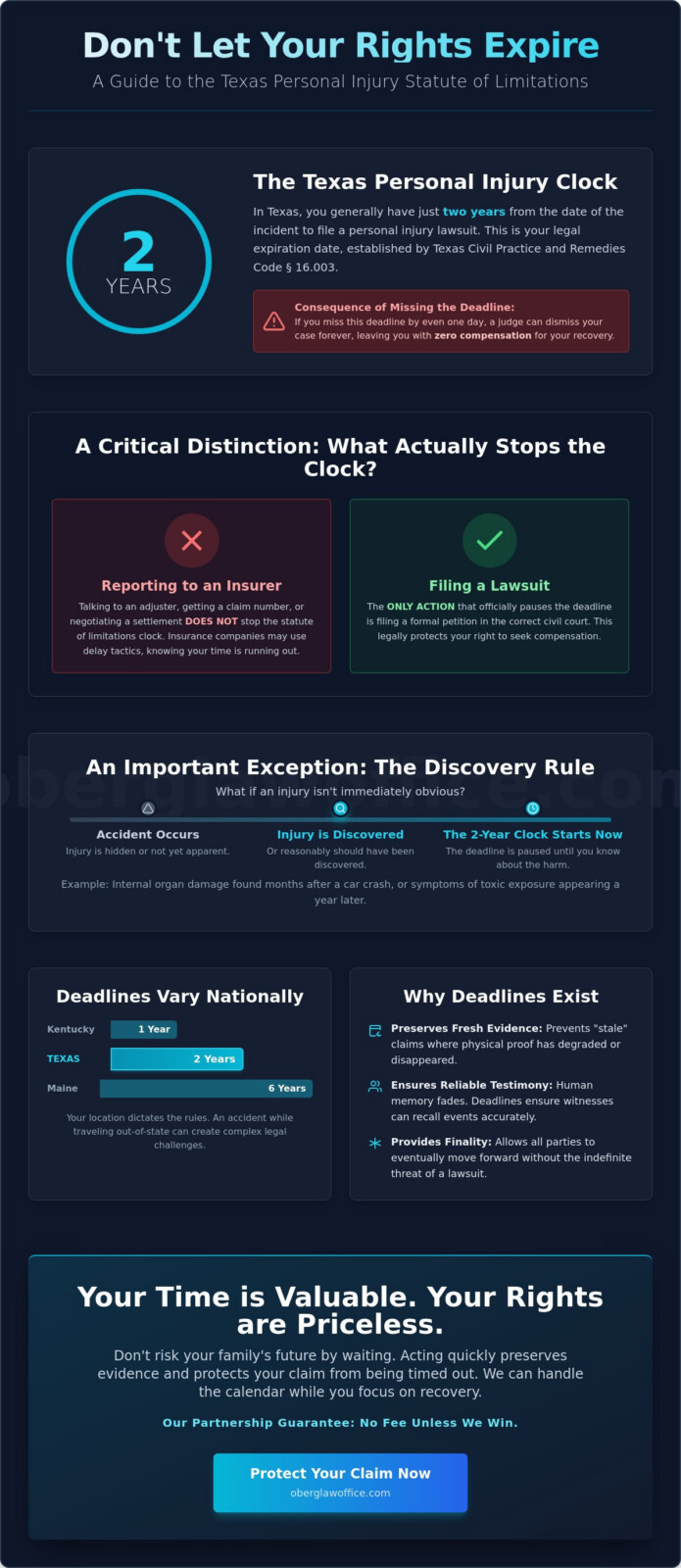
The statute of limitations for personal injury in Texas is generally two years from the day the incident occurred. This timeframe is established by the Texas Civil Practice and Remedies Code Section 16.003. While two years might seem like a long time, it passes quickly when you’re managing doctor appointments, physical therapy, and lost wages. Waiting until the last minute can put your entire claim at risk, as building a strong case requires time to gather evidence and speak with witnesses.
The Legal Purpose of Filing Deadlines
Courts exist to ensure justice is served fairly for everyone involved. These deadlines prevent “stale” claims from entering the judicial system years after an event has passed. Over time, physical evidence can disappear and documents often get shredded. Most importantly, human memory is fragile. A witness who can clearly describe a car crash today might struggle to recall the color of the traffic light three or four years from now. By setting a clear limit, the law ensures that trials rely on fresh, reliable evidence. It also provides a sense of finality for all parties, allowing people to eventually move forward with their lives.
Filing a Lawsuit vs. Reporting an Injury
Many neighbors make the mistake of thinking they’ve “filed” their case because they’ve been talking to an insurance company. This is a dangerous assumption. Notifying an insurance adjuster or receiving a claim number does not satisfy the statute of limitations for personal injury. You could spend 23 months negotiating in good faith with an adjuster, only to have them stop returning your calls the day the two-year mark passes.
The only action that officially stops the clock is filing a formal petition in a civil court. Insurance companies are well aware of these deadlines and may use “delay tactics” to keep you talking until your rights expire. At The Oberg Law Office, we make sure the necessary paperwork is filed correctly and on time, so you never have to worry about a technicality standing between you and the compensation you deserve. We treat your case with the urgency it requires, ensuring your voice is heard before the window of opportunity shuts.
State Variations: How Long Do You Really Have?
The national landscape for filing a claim is far from uniform. Depending on where your accident happened, your window for justice could be as short as 365 days in states like Kentucky or as long as six years in Maine. This clock defines your ability to recover compensation for your medical bills and lost wages. Your specific location dictates the rules of your recovery because state laws prioritize different timelines for different types of harm.
You might assume a car accident and a medical malpractice claim follow the same schedule. They often don’t. Many states set a two-year limit for general negligence but shorten that window for claims against healthcare providers. Matters get even more complex if you live in Texas but were injured while driving through another state. This “Choice of Law” issue can create a legal tug-of-war. You must identify which statute of limitations for personal injury applies to your specific situation before your rights expire. In 2024, records indicated that missing a deadline is one of the most common reasons valid claims are dismissed without a hearing.
The Discovery Rule: When the Clock Starts Late
Sometimes, the harm isn’t obvious the moment an accident occurs. You might feel fine after a minor collision, only to discover internal organ damage three months later. The discovery rule protects you in these scenarios. It pauses the countdown until the moment you reasonably should have known about your injury. Courts use a “reasonableness” standard here. If a typical person wouldn’t have noticed toxic exposure symptoms for a year, your deadline might extend. This rule ensures that hidden injuries don’t rob you of your right to seek justice and recovery.
Calculating Your Specific Deadline
To find your exact filing date, you first identify the “accrual date.” This is usually the day the accident happened. However, relying on the very last day of a legal deadline is a dangerous game. I always recommend aiming for a “soft deadline” at least six months before the official one. This buffer allows your legal team to gather evidence, interview witnesses, and build a strong case without the pressure of a looming cutoff.
If you feel overwhelmed by these dates, reaching out to a personal injury lawyer mesquite tx can provide the local clarity you need to move forward with confidence. We handle the technicalities so you can focus on healing with your family. Understanding the statute of limitations for personal injury is the first step in protecting your future. Don’t let a calendar mistake prevent you from getting the support you deserve.
Common Exceptions: When the Clock “Tolls” or Pauses
Life doesn’t always follow a neat schedule, and neither do legal claims. Sometimes, the law hits a pause button on your filing deadline. In legal terms, we call this “tolling” the statute. While the standard statute of limitations for personal injury in Texas is typically two years, these exceptions provide a vital safety net for neighbors who couldn’t realistically file a lawsuit on time. You shouldn’t assume you automatically qualify for extra time, though. These exceptions are narrow and strictly enforced. Proving your case fits into one of these categories requires clear evidence. If a judge rejects your reasoning later, your right to seek justice ends immediately. That is why having a steadfast protector by your side is so important when timing is tight.
Protecting Minors and Legally Incapacitated Individuals
Children don’t have the legal standing to represent themselves in court. Because of this, the clock often stays still until a minor reaches their 18th birthday. For example, if a child is hurt in a Mesquite car accident at age 10, they generally have until they turn 20 to file their own claim. Similar protections apply to individuals with mental disabilities or those who are temporarily incapacitated, such as being in a coma following a crash. Parents or legal guardians can choose to file a claim earlier to cover immediate medical bills, but the tolling ensures the victim’s rights stay protected until they are legally able to act for themselves.
Defendant Misconduct and Absence
Sometimes the person responsible for your pain makes it impossible to move forward with a case. If a defendant leaves the state of Texas to avoid a lawsuit, the time they spend outside the state borders might not count toward your deadline. This prevents negligent parties from simply waiting out the clock in another part of the country. Other scenarios where the clock might pause include:
- Fraudulent Concealment: This happens when a defendant actively hides their identity or hides the fact that their specific actions caused your injury.
- Bankruptcy Stays: If the person who caused your injury files for bankruptcy, the court issues an automatic stay. This pause stops the statute of limitations for personal injury from running out while the bankruptcy proceedings are handled.
- Military Service: Under the Servicemembers Civil Relief Act, the clock may pause if the defendant is on active duty.
Relying on these exceptions is a high-stakes gamble without professional guidance. We focus on ensuring your timeline is calculated accurately so you can focus on your recovery while we handle the insurance companies and the court’s rigid requirements.
The Risk of Waiting: Why the Deadline Isn’t Your Only Clock
You might think that having two years to file a claim means you can take your time. This is a dangerous misconception. While the statute of limitations for personal injury sets the final legal boundary, the practical window for building a winning case is much smaller. Your case is often at its strongest during the first 30 days after an accident. After that point, the “evidence decay” factor begins to erode your chances of a full recovery.
Physical evidence is fragile. Skid marks on a Mesquite road fade after a single heavy rain. Witnesses who were certain about what they saw on the day of the crash often move away or find their memories becoming fuzzy after just a few months. If you wait until the year mark to seek help, you’re fighting an uphill battle to prove facts that would have been obvious on day one.
The Vanishing Trail of Evidence
In modern personal injury cases, digital evidence is everything. Most commercial vehicles and many passenger cars now contain “black box” event data recorders. This data proves exactly how fast a driver was going and when they hit the brakes. However, this data is frequently overwritten within weeks if the vehicle is put back into service. A truck accident lawyer texas professional prioritizes immediate data downloads to prevent this loss. Our office can issue formal “spoliation letters” to insurance companies and trucking firms, which legally mandates them to freeze and preserve all evidence related to your crash.
- Surveillance footage from nearby businesses is often deleted every 7 to 14 days.
- Debris patterns at the scene change as soon as the road is cleared.
- Vehicle damage can be repaired or the car can be sold for scrap before it’s properly inspected.
Insurance Stalling Tactics
Insurance adjusters are trained to be friendly. They might call you regularly just to “check in” or tell you they’re waiting on one last piece of paperwork before they can settle. This is often a calculated strategy to run out the clock. If they can keep you talking until you are 48 hours away from the statute of limitations for personal injury, they hold all the power. They’ll often present a “take it or leave it” offer at the last second, knowing you no longer have time to hire a lawyer and file a formal lawsuit.
Many people also make the mistake of waiting until their medical treatment is completely finished before calling a lawyer. They worry that filing early is “rushing” the process. In reality, waiting can be fatal for your case. You don’t need to be fully healed to start the legal process; you just need a clear medical path. Starting early ensures your bills are tracked and your story is documented while the truth is still fresh. If you’ve been injured, don’t let the clock run out on your family’s future. Contact our team today for a free evaluation of your deadline.
Protecting Your Rights Before Time Runs Out
The clock doesn’t stop for your recovery. While you’re focusing on healing, the legal deadline for your case is ticking away. Understanding the statute of limitations for personal injury is vital, but you shouldn’t have to manage these dates while you’re in pain. At Oberg Law Office, we act as your steadfast protector. We ensure every filing meets Texas requirements so your right to compensation remains intact. Our process starts with a free strategy session. We clarify your specific deadline and evaluate the merits of your case. You’ll walk away with a clear roadmap, knowing exactly how much time remains to seek justice.
Your Immediate Action Plan
Taking the right steps now prevents headaches later. You need to gather essential evidence before it disappears or witnesses forget details. Start by organizing these items:
- Police and accident reports from the scene.
- Itemized medical bills and treatment records.
- Photos of your injuries and the property damage.
- Contact information for any witnesses.
Don’t wait for the insurance company to call you. If they reach out, avoid giving a recorded statement. These adjusters often look for ways to use your words against you to deny a claim or reduce your payout. Partnering with a mesquite personal injury lawyer ensures you have a local advocate who knows how regional courts handle these specific filing rules. We take over the communication so you don’t have to worry about saying the wrong thing. We recommend starting this process within 30 days of your accident to ensure no evidence is lost to time.
How Oberg Law Office Fights the Clock
We believe legal help should be accessible to everyone in our community. That’s why we offer a “No Fee Unless We Win” promise. This contingency model removes the financial barrier to taking early action. You won’t pay us a dime unless we successfully recover money for you. Our firm prioritizes direct attorney-client communication. You’ll speak with your lawyer, not just a staff member. We handle the heavy lifting of gathering records, interviewing witnesses, and filing formal complaints.
This allows you to focus on physical therapy and your family. You don’t have to carry this burden alone. We manage the calendar, track the statute of limitations for personal injury, and push for the settlement you deserve. Our goal is to provide peace of mind while we fight for your future. If you’ve been hurt, reach out today to ensure your voice is heard before the window of opportunity closes forever.
Take Control of Your Recovery Before Time Runs Out
The clock starts ticking the moment your accident occurs. Understanding the statute of limitations for personal injury is the first step toward reclaiming your peace of mind. While 2026 brings its own set of legal nuances, the core truth remains that waiting too long can permanently bar you from seeking the compensation you deserve. Evidence fades and witnesses move away; this makes it vital to act while the details are still fresh. You don’t have to carry this burden alone or settle for less than your family needs to move forward.
At The Oberg Law Office, we’ve spent over 25 years helping our Texas neighbors navigate these complex deadlines. When you call us, you won’t be passed off to a paralegal. Instead, you’ll have direct access to Attorney Gregg Oberg. We operate on a contingency-based model, so there are no fees unless we win your case. Let us handle the legal hurdles while you focus on your physical healing. Secure your future with a free injury strategy session today. We’re ready to stand by your side and fight for the justice you’re owed.
Frequently Asked Questions
Is it too late to sue if my accident happened over a year ago?
No, it’s usually not too late to seek justice for your injuries. In Texas, you generally have a two year window from the date of the incident to file a lawsuit. If your accident occurred in 2024 or 2025, you’re likely still within the legal timeframe to hold the negligent party accountable. Our Mesquite team helps you track these critical dates so you can focus on your physical recovery.
What happens if the statute of limitations expires on a weekend or holiday?
The deadline typically extends to the next business day if the final day falls on a Saturday, Sunday, or legal holiday. According to Texas Civil Practice and Remedies Code Section 16.072, you’re granted this small grace period to ensure your filing is officially recorded. It’s risky to wait until the final 24 hours; we prefer filing early to avoid any technical disputes with the court or insurance companies.
Can I still file a claim if I didn’t realize I was injured right away?
Yes, the discovery rule may protect your right to file even if the standard deadline has passed. This rule pauses the clock until the date you actually discovered, or should have discovered, your injury. For instance, if a medical error isn’t identified for 8 months, your two year clock might start on that later date. We’ll sit down with you to determine if this exception applies to your specific situation.
Does the statute of limitations apply to insurance claims or just lawsuits?
The statute of limitations for personal injury technically applies to filing a lawsuit in a court of law. However, insurance adjusters use this date as a hard cutoff for settlement negotiations. If the two year mark passes without a lawsuit being filed, the insurance company will stop offering compensation because you no longer have the legal power to sue them. We manage these timelines to keep your leverage strong.
What is the “statute of repose” and how is it different from a statute of limitations?
A statute of repose is a final, absolute deadline that exists regardless of when you discovered your injury. While a statute of limitations is flexible based on discovery, the statute of repose acts as a definitive shield for defendants. In Texas, most product liability cases have a 15 year statute of repose. This means if a defective tool was manufactured in 2010, your window to sue likely closed in 2025.
What happens if I miss the deadline by only one day?
Your case will almost certainly be dismissed by the judge if you miss the filing deadline by even one day. Texas courts are very strict about these timelines to maintain a predictable legal system. Missing the cutoff means you lose your right to recover money for medical bills or lost wages forever. We treat every client’s deadline with extreme urgency to ensure your family’s future is never put at risk.
Can the statute of limitations be extended if the defendant is in jail?
Yes, the clock may stop, or toll, if the person who caused your injury is incarcerated at the time the cause of action accrues. Texas Civil Practice and Remedies Code Section 16.001 lists imprisonment as a legal disability that can pause the timeline. This ensures you aren’t unfairly blocked from seeking justice just because the negligent party is behind bars. We investigate the defendant’s status to find every possible way to protect your claim.
How long do I have to sue a government entity for an injury?
You often have as little as 180 days to provide formal notice of a claim against a government body in Texas. The Texas Tort Claims Act creates much shorter windows than the standard statute of limitations for personal injury. Some local municipalities, like the City of Mesquite, have their own specific charter requirements for how and when you must report an injury. You must act immediately to preserve your rights against the state.