
Imagine sitting at your kitchen table, staring at a stack of medical bills that grows every time you check the mail. Between the calls from aggressive insurance adjusters and the physical pain that hasn’t faded, the idea of filing a personal injury lawsuit in texas feels like an overwhelming mountain to climb. You shouldn’t have to face this burden alone while you’re trying to heal. It’s frustrating to feel like a number in a system designed for large institutions rather than neighbors like you.
We understand that the legal process can feel cold and confusing, but you deserve a clear path to justice. This guide provides a straightforward roadmap to help you secure the compensation and restoration you need to move forward. We’ll walk you through the essential steps of the process, including the strict two-year statute of limitations and how the state’s 51% shared fault rule impacts your recovery. You’ll learn exactly how fault is calculated and how a steadfast advocate can handle the stress of the courtroom so you can focus on your family and your health.
Key Takeaways
- Learn the four essential pillars of a negligence claim and how proving a lack of ordinary care forms the foundation of your pursuit for justice.
- Understand the critical two-year deadline and how the Texas 51% bar rule calculates your eligibility for compensation based on shared responsibility.
- Follow a step-by-step roadmap for filing a personal injury lawsuit in texas, including what happens during the formal exchange of evidence and depositions.
- Identify the specific types of economic and non-economic damages available to you so you can accurately value the long-term impact of your injuries.
- Find out how a contingency fee partnership ensures you have access to a dedicated advocate who is personally invested in your recovery without upfront costs.
Understanding the Legal Grounds for an Injury Claim in Texas
Before you take the first step in filing a personal injury lawsuit in texas, you need to know if your situation meets the legal requirements for a claim. It isn’t enough to simply be hurt. You must prove that another party was negligent. In Texas, negligence is defined as the failure to use “ordinary care.” This means the person or company didn’t do what a person of reasonable prudence would have done in the same situation. Whether it’s a driver looking at their phone or a property owner ignoring a broken stair, their lack of care created a hazard that shouldn’t have been there. We look at these situations through a neighborly lens. If a reasonable neighbor wouldn’t have left that danger in your path, the law says you may have grounds for a claim.
Texas law also makes a clear distinction between damage to your vehicle and damage to your person. While a property claim covers the cost of repairs to your car or bike, the Legal definition of personal injury focuses on the physical, mental, and emotional toll an accident takes on your life. Filing a personal injury lawsuit in texas is specifically designed to address these human costs. This includes things like your medical bills, lost wages from missed work, and the pain you endure every day. Proving these losses requires a detailed approach that goes far beyond just showing a photo of a wrecked car.
The Four Elements of a Negligence Case
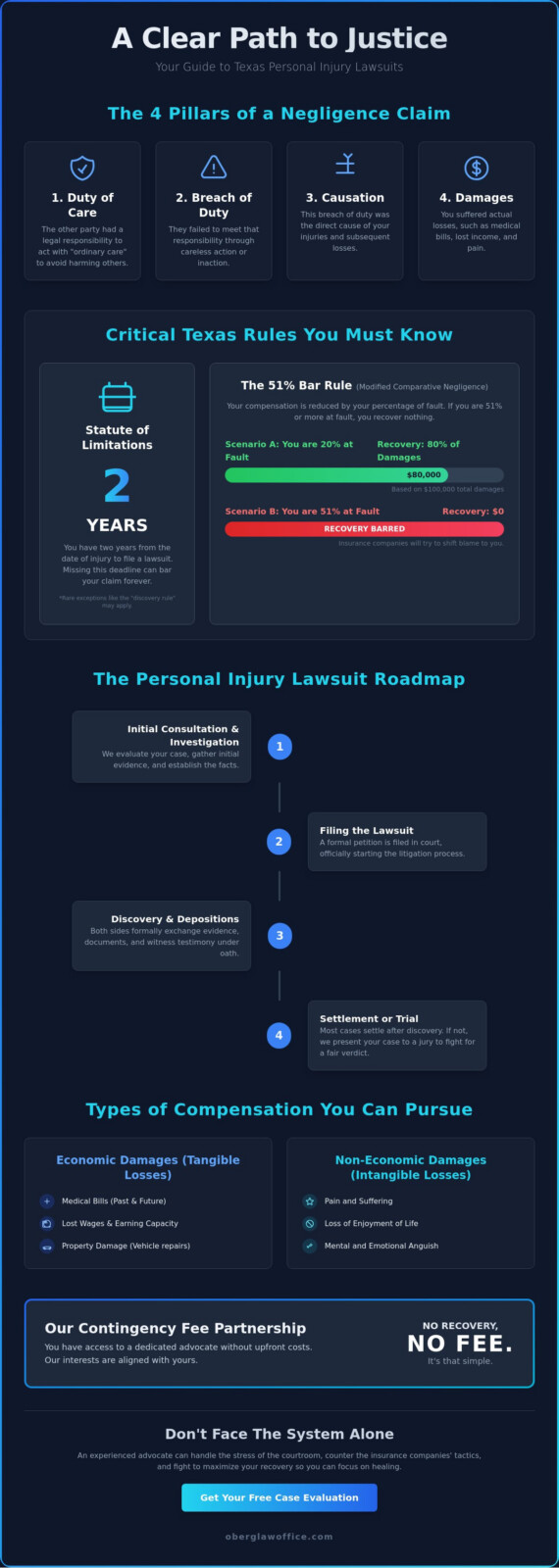
To win your case, we must establish four specific pillars. First is duty, which means the other party had a responsibility to act safely. Second is a breach of that duty. Third is causation, proving the breach directly led to your harm. Finally, we document damages, which are the actual losses you’ve suffered. Without all four, a claim cannot stand. We work to build this foundation for every client we protect.
Common Scenarios That Lead to Litigation
Many different situations can lead to a lawsuit. We often see car and motorcycle collisions caused by distracted drivers. Some cases are more complex, such as those requiring a truck accident lawyer texas to handle commercial regulation violations. Other times, people are hurt in slip and fall incidents caused by poorly maintained properties or “premises liability” issues. Each scenario requires a specific strategy to restore fairness.
Texas-Specific Rules: Deadlines and Shared Fault Math
Time is a quiet but relentless factor in any legal case. When you’re dealing with the aftermath of an accident, the last thing you want to think about is a ticking clock. However, the law in our state sets very specific boundaries for filing a personal injury lawsuit in texas. These rules are designed to ensure that evidence stays fresh and memories remain clear. Understanding these boundaries isn’t just about following paperwork; it’s about protecting your right to seek restoration and fairness. We believe that knowing the rules of the road helps you feel more empowered as you move toward a resolution.
The Two-Year Statute of Limitations
In Texas, you generally have exactly two years from the date of your injury to file a formal claim in court. This is a strict deadline set by the state legislature. While two years might seem like plenty of time, it passes quickly when you are focused on surgeries, doctor appointments, and physical therapy. There are rare exceptions to this rule. For instance, the “discovery rule” may apply if an injury wasn’t immediately obvious, or the clock might be “tolled” for minors until they turn 18. For the vast majority of adults, however, the clock starts the moment the accident occurs. Missing this deadline typically bars your recovery forever, meaning you lose the right to hold the responsible party accountable. It is always wise to talk with a local advocate early to make sure your rights are fully protected.
Modified Comparative Negligence Explained
Texas follows a rule known as modified comparative negligence, often called the “51% Bar Rule.” This is where the math of fairness comes into play during a lawsuit. A jury or an insurance adjuster will look at the facts and assign a percentage of fault to everyone involved in the incident. If a jury finds that you are 51% or more responsible for your own injury, you are legally barred from recovering any money from the other party. This rule is why insurance companies work so hard to shift even a small amount of blame onto you. They know that if they can push you over that 51% threshold, they don’t have to pay a dime.
If your fault is determined to be 50% or less, you can still recover compensation, but your final award will be reduced by your percentage of blame. For example, imagine a jury decides your total damages equal $100,000. If they find you were 20% at fault for the collision, your final check will be reduced by $20,000, leaving you with $80,000. These specific calculations must follow the Texas Rules of Civil Procedure and state statutes. Every single percentage point matters when you are filing a personal injury lawsuit in texas. A shift from 10% fault to 30% fault can mean losing a significant portion of the funds you need for medical debt and future care. We focus on ensuring the blame stays where it belongs so you receive the full measure of justice you deserve.
The Step-by-Step Litigation Process in Texas Courts
The transition from negotiating with an insurance company to actually filing a personal injury lawsuit in texas marks a significant shift in your case. It’s the moment you move from asking for a fair settlement to demanding justice through the court system. This process starts when your legal team drafts and files a document known as the Original Petition. This isn’t just paperwork; it’s your formal statement to the court outlining how you were harmed and why the defendant is responsible. Once this is filed, the defendant is served with notice and has a specific window of time to file a written answer. This exchange of documents sets the stage for a collaborative partnership between you and your advocate as we move toward restoration.
To get a broader view of how the system works, you can review the Basics of Civil Litigation in Texas, which outlines the foundational steps for any civil case. While the process can feel long, every step is designed to bring the truth to light and ensure that neither side is caught by surprise. We stand by you during every hearing and deadline, making sure you never feel lost in the shuffle of court dates and legal jargon.
From Initial Petition to the Discovery Phase
After the initial filings, your case enters the discovery phase. This is the most active part of the litigation process. During this time, both sides exchange evidence through several specific methods:
- Requests for Production: We demand the other party hand over physical evidence, such as maintenance logs, internal emails, or dashcam footage.
- Interrogatories: These are written questions that the other side must answer under oath.
- Depositions: You and the other parties involved will give oral testimony in front of a court reporter. Don’t worry about this; your lawyer is there to protect you from aggressive questioning and ensure your story is told accurately.
Mediation and Settlement Negotiations
Many people fear a long, drawn-out trial, but the reality is that most cases resolve long before they reach a jury. In many Texas jurisdictions, judges actually require parties to attend mediation before a trial date is set. During mediation, a neutral third-party mediator helps both sides find common ground. This is often where the most productive negotiations happen. Settling your case in mediation offers certainty and speed, allowing you to pay off medical debts and move forward without the stress of a public trial. However, if the other side refuses to be fair, we remain steadfast and prepared to take your case to a jury to ensure you receive every dollar you deserve.
Maximizing Your Recovery: Damages and Trial-Ready Evidence
Winning a case isn’t just about showing you were hurt; it’s about proving the full extent of your loss. When you are filing a personal injury lawsuit in texas, the goal is to make you “whole” again. While no amount of money can truly erase a traumatic event, a successful claim provides the financial security needed to handle mounting medical bills and lost income. We take an investigation-first approach because we know that insurance companies will try to minimize your suffering. By gathering trial-ready evidence from day one, we signal to the other side that we are prepared to fight for your restoration and fairness.
Proving the long-term impact of an injury often requires more than just your testimony. We frequently work with medical experts to explain to a jury how your injuries will affect your ability to work and enjoy life in the years to come. This professional testimony bridges the gap between a medical diagnosis and the legal requirement to prove future damages. It’s a collaborative effort designed to ensure the compensation you receive today is enough to cover the challenges of tomorrow.
Types of Compensatory Damages Available
Texas law categorizes your losses into two main groups. Economic damages are the tangible, receipt-based costs you’ve incurred. These include hospital bills, pharmacy costs, and the wages you lost while recovering. Non-economic damages are more personal. They cover your physical impairment, disfigurement, and the emotional distress caused by the accident. Calculating “pain and suffering” is complex, but we use proven methods to present your story to a jury with clarity and impact. In rare cases involving gross negligence, you may also be eligible for exemplary damages, which are meant to punish the wrongdoer for especially reckless behavior.
Building a Strong Evidence File
A successful lawsuit is built on a foundation of facts. To maximize your recovery, we follow a rigorous checklist for evidence collection:
- Immediate Documentation: We secure police reports, dashcam footage, and witness statements before they disappear.
- Expert Reconstruction: For complex vehicle collisions, we use accident reconstruction experts to prove exactly how the crash occurred.
- Medical Records: We compile every visit and diagnosis to create a clear timeline of your physical recovery.
- The Injury Journal: We encourage you to keep a daily diary. Documenting your pain levels and the daily activities you can no longer perform provides powerful evidence of your non-economic losses.
If you’re ready to start building a case rooted in truth and security, reach out to our team for the dedicated support you deserve.
Why an Experienced Advocate is Essential for Your Case
Choosing who will represent you is the most critical decision you’ll make after an accident. Many large firms operate as “settlement mills,” where cases are processed in bulk and clients rarely speak to their actual attorney. This high-volume approach often leaves money on the table because the firm is focused on quick turnovers rather than your long-term security. When filing a personal injury lawsuit in texas, you deserve a partner who is personally invested in your restoration. We believe in a different way of practicing law, one where you’re treated like a neighbor, not a file number. Our firm stands as a steadfast protector, ensuring that large insurance corporations don’t push you around during your most vulnerable moments.
Personalized Legal Guidance vs. Large Firms
Your story is unique, and your legal strategy should be too. Having an attorney who knows your name and the specific ways your injury has changed your life makes a profound difference in the courtroom. We provide a Texas personal injury recovery guide that is tailored to your needs, ensuring every detail of your loss is documented. Because we handle a selective number of cases, you’ll interact directly with senior professionals rather than support staff. This direct access builds trust and ensures that our deep experience in local courts is used to create maximum leverage during negotiations. We aren’t just filing papers; we’re building a partnership focused on your future.
The Contingency Fee Promise
We believe that fairness shouldn’t have an entry fee. Many people hesitate to seek help because they fear the high cost of legal hourly rates. Our firm operates on a contingency fee structure, which is a simple “No Win, No Fee” promise. This means we take on all the financial risk of filing a personal injury lawsuit in texas. We cover the upfront litigation costs, including court filing fees and the expense of hiring expert witnesses to prove your case. You only pay us if we successfully recover money for you. This model ensures that everyone has access to high-quality legal protection, regardless of their current financial situation. It aligns our success directly with yours. We invite you to schedule a free strategy session today to discuss your Texas injury claim and learn how we can stand by you as a knowledgeable guide and advocate.
Your Path to Justice and Restoration
Taking action after a serious accident is about more than just paperwork. It’s about reclaiming your peace of mind and holding responsible parties accountable for the harm they’ve caused. You now understand the critical role of the two-year deadline and how the 51% fault rule can impact your compensation. By focusing on trial-ready evidence and a clear legal strategy, filing a personal injury lawsuit in texas becomes a manageable journey toward recovery rather than a source of anxiety.
With over 25 years of Texas legal experience, our firm is dedicated to providing the personal touch you deserve. You’ll have direct access to your attorney throughout your case, ensuring your voice is always heard. We work on a contingency-based fee structure, meaning you pay nothing unless we win. Don’t let medical debt and insurance pressure define your future. Get Your Free Case Strategy Session Now and let us serve as your steadfast protector. You’ve been through enough; let us handle the legal burden so you can focus on your health and your family.
Frequently Asked Questions
How long does a personal injury lawsuit take in Texas?
The timeline for a lawsuit can range from several months to two years or more depending on the complexity of the facts and the court’s current backlog. While simple settlements might resolve relatively quickly, cases that require the full discovery phase and mandatory mediation take more time to process. We work to move your case forward with purpose, ensuring we don’t sacrifice the full value of your claim for a rushed result.
Can I still sue if I was partially at fault for the accident?
Yes, you can still seek justice as long as your percentage of responsibility is 50% or less. Texas uses a modified comparative fault rule, which means your final compensation is reduced by your share of the blame. For instance, if a jury finds you 20% responsible for a collision, you would receive 80% of the total damages. If your fault reaches 51%, the law bars you from any recovery.
What is the statute of limitations for personal injury in Texas?
The deadline for filing a personal injury lawsuit in texas is generally two years from the date the injury occurred, as mandated by the Texas Civil Practice & Remedies Code. For wrongful death claims, this two-year clock begins on the date of the individual’s death. It’s vital to contact an advocate early so evidence can be preserved before this strict legal window closes and your right to recovery is lost forever.
Do I have to go to court for a personal injury claim?
Most injury claims are resolved through settlements or mediation without ever requiring a trial in front of a judge. We prepare every file with the determination needed for a courtroom battle, which often gives us the leverage to reach a fair agreement earlier in the process. If the insurance company refuses to offer a settlement that covers your medical debt and restoration, we are fully prepared to protect you in court.
What is the average settlement for a Texas personal injury case?
There isn’t a single “average” settlement because every person’s situation and recovery needs are different. Your compensation is calculated based on concrete factors like your total medical bills, lost wages from missed work, and the long-term impact on your quality of life. We focus on the specific details of your story to ensure your settlement reflects the true cost of your injuries rather than a generic industry estimate.
How much does it cost to hire a personal injury lawyer in Texas?
Our firm works on a contingency fee basis, which means there are no upfront costs or hourly bills for you to worry about. We only receive a fee if we successfully win your case or reach a settlement. This fee is typically a percentage of the total recovery, often ranging from 33% to 40%. This structure ensures that everyone in our community has access to high-quality legal protection regardless of their financial status.
What happens if the insurance company denies my claim?
A denial from an insurance adjuster is often just the beginning of the formal legal process. If the company refuses to accept liability or offers an amount that doesn’t cover your losses, filing a personal injury lawsuit in texas allows us to use the discovery process to uncover the truth. We stand as a formidable advocate against these large institutions, using the court’s power to ensure they are held accountable for their obligations.
What documents do I need to start a lawsuit?
To build a strong foundation, you should gather any records that document the incident and your physical recovery. This includes police reports, photos of the accident scene, and contact information for any witnesses. It’s also helpful to keep all medical bills, treatment records, and pay stubs that show the income you’ve lost. These documents act as the essential evidence we need to prove the extent of your damages and fight for your fairness.