
Did you know that in Texas, being found just 51% responsible for your accident could mean you walk away with nothing at all? It’s a heavy thought to carry when you’re already dealing with the physical and emotional aftermath of a crash or a fall. You’re likely feeling the pressure of mounting medical bills and wondering if you’ve already missed a critical legal deadline. It’s completely normal to feel a bit lost when you’re trying to figure out how to file a personal injury claim in Texas while just trying to get back on your feet.
We believe you deserve a clear path to restoration without the stress of cold, detached legal formality. This 2026 guide is designed to help you navigate the system with confidence, ensuring you understand the strict two-year statute of limitations and how to protect the full value of your claim. We’ll break down the state’s modified comparative negligence rules and explain how a contingency-based partnership means you work directly with senior legal experts without any financial risk. From gathering evidence to calculating your true damages, you’re about to learn exactly what it takes to secure the fairness you’re owed.
Key Takeaways
- Learn why seeking immediate medical care is the most vital step to link your injuries directly to the incident for insurance purposes.
- Understand the strict two-year statute of limitations and how Texas “modified comparative fault” rules could impact your final recovery.
- Discover the specific types of visual and witness evidence you need to collect early before critical details disappear from the scene.
- Master the step-by-step process of how to file a personal injury claim in texas, from notifying insurance carriers to the formal investigation phase.
- Find out how working directly with a senior attorney on a contingency basis ensures your rights are protected against large institutions without any upfront costs.
Immediate Actions: The Foundation of Your Texas Injury Claim
The moments following an accident are often a blur of adrenaline and confusion. While your instinct might be to push through the pain, the choices you make in these first few hours dictate the success of your future recovery. If you’re looking into how to file a personal injury claim in texas, you must treat this initial window as the foundation of your entire case. Everything you do now serves to protect your health and your right to a fair restoration. We’ve seen how quickly insurance companies move to minimize claims, so taking these steps immediately keeps the power in your hands.
Seeking Medical Attention and “MMI”
Your first priority is a professional medical evaluation. Even if you feel okay, many injuries like whiplash or internal trauma don’t show symptoms for days. Insurance adjusters look for any gap in treatment to argue that your injuries weren’t caused by the accident or that they aren’t serious. By seeing a doctor right away, you create a clear paper trail that links the event to your physical condition. This is a core concept in personal injury law, where evidence must be documented before it can be disputed.
As your treatment continues, your doctor will eventually mention Maximum Medical Improvement, or MMI. This is the point where your condition has stabilized as much as it’s likely to, even if you haven’t fully returned to your pre-accident health. You shouldn’t settle your claim until you reach MMI. Doing so ensures you aren’t stuck paying for future medical needs that weren’t accounted for in an early, low-ball settlement offer. Consistent medical records prevent insurers from claiming your pain stems from a pre-existing condition rather than the recent incident.
Reporting the Incident Correctively
Official documentation is your strongest shield against a “he-said, she-said” argument. If you’re in a car crash, you need to file a Texas Peace Officer’s Crash Report (CR-3). If the police don’t arrive at the scene, you can often file a report online through the state’s official channels. For a Texas personal injury attorney, this document is an essential piece of the puzzle that proves when and where the negligence occurred.
If your injury happened at a store or workplace, notify management immediately. Ask them to create a formal incident report and request a copy for your records before you leave. This prevents the property owner from claiming the event never happened. When you understand how to file a personal injury claim in texas, you realize that these reports are the objective facts that large institutions find difficult to ignore.
Collect what we call Golden Hour evidence while you’re still at the scene. Take photos of everything: vehicle damage, skid marks, broken railings, and your own visible injuries. If there are witnesses, get their names and phone numbers. Most importantly, stay silent regarding who is to blame. Even a simple “I’m sorry” can be twisted by an insurance company into an admission of fault. Let the evidence speak for itself while you focus on your recovery.
Understanding Texas Injury Laws: Deadlines and Shared Fault
Texas legal rules aren’t just suggestions. They are the boundaries of your recovery. If you’re learning how to file a personal injury claim in texas, you’ll find that timing and liability are the two most critical factors. We understand that legal jargon can feel overwhelming while you’re healing, but knowing these rules protects you from being taken advantage of by insurance companies that want to protect their own bottom line.
The Two-Year Filing Deadline
You don’t have forever to seek justice. The Texas Statute of Limitations for personal injury is two years from the date of the injury. This deadline is non-negotiable in the eyes of the civil court. If you miss this window, you lose your legal right to demand compensation, regardless of how clear the other party’s negligence was. It’s a hard wall that stops many valid cases before they even begin.
Some exceptions do exist for those facing unique hurdles. For instance, the clock is typically paused for minors until they reach age 18. Similarly, the “discovery rule” might apply if an injury wasn’t immediately apparent at the scene. However, these are rare legal nuances that require careful documentation. Most individuals should assume the two-year clock is ticking from the moment of the incident. Waiting until the last minute often makes it harder to find witnesses or secure fresh evidence.
Proportionate Responsibility and Your Settlement
Texas operates under a system known as “modified comparative negligence.” This is governed by the Texas proportionate responsibility statute, which determines how fault is shared between everyone involved. Under this law, you can recover damages as long as you aren’t more than 50% responsible. If a jury finds you 51% at fault, you’re legally barred from recovering any compensation. This is why understanding the nuances of how to file a personal injury claim in texas involves more than just filling out forms; it involves building a case that minimizes your liability.
Even if you’re only partially at fault, it impacts your check. If you’re assigned 10% of the blame for a $100,000 claim, your final recovery is reduced to $90,000. Insurance adjusters know this rule well and often try to shift small percentages of blame onto you to save their company money. Proving the other party held the overwhelming majority of negligence requires aggressive evidence gathering and a steady hand. If you find yourself facing these complex rules alone, reaching out for a free legal consultation can ensure your rights stay protected while you focus on getting better.
Compiling Evidence for Your Texas Personal Injury Claim
Evidence is the bridge between what happened and the justice you receive. When you’re determining how to file a personal injury claim in texas, think of yourself as a storyteller who must back up every word with a hard fact. Photos of the scene, vehicle damage, and your physical injuries are the most immediate tools you have. Don’t forget to document environmental factors like missing stop signs or poor lighting, as these often change shortly after an incident. We’ve seen how quickly a scene can be cleaned up, so capturing these details early is vital.
Witnesses provide the objective perspective that juries value. Collect names and phone numbers immediately, as people move and memories fade. On the financial side, keep every single medical bill and pharmacy receipt. Tracking lost wages through pay stubs and employer letters is equally important to show the full economic impact of the event. For complex cases, expert testimony from accident reconstruction specialists or medical professionals often provides the final piece of the puzzle. You can find general guidance on these requirements at TexasLawHelp.org.
Digital and Electronic Evidence
Modern claims rely heavily on electronic data that didn’t exist a decade ago. Dashcam footage or nearby surveillance video from a local business can provide an undisputed account of the event. If your case involves a commercial vehicle, “Black Box” data is vital for proving speed and braking patterns at the time of impact. Be careful with your own digital footprint during this time. Defense attorneys will scour your social media for any post that contradicts your injury claims, so it’s best to stay offline until your case is resolved. One misplaced photo can be used to question the severity of your pain.
Documenting Non-Economic Damages
Not all losses come with a receipt. Documenting your daily pain and the ways the injury has changed your life is crucial for a full recovery. We suggest keeping a daily journal to track your physical limitations and emotional struggles. This helps us tell the story of your recovery in a way that numbers alone cannot. Testimony from friends and family helps illustrate your loss of quality of life to a jury. For those dealing with life-altering changes, a catastrophic injury lawyer at Oberg Law Office can help you quantify these profound non-economic damages to ensure your future security. We are here to make sure every part of your struggle is acknowledged and compensated.
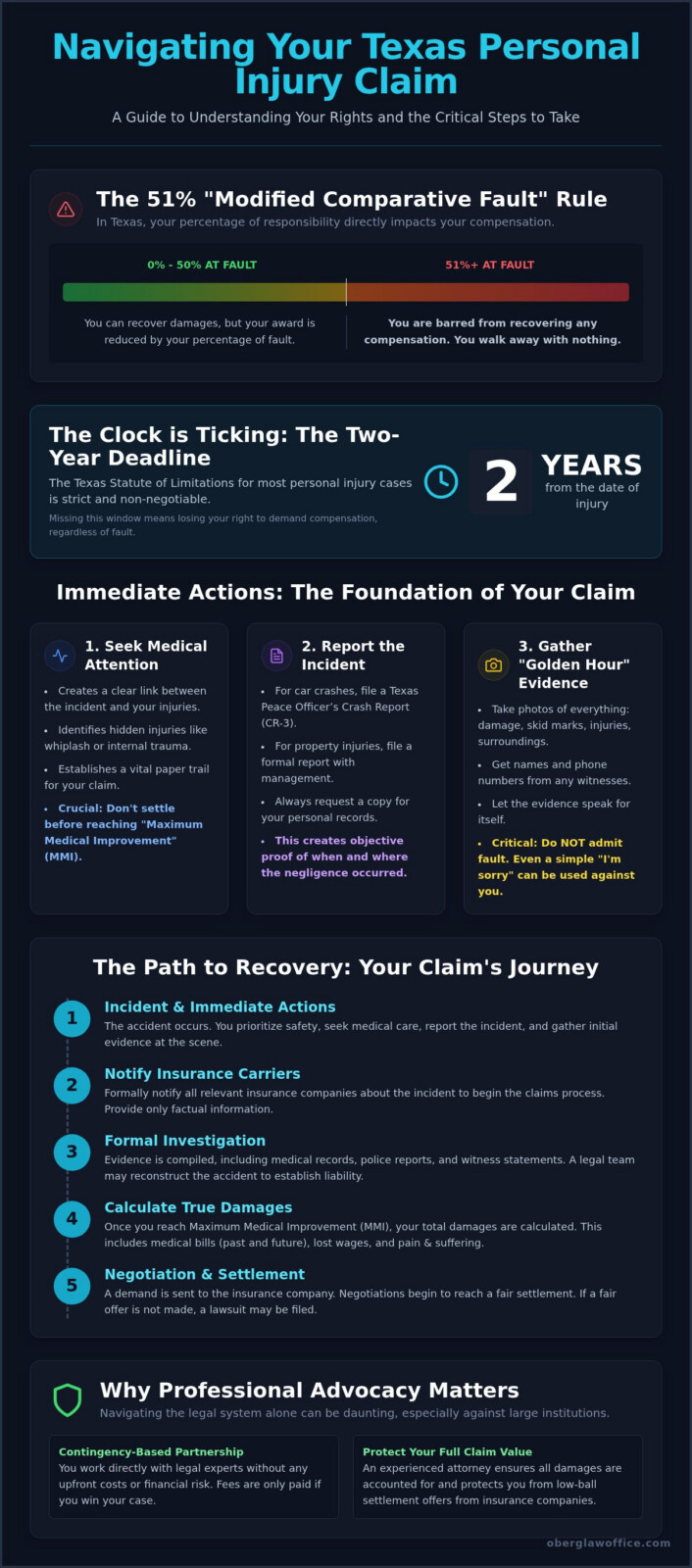
The Step-by-Step Process of Filing Your Claim
Filing a claim isn’t just about filling out a few forms. It’s a strategic sequence of events designed to prove your case and secure the restoration you deserve. When you’re learning how to file a personal injury claim in texas, you’ll find that the process moves from informal notifications to high-stakes negotiations. We treat this journey as a collaborative partnership, keeping you informed while we handle the heavy lifting of legal documentation and insurance communication.
The first formal step is notifying the negligent party and their insurance carrier of your intent to file. This isn’t a casual phone call; it’s a legal marker that establishes your claim. While you focus on your physical recovery, your legal team enters the investigation phase. We look deep into the details, uncovering hidden liability through maintenance logs, cell phone records, or surveillance data. This information eventually fuels your Demand Letter. This critical document summarizes the facts of the accident, provides proof of negligence, and lists the total value of your damages. A strong demand letter signals to the insurance company that you’re prepared and won’t be pushed around.
Navigating Insurance Negotiations
Insurance adjusters are trained to protect their company’s profits, not your health. You’ll likely encounter common tactics like the “low-ball” offer, where they suggest a small settlement before you even know your full medical needs. They might also try the “recorded statement” trap. They’ll ask seemingly innocent questions, hoping you’ll say something that shifts blame onto yourself. You should also never sign a medical release form without legal review. These forms often give adjusters access to your entire medical history, which they’ll use to claim your current injuries are actually pre-existing conditions. Most Texas settlements are reached through a series of back-and-forth offers that can take several months to finalize.
Filing a Lawsuit in Texas Civil Court
If the insurance company refuses to offer a fair settlement, the next step is moving from an insurance claim to a formal lawsuit in a Texas civil court. This triggers the Discovery Process. During this phase, both sides exchange evidence and take depositions to clarify the facts. It’s a rigorous part of the process where having an experienced protector by your side is vital. Many cases find a resolution during mediation, where a neutral third party helps both sides reach an agreement. If mediation doesn’t work, your case moves to a trial where a judge or jury decides the outcome. If you’re ready to start this process with a partner who cares about your future, you can contact us for a free strategy session to discuss your options.
Why Professional Advocacy Matters: The Oberg Law Office Advantage
Managing the aftermath of a serious injury is exhausting. While you focus on your physical recovery, the legal clock is ticking and insurance adjusters are already looking for ways to minimize your story. Attempting to handle the technicalities of how to file a personal injury claim in texas on your own often feels like a lopsided battle. You’re facing institutions with massive resources; you deserve a protector who brings that same level of force to your side of the table. We believe in providing a neighborly, accessible experience that combines deep legal authority with genuine compassion.
Gregg Oberg brings over 25 years of Texas litigation experience to every case he handles. This isn’t a “big law” factory where your file is handed off to a junior assistant or a support staff member. You work directly with a senior Texas personal injury attorney who is personally invested in your restoration. We operate on a contingency fee model, which means you don’t pay us a dime unless we secure a recovery for you. This structure ensures that justice is accessible to everyone, regardless of their current financial situation. It’s our way of sharing the risk and proving our commitment to your success.
Maximizing Your Financial Recovery
A fair settlement must cover more than just your current medical bills. We look beyond the surface to identify “hidden” insurance policies, such as umbrella coverage or corporate liability layers, that an individual might miss. Our team also works to quantify the long-term impact of your injuries, including future surgeries, physical therapy, and lost earning capacity. If your situation involves a vehicle, our specialized car accident representation ensures that every detail of the crash is used to build a formidable case for maximum value. We don’t just settle; we strive for a result that truly secures your future.
Your Free Initial Strategy Session
Taking the first step shouldn’t feel like a high-pressure sales pitch. Our free initial strategy sessions are designed to be educational and empowering. We’ll sit down with you, listen to your story, and evaluate the merits of your claim based on current Texas law. We’ll give you an honest assessment of what it takes to successfully determine how to file a personal injury claim in texas for your specific circumstances. This is a no-risk opportunity to get your questions answered by a professional who cares about your wellbeing. You’ll walk away with a clear understanding of your rights and a roadmap for the journey ahead. Let us carry the legal burden so you can focus on getting your life back on track.
Take the First Step Toward Your Restoration
You’ve already taken a significant step by educating yourself on the legal path ahead. From respecting the strict two-year statute of limitations to navigating the nuances of shared fault, you now have the knowledge to protect your interests. Success in these cases isn’t just about knowing the law; it’s about acting quickly to preserve evidence and standing firm against insurance tactics that try to minimize your pain. While understanding how to file a personal injury claim in texas is the foundation, you don’t have to carry the legal weight by yourself.
At Oberg Law Office, we offer more than just legal advice; we provide a partnership built on integrity and results. You’ll benefit from over 25 years of Texas legal experience and have direct communication with Attorney Gregg Oberg throughout your case. We operate on a performance-based structure, meaning there are no fees unless we win your case. You deserve a protector who is personally invested in your recovery and fairness. Schedule Your Free Texas Injury Strategy Session with Oberg Law Office today and start your journey back to security with a neighborly guide by your side.
Frequently Asked Questions
How long do I have to file a personal injury claim in Texas?
You have exactly two years from the date of the incident to file a lawsuit in a Texas civil court. This strict deadline is set by the Texas Civil Practice and Remedies Code Section 16.003. If you miss this window, you lose your legal right to pursue compensation. It’s vital to begin the process of how to file a personal injury claim in texas as soon as possible to ensure evidence remains fresh.
What happens if I am partially at fault for my accident in Texas?
Texas follows a modified comparative negligence rule, often called the 51% bar rule. You can still recover damages as long as your share of the responsibility is 50% or less. However, your final financial recovery will be reduced by your percentage of fault. If a jury finds you 51% responsible, you are legally prohibited from collecting any compensation from other parties involved in the accident.
How much does it cost to hire a personal injury lawyer?
We represent clients on a contingency fee basis. This means you don’t pay any upfront costs or hourly rates for our legal services. Our firm only receives a fee if we successfully recover a settlement or jury award for you. This structure allows you to work directly with a senior attorney regardless of your current financial situation, sharing the risk as we pursue the justice you deserve.
Do I have to go to court for a personal injury claim?
Most claims are resolved through negotiations with insurance companies without ever stepping foot in a courtroom. However, if an insurer refuses to offer a fair settlement, filing a formal lawsuit may be necessary to protect your rights. Even then, many cases reach a resolution during the mediation phase before a trial begins. We prepare every case as if it’s going to trial to maintain a position of strength.
Can I still file a claim if I did not feel hurt at the scene?
Yes, you can still pursue a claim even if symptoms appeared after you left the scene. Adrenaline often masks pain immediately following a traumatic event, and conditions like soft tissue damage or internal injuries may take days to become apparent. The key is to seek a medical evaluation as soon as you notice any discomfort. This creates the necessary documentation to link your physical condition directly to the incident.
How is the value of a personal injury claim calculated in Texas?
Your claim’s value is based on both economic and non-economic damages. Economic damages include tangible losses like medical bills, pharmacy receipts, and lost wages from missed work. Non-economic damages cover more personal impacts like pain, suffering, and loss of enjoyment of life. When calculating how to file a personal injury claim in texas, we also account for your future medical needs and any long-term disability that affects your earning capacity.
What if the person who hit me does not have insurance?
The timeline for a settlement varies significantly based on the complexity of your case and the length of your medical treatment. Some straightforward claims may resolve in a few months, while cases involving catastrophic injuries or litigation can take a year or longer. It’s important not to settle until you reach Maximum Medical Improvement (MMI). This ensures all your medical expenses and future needs are fully accounted for in the final agreement.