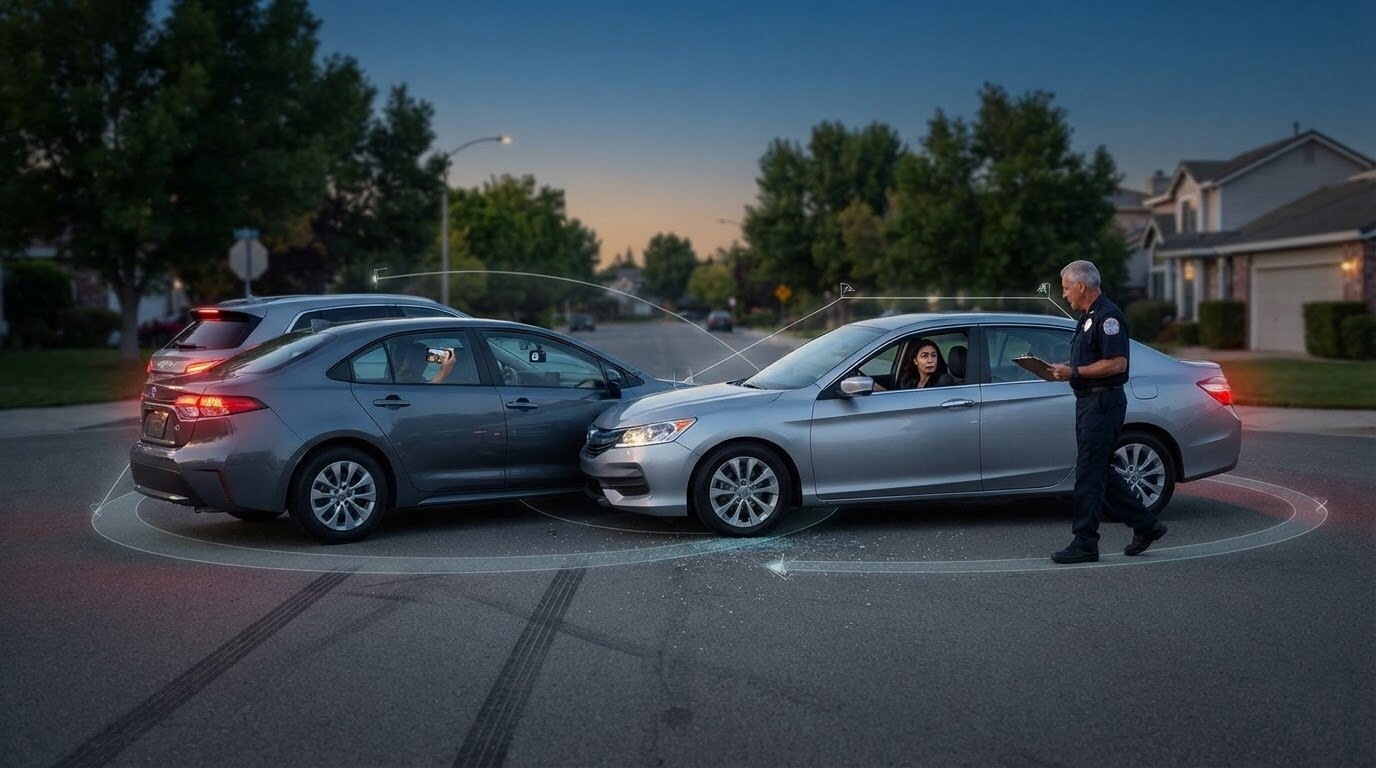
Within hours of a serious truck crash in Texas, the trucking company’s response team may already be working — sometimes before you have left the hospital. They are not the police, and they are not there for you.
In this eight-minute video, Gregg Oberg walks through why a commercial truck claim is not simply a bigger car accident: the number of parties who can share responsibility, the federal safety rules that govern professional drivers, and the fact that the evidence sits in electronic logging devices, maintenance records and engine control modules rather than in a glove box.
He also covers how Texas’s modified comparative fault rule affects what you can recover, the two broad categories of damages available, and the practical steps that protect a claim in the days after a crash — starting with medical care and evidence preservation.
The full transcript is below if you would rather read than watch. One point worth noting if your case involves a semi-truck: digital records get overwritten and camera footage auto-deletes, so preservation letters need to go out early.
Full transcript (lightly edited for readability)
When a truck hits you, it’s not just you versus the driver. It’s you versus a billion-dollar industry trained to make your case disappear. In this video, we’ll talk about why truck cases are different, how Texas fault rules really work, what compensation you can pursue, and the exact steps to protect your rights so you don’t leave money behind.
Hi, I’m attorney Gregg Oberg. For over 30 years, my firm and I have been fighting for injured Texans, working to get every client the maximum compensation they deserve. If you or your loved one have been hurt in an accident, let’s talk. Give us a call at 972-682-9700 for a free consultation.
Why truck cases are different
Truck crashes aren’t simply bigger car accidents. They involve professional drivers, federal safety rules, corporate risk teams, and high-limit insurance. That combination creates both opportunity and resistance. The opportunity is accountability and coverage to pay full losses. The resistance is a fast, sophisticated response designed to minimize what is paid to you.
A commercial trucking claim sits at the intersection of multiple players and multiple rule books. The driver, the motor carrier, the trailer owner, the shipper, the broker, the loading crew, the maintenance contractor, the manufacturer of a failed component, and even third-party logistics companies can all share responsibility. That means evidence isn’t sitting in one glove box. It is scattered across driver qualification files, electronic logging devices, tractor and trailer maintenance records, dispatch instructions, lading, and sometimes the truck’s engine control module.
Another layer is regulation. Professional drivers and carriers must follow federal safety standards, including hours of service limits, drug and alcohol testing, routine inspections, and cargo securement rules. Texas law adds state-level requirements and roadway rules on top. When a crash happens, violations of these standards often explain why. A fatigued driver, a skipped brake inspection, or an overloaded trailer is not just a detail. It is the reason a jury cares and an insurer pays attention.
Finally, there is the scale of insurance and the speed of the response. Carriers buy high-limit policies. In serious injury cases, insurers move quickly to protect those limits. That can mean rapid scene teams, aggressive contact with witnesses, and tightly controlled access to documents. The flip side is that with the right preservation letters and early investigation, you can capture video telematics, GPS breadcrumbs, and body shop data before it is overwritten or goes missing. The more organized your proof, the less room there is for blame shifting.
How Texas fault rules work
That takes us directly to fault, because in Texas, the math of fault determines what you can collect. Now that you see why trucks create a different playing field, let’s talk about how Texas decides who pays and how much.
Texas follows a modified comparative fault rule. That means you can recover damages if you are not more than 50% at fault, and your recovery is reduced by your percentage of fault. Fault is a function of evidence, not opinions. That is why truck cases lean so heavily on objective sources: dash cam and roadside cameras, black box downloads, driver logs, location and dispatch data, weigh station and toll records, scene measurements, and witness statements captured while memories are fresh.
Because professional drivers and carriers are subject to detailed rules, fault analysis often turns on whether those rules were followed hour by hour. Was the driver within hours of service limits? Did the carrier monitor violations or look the other way? Was cargo stacked beyond securement guidelines? Did pre-trip or post-trip inspections catch a brake or tire condition that should have sidelined the truck? Each answer makes fault clearer and undercuts the common defense that the crash was unavoidable.
Timelines matter, too. Texas generally gives you 2 years from the crash to file a lawsuit. That deadline is a hard stop. Waiting to act can put you in a bind as digital records are overwritten and key videos are auto deleted. Early notice to preserve evidence isn’t a technicality. It is how you prove fault in a way an insurer cannot ignore.
What compensation you can pursue
A truck crash can affect every part of life: health, income, family, transportation, and day-to-day independence. Texas law recognizes that by allowing recovery in two broad categories, economic and non-economic losses, with the possibility of punitive damages when conduct is extreme.
Economic losses are the numbers you can add. They include emergency care, hospital stays, follow-up visits, imaging, surgery, injections, physical therapy, medications, medical equipment, and the cost of future care if your doctor expects more treatment. They also include lost income, reduced hours, missed opportunities for overtime, and diminished earning capacity if you cannot return to the same kind of work. Property damage, towing, storage, rental or loss of use, and replacement of damaged personal items also belong here.
Non-economic losses capture what the spreadsheet misses. Pain that interrupts sleep, anxiety that follows you into a car, the inability to lift a child or stand through a shift, the loss of hobbies that give your life joy, scarring that changes how people look at you, and the day-to-day frustration of moving through the world with limitations. Precise documentation makes these harms visible. Short daily notes about what hurts, what you can no longer do, and how long an activity takes now turn general complaints into credible proof.
In rare cases, a jury can award punitive damages to punish and deter when a company or driver shows gross negligence. For example, recorded patterns of falsified logs, repeated hours of service violations, or knowingly sending a truck on the road with unsafe brakes can move a case from careless to reckless. When the conduct crosses that line, settlements often reflect the risk a jury will send a message.
Steps to protect your claim
However, knowing what you can claim is only useful if you can protect the claim and present it cleanly. That is where your next steps make all the difference.
Start with your health. Get checked right away, follow every recommendation, and keep all appointments. Gaps in treatment make it easy for insurers to argue your injuries weren’t serious or crash-related. Tell your providers exactly how the accident affects your work and daily life, so those details are documented in real time.
Next, preserve evidence before it disappears. Photograph the vehicles, skid marks, and your injuries. Write down what you remember and gather witness contacts. If cameras may have captured the crash, send written requests for footage. In trucking cases, a lawyer can issue preservation letters to secure the truck, driver logs, black box data, and maintenance records — all critical proof that often vanishes fast.
Be cautious in every communication. Stay polite but brief with insurers. Confirm details in writing and never give a recorded statement or speculate about what happened. Speak only to facts you know, not assumptions. Stay organized. Keep copies of medical bills, work notes, receipts, and a daily log of your pain or limitations. And stay off social media. Insurers monitor posts to challenge credibility.
Finally, don’t wait to get help. An attorney experienced in truck cases knows how to preserve evidence, coordinate care, and build a claim the insurer must take seriously. Waiting too long risks losing key proof or missing Texas’s 2-year filing deadline. Acting early protects both your health and your right to full compensation.
Truck cases are complex because there are many players, many rules, and a lot of evidence. Your best result comes from fast medical care, disciplined evidence preservation, careful communication, clean documentation, and timely action if talks go nowhere. That’s why it’s so important to understand your rights, act quickly, and get the right legal guidance from the start.
If you or your loved one have been in a semi-truck accident and you’re feeling overwhelmed or unsure about what to do next, you don’t have to figure it out alone. At Oberg Law Office, we’ve been helping injured Texans for over 30 years, and we’re here for you, too. If you or someone you care about was hurt in a crash, call us at 972-682-9700. Let’s talk about what happened and what your options may be.
Related reading
- What Evidence Is Needed for a Truck Accident Claim? A 2026 Legal Guide — what proof a trucking claim needs and where it lives.
- FMCSA Violations Lawyer in Texas: Holding Trucking Companies Accountable (2026) — how federal safety violations build accountability.
- Truck Accident Lawyer: Navigating Complex Commercial Vehicle Claims (2026) — the wider guide to commercial vehicle claims.