
Bicycle & Pedestrian Accidents
What to Do After Being Hit by a Car as a Pedestrian: A 2026 Guide to Protecting Your Rights
By Gregg Oberg ·

In the first half of 2025, over 3,000 pedestrians lost their lives on American roads. While this represents a slight decline in national fatalities, it doesn’t lessen the trauma you’re experiencing right now. You’re likely dealing with intense physical pain and the fear of mounting medical bills that seem impossible to pay. Knowing what to do after being hit by a car as a pedestrian is the first step toward reclaiming your life and holding the responsible parties accountable. You shouldn’t have to carry this burden by yourself.
This article provides a comprehensive roadmap to ensure your safety and your legal rights are fully protected. We’ll walk you through the essential steps for the first 72 hours, explain how to handle the driver’s insurance company, and show you how to secure the financial compensation you need. From understanding the two year statute of limitations for personal injury claims to gathering vital evidence at the scene, we’re here to help you move from uncertainty to a place of clarity and strength. You deserve a path to restoration, and it starts with having the right information.
Key Takeaways
-
Call 911 immediately to secure both professional medical aid and an official police presence for your protection.
-
Learn exactly what to do after being hit by a car as a pedestrian, from capturing scene photos to collecting witness contact information.
-
Discover why you should never provide a recorded statement or accept the first lowball check from the driver’s insurance adjuster.
-
Understand how a professional advocate calculates the long-term costs of your injuries to ensure you receive full financial restoration.
-
Explore the contingency fee model that makes high-quality legal support accessible, meaning you won’t pay unless we win your case.
Table of Contents
-
Immediate Priorities: Your Health and Safety at the Scene
-
Documenting the Incident: Building Your Evidence Base
-
Understanding Liability: Who Is Responsible for Your Injuries?
-
Navigating the Insurance Maze and Avoiding Common Traps
-
The Path to Recovery: Why Legal Advocacy Matters
Immediate Priorities: Your Health and Safety at the Scene
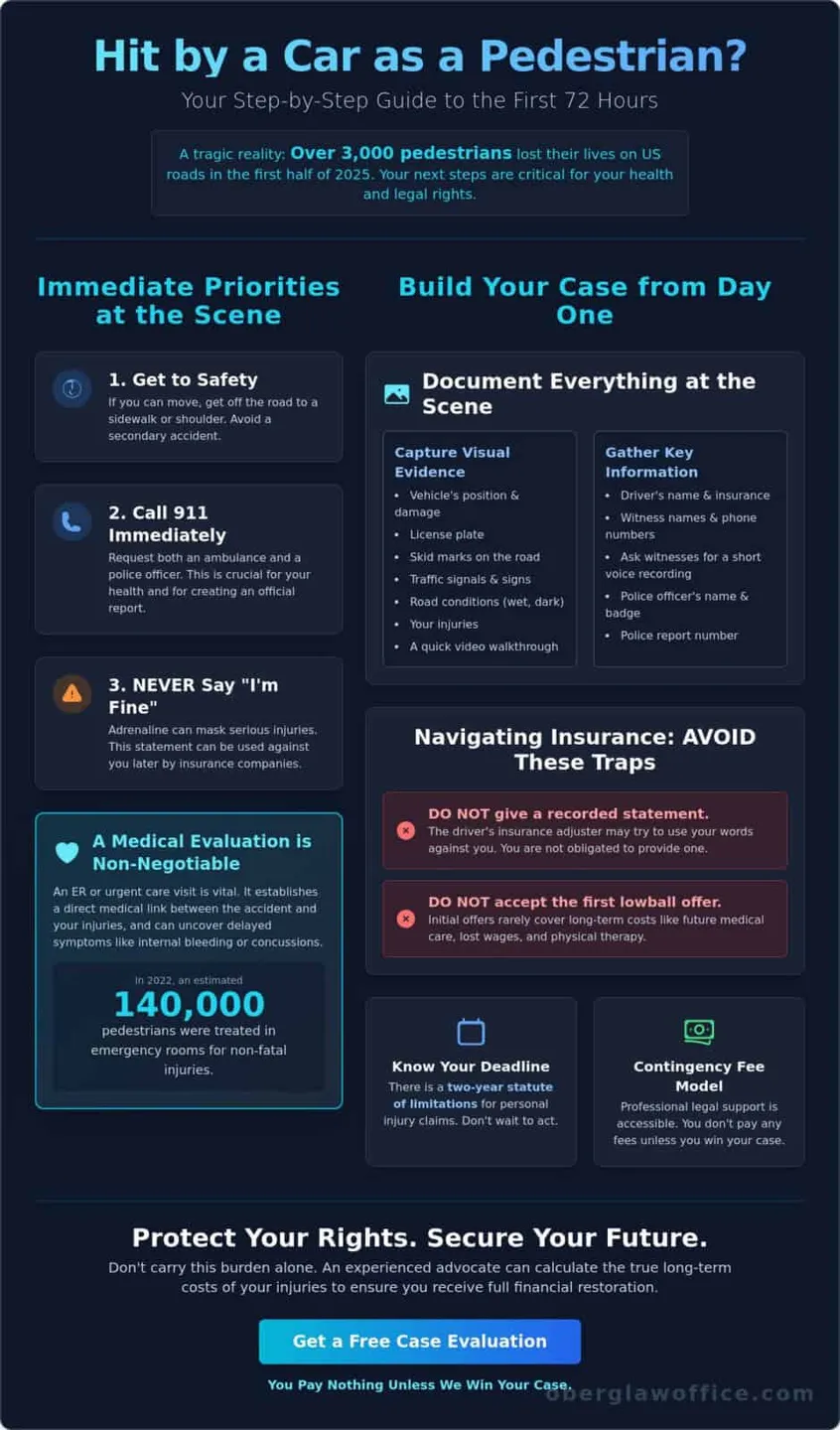
The impact of a vehicle is a violent event that leaves you in a state of shock. Your first priority is preventing further harm. If you can move, get yourself to a safe area like a sidewalk or a grassy shoulder to avoid a secondary accident. Staying in the roadway puts you at risk of being struck again by other drivers who may not see you. Once you’re clear of traffic, your next move is to call 911. You need both an ambulance for your health and a police officer to document the scene professionally.
Stay at the location until the authorities tell you it’s okay to go. Leaving early, even if you think the accident was minor, could be interpreted as leaving the scene of an accident. It’s also vital that you never minimize your pain. Adrenaline floods your system after a crash, which can easily mask the severity of your injuries for several hours. When you’re trying to figure out what to do after being hit by a car as a pedestrian, remember that your health is the most important factor in the entire process.
Why a Medical Evaluation is Non-Negotiable
Accepting a ride to the emergency room or visiting an urgent care center immediately is essential for your recovery. In 2022, an estimated 140,000 pedestrians were treated in emergency departments for non-fatal crash-related injuries according to national safety data. This visit establishes a direct medical link between the accident and your physical condition. Without this record, insurance companies will argue that your injuries happened elsewhere or aren’t as serious as you claim. Be aware of delayed symptoms like internal bruising, soft tissue damage, or traumatic brain injuries. Never say “I’m fine” to the driver or bystanders. This simple phrase can haunt your legal recovery later. Following recognized pedestrian safety guidelines means letting a professional decide if you’re truly okay.
Interacting with Law Enforcement
The police report is often the most influential piece of evidence in a pedestrian accident case. When the officer arrives, provide a clear, factual account of what happened. Avoid speculating about the driver’s speed or the exact distance of the vehicle before impact. If you aren’t sure about a detail, tell the officer you don’t know rather than guessing. Make sure the officer hears your side of the story so it’s reflected in the final report. Before the officer leaves, get their name, badge number, and the incident report number. This information is a critical part of what to do after being hit by a car as a pedestrian to ensure your rights are protected from day one.
Documenting the Incident: Building Your Evidence Base
Once you’ve secured your immediate safety and called for help, your focus must shift to preserving the truth. Memory fades and street scenes change quickly as debris is cleared and vehicles are moved. Gathering evidence is a vital part of what to do after being hit by a car as a pedestrian because it creates an objective record of a chaotic moment. Use your smartphone to document everything you can while the scene is still intact. This documentation serves as the foundation for your recovery, ensuring that the facts speak louder than any conflicting stories from the driver.
The Power of Visual Evidence
Photos are incredibly difficult to dispute. Start by capturing the vehicle’s position, the point of impact, and any visible damage to the car’s exterior. Don’t just look at the vehicle; photograph the road conditions, any visible skid marks, and the status of nearby traffic signals. If it’s raining, dark, or foggy, make sure those conditions are visible in your shots. A quick video walk-through of the scene while you narrate what you see can be an invaluable tool for reconstruction experts later. This visual data aligns with NHTSA pedestrian safety standards by highlighting environmental risks that may have contributed to the crash.
Gathering Witness and Driver Information
You’ll need the driver’s name, insurance policy number, and license plate information. However, don’t stop there. Bystanders are often your most powerful allies. Their neutrality makes their testimony more valuable than yours in a legal setting because they don’t have a personal stake in the outcome. Politely ask witnesses if they’d mind giving a short, recorded statement on your phone’s voice recorder. Just a few seconds of them describing the impact from their perspective can be the difference between a denied claim and a successful settlement. If the process of gathering this information feels overwhelming while you’re in pain, securing pedestrian accident representation can help ensure no stone is left unturned.
Look around for nearby security or doorbell cameras on homes and businesses. These systems often record the minutes leading up to a crash, but the footage is frequently overwritten within days. Note the locations of these cameras so they can be subpoenaed quickly. Finally, save every piece of clothing and gear you were wearing during the accident. Don’t wash your clothes or throw away broken glasses or torn bags. These items are physical proof of the force of the impact and can help prove the severity of the incident when words aren’t enough.
Understanding Liability: Who Is Responsible for Your Injuries?
Determining who is legally responsible for your pain is one of the most complex parts of what to do after being hit by a car as a pedestrian. While you’re focused on your physical recovery, insurance adjusters are often busy looking for reasons to blame you for the impact. In the eyes of the law, every driver owes you a “Duty of Care.” This is a legal obligation to operate their vehicle safely and remain vigilant for anyone else on the road. When a driver fails in this duty by texting, speeding, or ignoring a stop sign, they’ve broken that promise of safety.
Negligence is the failure to act with the reasonable care that a person of ordinary prudence would exercise in the same situation. Many victims worry about the “jaywalking myth.” They believe that if they weren’t inside a marked crosswalk, they have no legal standing. This isn’t true. Drivers are required to exercise due caution to avoid hitting a pedestrian regardless of where that person is standing. If you’ve been injured, exploring your legal options for pedestrians is essential to see how these rules apply to your specific case. You shouldn’t assume you’re at fault just because the driver’s insurance company says so.
Driver Negligence vs. Pedestrian Rights
Right of way laws are designed to protect the most vulnerable people on the road. In many cases, even if you were partially responsible for the accident, you can still recover compensation. This is known as comparative negligence. For example, if a court finds you were 20 percent at fault for crossing mid-block but the driver was 80 percent at fault for speeding, you could still receive 80 percent of your total damages. This system ensures that a small mistake on your part doesn’t completely strip away your right to financial restoration. We believe in holding drivers accountable for the choices they make behind the wheel.
Third-Party Liability in Pedestrian Crashes
Sometimes the driver isn’t the only one at fault. If a vehicle’s brakes failed or a tire blew out, the manufacturer might be held liable for a defective product. If the driver was making a delivery or traveling for work, their employer could be responsible for your medical bills and lost wages. In other instances, a municipality might be to blame. Poorly timed traffic signals, obscured stop signs, or broken streetlights create dangerous environments that lead to crashes. Identifying these third parties is a critical step in what to do after being hit by a car as a pedestrian to ensure you access every available source of compensation for your recovery.
Navigating the Insurance Maze and Avoiding Common Traps
Dealing with insurance adjusters is often the most stressful part of what to do after being hit by a car as a pedestrian. These professionals are trained to be friendly and helpful, but their primary goal is to protect their company’s profits. They may offer you a quick settlement check within days of the accident. While this money might seem like a relief when your bills are mounting, it’s almost always a lowball offer. This initial check rarely covers the full scope of your long-term medical needs or the wages you’ll lose while out of work. Don’t sign anything yet. Accepting a settlement before you’ve reached maximum medical improvement is a mistake that can’t be undone. Once you sign a release of liability, you’re barred from seeking more compensation later, even if your condition worsens.
Protecting your future requires patience and a clear understanding of your own insurance policies. You don’t have to wait for the driver’s insurance to take responsibility to start your recovery. If you have an auto policy of your own, your Personal Injury Protection (PIP) or MedPay coverage usually follows you even when you’re a pedestrian. This can provide immediate funds for your initial medical treatments. Navigating these overlapping layers of coverage is a complex task, which is why securing professional pedestrian accident representation is so important for your financial security.
The Adjuster’s Strategy
Insurance adjusters use several tactics to undermine your claim. One of the most common is asking for a recorded statement. They’ll tell you it’s just to get the facts straight, but they’re actually looking for any slip-up or contradiction they can use to deny your claim. They also keep a close eye on your social media presence. A simple photo of you smiling at a birthday party can be twisted into evidence that your injuries aren’t as severe as you claim. It’s best to stay off social media and let your attorney handle all communication with the insurance company.
Uninsured and Underinsured Motorist Coverage
What happens if the driver who hit you doesn’t have insurance or leaves the scene? This is a terrifying scenario, but you may still have options. Your own Uninsured/Underinsured Motorist (UM/UIM) coverage acts as a vital safety net. It steps in to provide the compensation that the at-fault driver cannot. This is especially relevant in California, where mandatory minimum coverage recently increased to $30,000 per person and $60,000 per incident. If your medical bills exceed these limits, your UIM policy can bridge the gap. In cases of hit-and-run accidents, some states also offer victim compensation programs to help cover your basic needs.
The Path to Recovery: Why Legal Advocacy Matters
The journey toward physical and financial restoration after a crash is rarely a straight line. You’ve already managed the immediate chaos at the scene and guarded yourself against early insurance tactics. Now, the focus shifts to the long-term. Understanding what to do after being hit by a car as a pedestrian involves recognizing when you need a steadfast protector in your corner. A dedicated attorney does more than just file paperwork. We take the weight of the legal battle off your shoulders so you can focus entirely on your physical therapy and emotional healing. You’ve been through enough; you shouldn’t have to be your own investigator and negotiator too.
At Oberg Law Office, we bring over 25 years of experience to every case. We believe in a personal touch, which means you’ll work directly with senior professionals who are personally invested in your recovery. We also understand the financial anxiety that follows an accident. That’s why we operate on a performance-based fee structure. You pay nothing unless we win your case. This shared risk is our promise of accessibility, ensuring that high-quality legal guidance is available to everyone in our community, regardless of their current bank balance.
Calculating Your Damages
Determining the true value of your claim requires looking far beyond the medical bills sitting on your kitchen table. A comprehensive recovery plan accounts for lost wages, the cost of future medical care, and the profound impact of emotional distress. We also focus heavily on the “pain and suffering” component, which compensates you for the disruption of your quality of life. If you’re looking for a Mesquite Personal Injury Lawyer: Your 2026 Guide to Accident Recovery, you’ll find that our approach is rooted in securing the full financial restoration you deserve. We don’t just look at what you’ve lost today; we look at what you’ll need for years to come.
Your Strategy Session with Oberg Law Office
We invite you to a free, no-obligation initial strategy session to discuss the specifics of your accident. During this conversation, we’ll listen to your story, evaluate the evidence you’ve gathered, and outline a clear path forward. Our team is formidable against large institutions and insurance companies that try to minimize your trauma. We know their playbooks and how to counter them effectively. For more details on choosing the right advocate, see Your Guide to Hiring a Car Accident Lawyer in Mesquite (2026 Edition). We’re ready to stand with you and fight for the justice you deserve.
Take the First Step Toward Your Recovery Today
Recovering from a pedestrian accident is about more than just physical healing; it’s about restoring your sense of security and fairness. You now have a clear roadmap for what to do after being hit by a car as a pedestrian, from prioritizing an immediate medical evaluation to guarding against aggressive insurance adjusters. Remember that you don’t have to face the legal maze alone while you’re trying to get back on your feet. Professional advocacy ensures that your future is protected and that the true value of your claim is recognized by the insurance companies.
At Oberg Law Office, we bring over 25 years of legal experience to your side. You’ll have direct access to lead attorney Gregg Oberg, ensuring your case receives the personal attention it deserves. We believe in shared risk, so you’ll never pay us any fees unless we successfully recover money for you. Let us handle the negotiations and complex paperwork so you can focus entirely on your health. Schedule Your Free Strategy Session with Oberg Law Office Today. You deserve a partner who is formidable in the courtroom and compassionate in the office. We’re here to help you move forward with confidence.
Frequently Asked Questions
Can I still file a claim if I was hit while jaywalking?
You can still file a claim even if you weren’t in a crosswalk. Drivers must remain vigilant and exercise due caution to avoid hitting anyone on the road, regardless of where they’re walking. If you’re found partially at fault for crossing mid-block, your total compensation might be reduced by your percentage of responsibility. However, this doesn’t bar you from seeking recovery for the driver’s negligence. We’ll help you navigate these complex liability rules to ensure you’re treated fairly.
What if the driver who hit me doesn’t have insurance?
You may still have options for recovery through your own Uninsured/Underinsured Motorist (UM/UIM) coverage. This policy acts as a safety net when the at-fault driver lacks insurance or flees the scene. In states like California, where minimum coverage recently increased to $30,000 per person, your own policy can bridge the gap for serious injuries. We can investigate your insurance documents to identify every available source of funding for your medical bills and lost wages.
How long do I have to file a lawsuit after being hit by a car?
The time limit to file a lawsuit is typically two years from the date of the accident. In Florida, for incidents occurring on or after March 24, 2023, the statute of limitations is exactly two years. California also follows a two-year limit for most personal injury claims. Missing these deadlines permanently bars you from seeking compensation. It’s best to act quickly to preserve evidence and meet all legal requirements before your time runs out.
Should I talk to the driver’s insurance company if they call me?
You should avoid giving any detailed or recorded statements to the driver’s insurance company. Their adjusters are trained to look for information they can use to minimize your payout or shift blame onto you. Politely inform them that you’re seeking legal advice and that all future communications should go through your representative. This protects you from accidentally saying something that could damage your claim before you’ve even started your recovery process.
Who pays for my medical bills immediately after the accident?
Your own health insurance or Personal Injury Protection (PIP) coverage usually pays for your initial medical treatments. While the driver’s insurance is ultimately responsible if they’re at fault, those settlements can take months or years to finalize. Using your own coverage ensures your doctors are paid and your treatment continues without interruption. We work to ensure these costs are eventually reimbursed as part of your final settlement with the at-fault party’s insurance provider.
What if I was hit by a car but didn’t feel hurt until the next day?
It’s very common for injuries to manifest hours or even days after the initial impact. Adrenaline and shock often mask symptoms of soft tissue damage or internal bruising at the scene. If you’re wondering what to do after being hit by a car as a pedestrian when pain develops late, the answer is to seek a medical evaluation immediately. Documenting these symptoms as soon as they appear is vital for connecting them directly to the accident.
How much is a pedestrian accident case typically worth?
Settlement values vary based on the severity of your injuries and available insurance. Nationally, the average settlement for a pedestrian hit by a car is approximately $67,511.90, though catastrophic cases can exceed $1,000,000. Minor injuries often result in settlements between $15,000 and $75,000. We calculate the true value of your claim by looking at your current bills, future care needs, lost income, and the pain you’ve endured to ensure you’re fully compensated.
Do I need a lawyer if the driver’s insurance company admitted fault?
Yes, because admitting fault doesn’t mean the insurance company will offer a fair settlement. Knowing what to do after being hit by a car as a pedestrian includes understanding that adjusters still try to minimize the cost of your treatment. An attorney ensures that every expense, including future medical needs and emotional distress, is accounted for. We represent your interests to make sure “admitting fault” actually leads to the full financial restoration you deserve.
This article provides general information. For advice about your circumstances, contact Oberg Law Office.